Sudan has formally accused Ethiopia of allowing the Rapid Support Forces paramilitary to launch drone attacks from its territory, lodging official complaints with the United Nations Security Council and the African Union's Peace and Security Council. The allegations lay bare a deep and longstanding rift between the two countries, one that threatens to intensify internal conflicts in both.
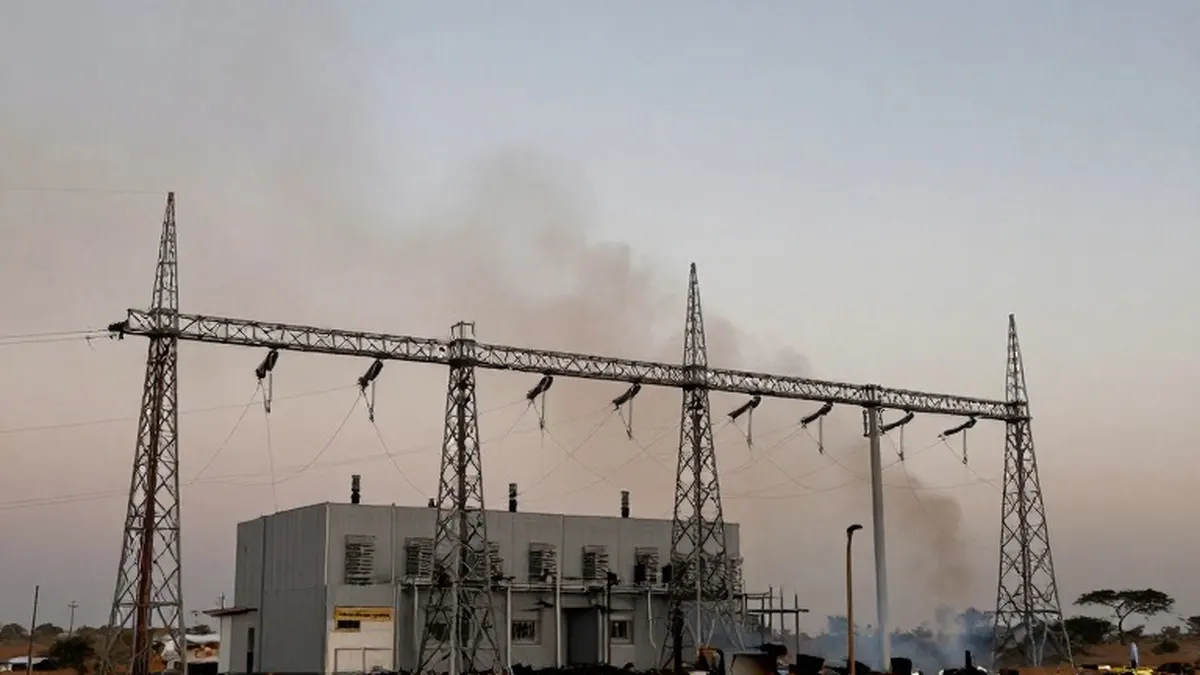
The RSF has been at war with the Sudanese Armed Forces since April 2023. Khartoum alleges the paramilitary is using Ethiopian territory to strike civilian sites, including power stations, in army-controlled areas. Suspected RSF drone attacks have heavily damaged civilian infrastructure, leaving more than 90 percent of power stations in Sudanese cities out of service, according to Sudanese border affairs specialist Abdul Kareem Al-Almin Ahmed.
Ethiopia's alleged support for the RSF has triggered divisions within the SAF over how to respond, Al-Almin told Al Jazeera. "The mutual accusations are many and almost daily, and the tension on the part of the Sudanese army has reached high levels," he said, adding that some voices inside the army and its allied forces have demanded Sudan declare war on Ethiopia over these interventions.
Al-Almin described the weapons as "mysterious drones" that reach long distances, saying almost all Sudanese land is now violated by them. He said their range, flight properties and destructive power confirm significant external backing.
A detailed report prepared by the Sudanese Ministry of Foreign Affairs alongside military intelligence claimed that 70 separate assaults involving 187 one-way attack drones were launched from Ethiopian territory between February and October, with the frequency increasing: 28 attacks carried out by 97 drones were recorded in October alone. A separate report compiled by the Transitional Sovereignty Council, which is linked to de facto leader Abdel Fattah al-Burhan and the SAF, said drone attacks killed 176 Sudanese soldiers and 484 civilians between February 15 and October 27. It identified Asosa Airport in western Ethiopia, the Kurmuk-Gizen border area and the Bahir Dar airbase in Amhara as specific launch sites.
UN Secretary-General Antonio Guterres said on Saturday he was appalled by the use of drones in the war and condemned the catastrophic toll on civilians. A drone attack on displaced families in Wad el-Mahi, near the Ethiopian border on October 3, killed 26 women and four children. Another drone attack in Nyala, in Sudan's Darfur region, on October 26 killed at least 21 people and injured at least 40. The conflict has already displaced 13 million people and left thousands at risk of famine.
Addis Ababa denies the accusations and has in turn accused the Sudanese government of backing rebels linked to the Tigray People's Liberation Front. The friction extends beyond drones and rebel groups to a confrontation over water and strategic alliances, including the Grand Ethiopian Renaissance Dam built by Addis Ababa on the Nile River. Egypt and Sudan rely heavily on the Nile for water and, as downstream nations, fear the dam threatens their national security and breaches international law.
"The Sudanese-Ethiopian file is a complex file, in which many factors have intertwined," Al-Almin said, citing the dam dispute and the rapprochement between the Sudanese army and the Egyptian government, alongside Khartoum's anger over Ethiopia's alleged support for the RSF.
Badr Hassan Al-Shafei, a professor of African studies and conflict resolution expert, wrote in a study published by the Al Jazeera Centre for Studies that "Khartoum's interest lies in the stability of its eastern neighbourhood to avoid security threats and waves of asylum." He said Khartoum fears that providing military support to Tigray would explode the situation on its borders and increase displacement that border states cannot bear, especially while the war against the RSF continues.
A direct military confrontation with Addis Ababa would severely strain an already exhausted Sudanese military still engaged in intense battles with the RSF in the southeast of the country. "If the Sudanese army opens a war front with Ethiopia, this is not in its favour and confuses the region," Al-Amin wrote, warning Sudan could find itself "fighting on two fronts": the RSF, which occupies part of the country, and the Ethiopian army, whose capabilities and long border reach pose a serious threat.