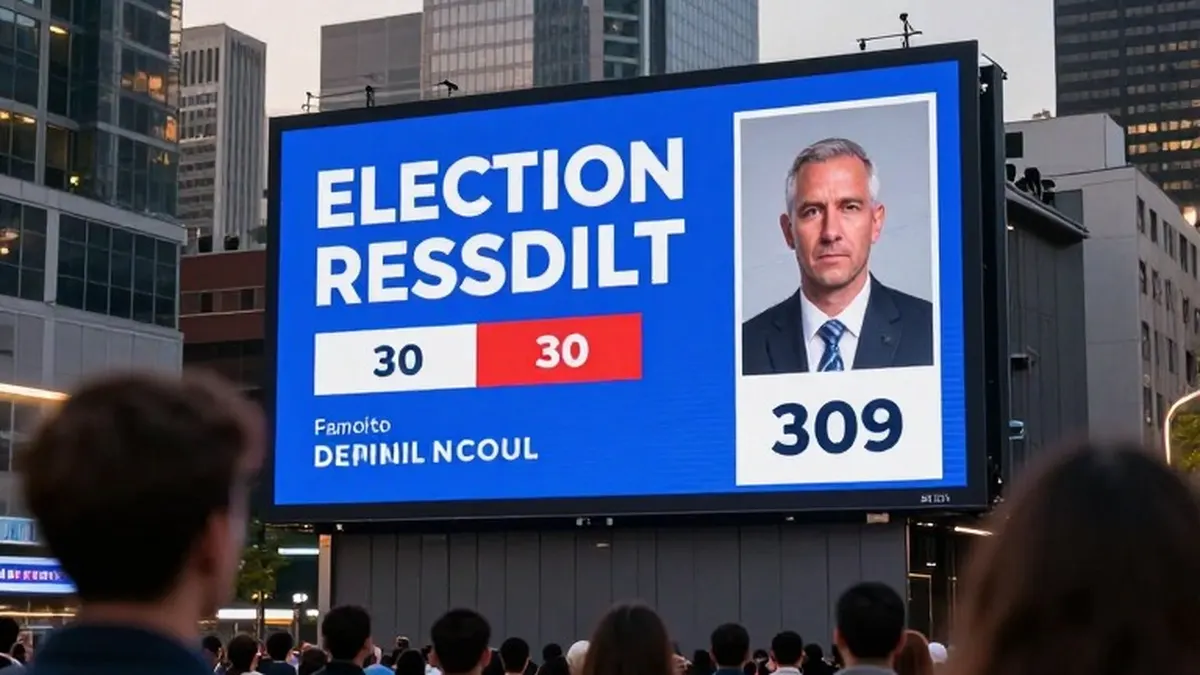
Janeese Lewis George, a 38-year-old member of the D.C. Council, has won the mayoral election for the nation's capital. The Democratic socialist candidate achieved a decisive victory on Tuesday, capturing nearly 85% of the ranked-choice vote in a contest that also included Green Party nominee Robert Gross and independent candidate Rhonda Hamilton. These results were confirmed by the latest data from the District of Columbia Board of Elections.
The outcome marks a significant shift for the capital, as Lewis George replaces outgoing Mayor Muriel Bowser. Bowser, who took office in 2015, announced last year that she would not seek re-election. In a message posted on X on Wednesday morning, Bowser expressed her congratulations to the new mayor-elect. She stated that the city had kept its promise to maintain Home Rule and elect its next leaders. Bowser also pledged to review the transition process and support a seamless handover of power.
Following her victory, Lewis George signaled a pragmatic approach to her relationship with the federal government. She told FOX 5 DC that she is willing to work with the current administration to benefit D.C. residents. However, she noted that she is also prepared to stand up to the White House when necessary. She emphasized that the people of D.C. elect their own mayor and that cooperation should serve the interests of local residents.
The incoming mayor outlined specific plans for her first term, focusing on financial accountability within the local government. Lewis George said she intends to conduct a forensic analysis of every District agency early in her administration. This review aims to identify savings, monitor spending, and detect fraud, abuse, or mishandling of funds. She believes these measures will help restore trust from District taxpayers.
Lewis George joins a growing group of Democratic socialist mayors in major U.S. cities. She is now aligned with leaders such as Zohran Mamdani of New York City, Katie Wilson of Seattle, and David Morales, the mayor-elect of Providence, Rhode Island. In her victory announcement on X, Lewis George thanked the residents of Washington, D.C., for trusting a daughter of the District to lead the city.
The relationship between Lewis George and President Donald Trump has been marked by public tension. Earlier this year, Lewis George told The Associated Press that she plans to address the affordability crisis in D.C. She argued that the Trump administration has exacerbated the issue by firing federal employees in large numbers and militarizing the streets.
Trump previously criticized Lewis George on social media, referring to her as a communist. In a post on Truth Social following her primary victory in June, the president expressed concern that candidates like Lewis George might destroy the city. He listed several policies he attributed to her, including emptying prisons, making D.C. a sanctuary city, and opposing ICE. He also mentioned plans to defund the police and expand cashless bail.
The president stated that he would not let these changes destroy the capital. He claimed that he had worked hard to make Washington, D.C., a safe and prestigious community with low crime rates and significant beautification efforts. While saying he would meet with Lewis George, he warned that the city was again a safe and prestigious community that many people, including himself, had worked to maintain.
Despite the previous friction, Lewis George's comments suggest an intent to engage constructively with the federal government. Her focus on internal district reforms and her public acknowledgment of the administration's role in local issues indicate a complex political dynamic ahead. The transition period will likely involve negotiations between the new local leadership and the White House on key policy matters.
The election result reflects the strong support Lewis George garnered within the District. Her ability to secure such a high percentage of the vote in a ranked-choice system underscores her broad appeal among local voters. As she prepares to take office, her administration will face immediate challenges related to budgeting, public safety, and federal relations.