Ti West's new adaptation of Charles Dickens' classic novella, titled 'Ebenezer,' presents itself as a fresh perspective on the well-known holiday story, though the film ultimately delivers a fairly traditional narrative. Marketing materials for the movie, distributed by Paramount, have emphasized an origin story angle with taglines suggesting an unknown version of the tale. However, the final product is a straightforward retelling that incorporates slightly darker ghost effects without making drastic changes to the source material. This approach may be a relief to viewers who prefer a less experimental take, though it does not fully justify the revisionist framing used in the initial promotion.
The film distinguishes itself primarily through its visual style, which draws heavily from the retro Hammer horror aesthetic. West, known for genre classics like 'The House of the Devil' and the 'X' trilogy, brings an indie-rooted sensibility to the project. Despite the gothic atmosphere, the movie remains a PG-13 release and stays true to Dickens' sentimental arc. It avoids becoming an outright horror film, maintaining the core message of redemption and the spirit of Christmas, even as it retains a frost-bitten edge throughout the runtime.
A central element of the film's commercial strategy is the casting of Johnny Depp in the title role. This marks his return to major studio cinema after eight years away from the A-list. Depp takes on a transformative, pantomime-style part similar to those he previously performed for directors like Tim Burton and Gore Verbinski. He appears with heavy prosthetics, a hunched posture, and a snarly vocal delivery. His performance is described as solid and by-the-book, with moments of inspiration, though it does not reach the emotional depths of Alastair Sim's 1951 screen incarnation.
The narrative begins with a prologue explaining how Jacob Marley, played by Ian McKellen, became a ghost. The story then jumps forward seven years to Scrooge's loan office, where he is depicted in a state of misery. He grudgingly gives his clerk, Bob Cratchit, played by Rupert Grint, the next day off. The plot proceeds through familiar beats, including Scrooge rejecting requests from charity collectors and his nephew Fred, played by Sam Claflin. This structure creates a sense of déjà vu for audiences familiar with the original novella.
One of the more striking elements is the design of the Ghost of Christmas Past, portrayed by Andrea Riseborough. She appears as a wheezy, tulle-swaddled figure with eerie eyes and a distinctive manner of speech. This character is sufficiently unnerving to distract from some light embellishments in the script, particularly regarding the relationship between the young Ebenezer, played by Arthur Conti, and his former fiancée Belle, played by Ellie Bamber. These adjustments, along with changes to Cratchit's professional standing, represent the most significant liberties taken by writer Nathaniel Halpern.
Tramell Tillman provides compelling energy as the Ghost of Christmas Present, depicted as an ailing and antagonistic figure with cracking spirit-skin. Daisy Ridley plays Fred's wife, Clara, in a shorter role. The film moves efficiently without dragging, largely because viewers can anticipate the upcoming events. While it is not a heart-stirring experience in the way the best adaptations can be, it maintains a steady pace.
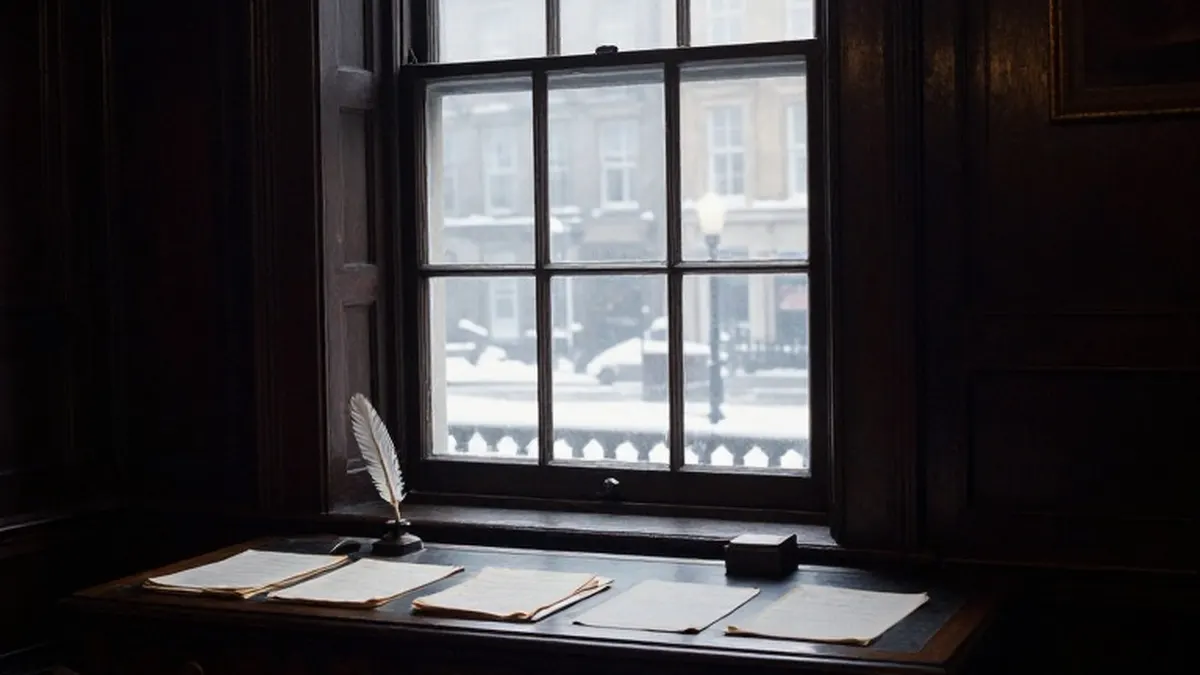
For audiences less focused on Depp's return, the film offers strong atmospheric and craft-based rewards. Director Ti West pays close attention to detail, starting with the luridly scarlet, 1960s-style opening credits. Production designer Eve Stewart creates a dank and crooked recreation of Dickensian London, filled with blackened timber and mildew. This set design is complemented by Checco Varese's charred and coaly cinematography, creating a sensory experience that evokes sour rot in every corner of the frame.
Even during moments of Yuletide cheer, the film retains a cold edge both visually and spiritually. By the end, there is a sense that the reformed Scrooge may have retained a small nugget of cruelty. This subtle tonal choice suggests that a change of heart is a lifelong process, not just a seasonal occurrence, adding a layer of complexity to the traditional holiday message.