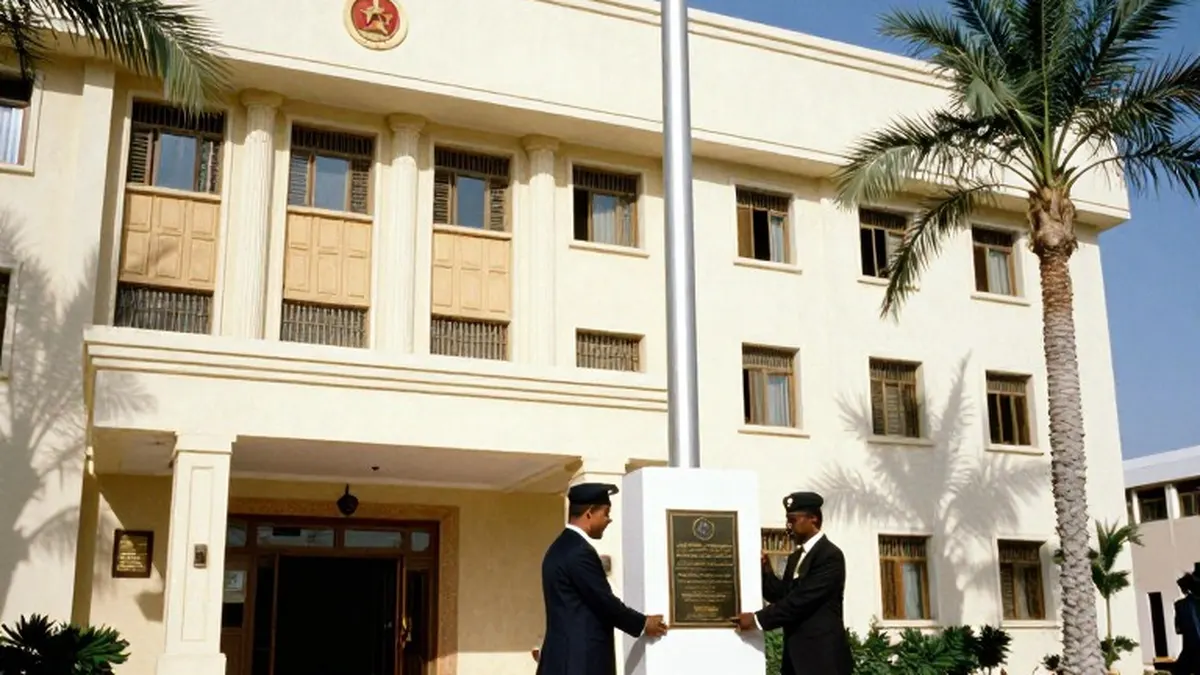
Egypt has reopened its embassy in Tripoli, ending a 12-year closure prompted by security concerns, in what analysts describe as a significant political shift for Libya both domestically and regionally.
Egyptian Foreign Minister Badr Abdelatty inaugurated the historic embassy building on Saturday. Libya has been split since the fall of Muammar Gaddafi in 2011, with rival administrations based in Tripoli in the west and in Tobruk and Benghazi in the east.
Cairo was long seen as a backer of the eastern authority, effectively led by military commander Khalifa Haftar and his self-styled Libyan National Army (LNA). Recent regional developments, however, have pushed Egypt to rethink that approach.
Libyan political analyst Hazem al-Rayes said the reopening of the embassy in Tripoli, the seat of the internationally recognised government Haftar once fought, reflects that change. "I can consider that what Egypt is doing in its recent moves towards the capital, Tripoli, is an attempt to readjust its behaviour in the Libyan file," he told Al Jazeera, noting that no Egyptian foreign minister had visited the capital in five years. Elias al-Barouni, a political science professor at Nalut University, called the move "an indicator of a shift in Cairo's method of managing its relations with the Libyan parties."
Several recent developments have somewhat stabilised Libya, where thousands have been killed in fighting between militias loyal to rival authorities. In July, Ankara and the LNA reached unprecedented coordination on developing military facilities, surveillance systems and training programmes in Turkiye for eastern Libyan officers. Haftar's son Saddam, deputy commander of the eastern forces, has visited Turkiye and Qatar, both supporters of Tripoli's United Nations-recognised government. Libyan rivals also recently signed the so-called 4+4 agreement, a roadmap towards possible presidential and legislative elections within two years.
Badr Hassan al-Shafei, a professor of African studies and conflict resolution at Cairo University, said Egypt reconsidered after concluding that relying solely on Haftar's forces did not serve its strategic interests. Cairo, he said, may want to signal to Haftar that he should not act unilaterally, while also extending "bridges of cooperation" with Tripoli. Egypt has also grown more concerned about the expansion of Sudan's Rapid Support Forces, which had allegedly received support from Haftar.
Al-Rayes said Egypt is "convinced today that its ally, which it supported throughout the past years at the expense of the legitimate government in Tripoli, has distanced itself from it," forcing a readjustment towards the capital.
During the visit, Abdelatty discussed economic files with Libyan officials, including the 2019 maritime border memorandum between Tripoli and Ankara. According to the Egyptian Ministry of Foreign Affairs, he stressed the need to address Egyptian concerns over maritime demarcation in line with international law, after the eastern parliament recently ratified the agreement it had initially opposed. Al-Shafei said Cairo now prefers negotiating directly with the government that signed the deal to protect its gas and oil interests in the Eastern Mediterranean, and may also eye reconstruction contracts and opportunities for Egyptian labour and investment in Libya's oil industry.
Al-Rayes said a new regional consensus raises the likelihood of a comprehensive agreement to end the war. Al-Barouni cautioned, however, that Libya's dispute is not merely over who leads the government but over power, resources, institutions and the path to elections. "Libya needs a settlement that ends the division, not a deal that redistributes the division," he said.