As Iran comes under growing strain from US sanctions, the blockade in the Gulf and a new American campaign to cut it off from supplies moving across its land borders and the Caspian, the militias Tehran backs in Iraq may respond by lashing out. Iran has already spread the war to Iraq, and it has spent decades working to shape Iraqi politics through armed groups and allied political factions.
One of those militias, Kataib Hezbollah, took aim at Iraqi Prime Minister Ali al-Zaidi over the weekend. According to Rudaw media, the group accused him and a top aide of amassing billions of dollars in alleged illicit wealth, while denying that the armed faction controls commercial contracts at Iraqi airports and threatening to expose alleged plots against the Kurdistan Region's Khor Mor gas field.
In a statement published on Telegram, Kataib Hezbollah security chief Abu Mujahid al-Assaf demanded to know how the prime minister's financial empire, which he said al-Zaidi had acknowledged at nearly 21 trillion dinars, or more than 13 billion dollars, had been built in under 10 years.
The attack shows Kataib Hezbollah openly challenging Iraq's government and its leader. The group, like Lebanon's Hezbollah, is a central pillar of Iran's proxy network. It has carried out attacks on US forces in Iraq, struck Saudi Arabia, killed three American service members in Jordan in January 2024, and kidnapped researcher Elizabeth Tsurkov.
Rudaw reported that Assaf also warned against opening files on alleged plots to target the Khor Mor gas field, saying: "We do not want to air dirty laundry in public." The field, located between Sulimaniyeh and Kirkuk, is vital to the Kurdistan Region's energy grid.
The militia may be feeling pressure from Baghdad. Zaidi has demanded that groups like Kataib Hezbollah surrender their weapons to the government. Rudaw noted that he initially set the end of September as the deadline for armed factions to disarm, timed with the end of the US-led coalition's military mission in Iraq, before extending the timetable to the end of June 2027. Iraq hosts around a dozen Iran-backed militias of varying size, including Badr, Harakat Hezbollah al-Nujaba, Harakat Ansar Allah al-Awfiya and Kataib al-Imam Ali.
Several of these factions, many of them operating within the Popular Mobilization Forces, have been designated Foreign Terrorist Organizations by the United States over attacks and activities tied to Iran's Islamic Revolutionary Guard Corps. Kataib Hezbollah was designated in July 2009 and Asaib Ahl al-Haq, led by Qais al-Khazali, in January 2020. In September 2025, Washington added four more: Harakat Hezbollah al-Nujaba, Kataib Sayyid al-Shuhada, Harakat Ansar Allah al-Awfiya and Kataib al-Imam Ali. Other influential groups, including Hadi al-Amiri's Badr Organization, Saraya al-Khorasani and Kataib Jund al-Imam, have not been designated, nor has the PMF itself. The Islamic Resistance in Iraq serves as an umbrella identity used by Iran-backed factions to claim attacks.
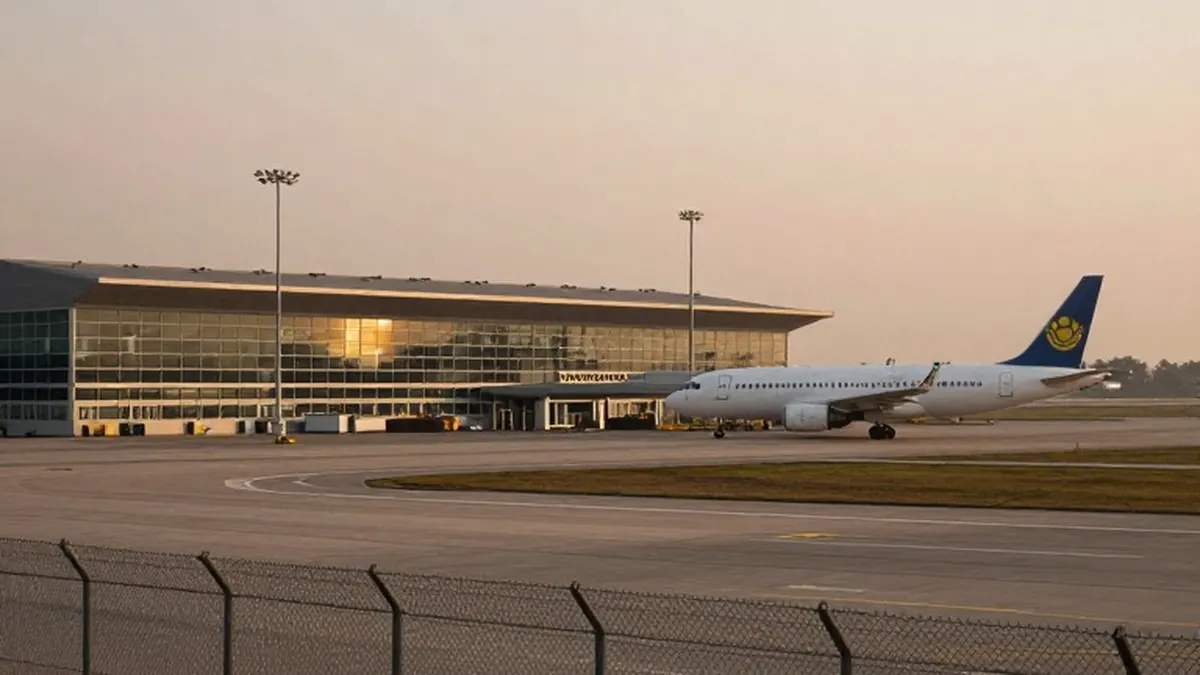
The militias also appear entangled in corruption at Mosul airport. Mosul, liberated from ISIS in June 2017, has been reconstructed, but militias seized swaths of the Nineveh plains and gained a foothold in the city. Iraqi state media reported that Zaidi on Saturday ordered the cancellation of three commercial contracts at Mosul International Airport over the companies' alleged links to armed groups, directing that they go to international firms instead. The Iraqi News Agency said he ordered the contract of the Sky Plus company for leasing airport counters canceled over its ties to armed groups.
Assaf dismissed reports by the Saudi-owned Al-Arabiya network alleging that Kataib Hezbollah controls contracts inside Iraqi airports as a "blatant lie," describing them as part of a media war against the pro-Iran Axis of Resistance, according to Rudaw.