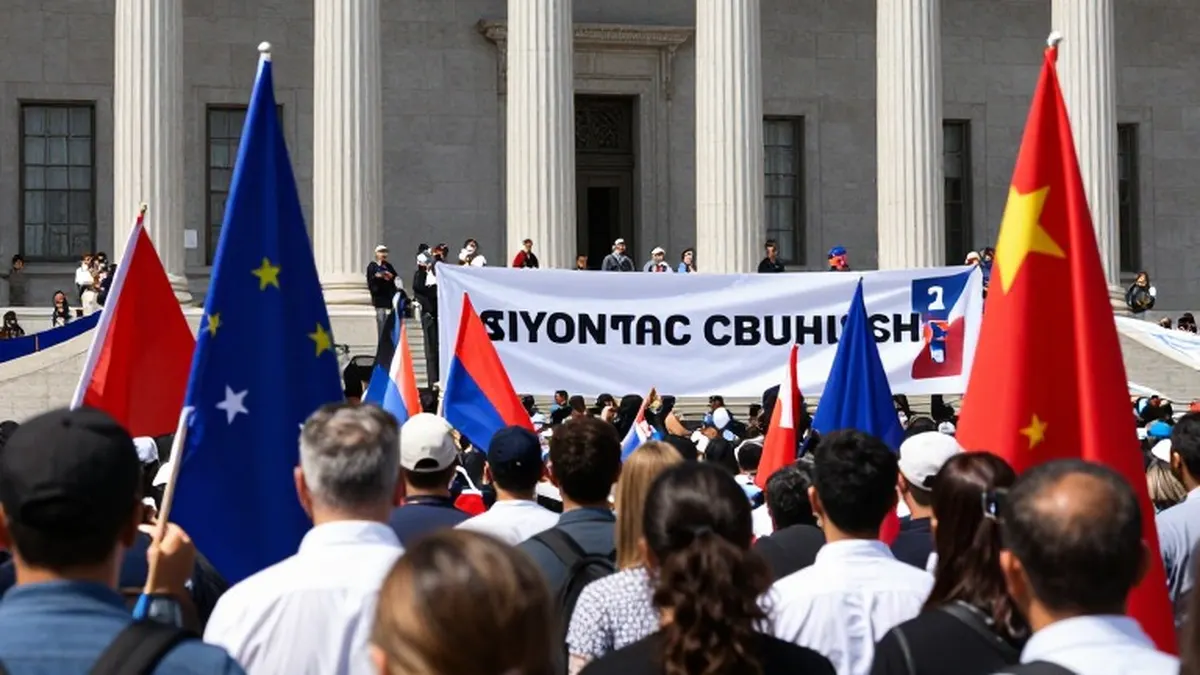
President Nayib Bukele of El Salvador has formally begun his campaign for a third consecutive term in office, a move that has drawn sharp criticism from opposition figures and international observers. On Thursday, supporters gathered outside the Supreme Electoral Tribunal to witness the president register his candidacy for the upcoming national elections. The event marked a significant milestone in his political trajectory, signaling his intent to extend his rule beyond the traditional limits previously imposed by the country's constitution.
The path to this registration was paved by legislative actions taken by Bukele's party, Nuevas Ideas. Leveraging a supermajority in the national congress, the party voted to remove presidential term limits. Additionally, they amended the constitution to increase the length of a presidential term from five years to six. These structural changes have been central to the debate surrounding Bukele's governance style, with detractors arguing that the modifications were designed specifically to facilitate his continued hold on power.
Bukele, who is 45 years old, has built his political brand largely on a vigorous campaign against violent cartels that have long plagued El Salvador. His aggressive stance on public security has earned him substantial popularity among voters, leading to broad expectations that he will secure another victory in the February election. His political persona is deeply intertwined with the narrative of restoring safety and order to the nation.
Speaking to the crowd assembled at the electoral tribunal, Bukele defended the current state of governance in the country. "In El Salvador there is total, complete open democracy," he told the supporters. He added that the nation is "sending a message to the world that El Salvador will never return to the past." These remarks reflect his confidence in the current political landscape and his desire to project stability to the international community.
Critics, however, view the recent constitutional changes as a consolidation of power that erodes traditional checks and balances. The Bertelsmann Transformation Index and other monitoring bodies have accused Bukele of creating a de facto one-party state. They argue that the dominance of Nuevas Ideas in the legislature allows the executive branch to operate with minimal resistance, effectively sidelining opposition voices in the legislative process.
The controversy over Bukele's governance extends beyond domestic politics to international affairs. Last month, he dispatched approximately 2,500 soldiers to Haiti. This deployment followed the disappearance of four Salvadoran members of a United Nations-backed force on the island. While the military presence has been welcomed in Port-au-Prince, which is struggling with gang violence, many analysts question the underlying motives for the intervention. Some suggest that Bukele is using the crisis to bolster his reputation as a decisive leader on the world stage.
Juan Pappier of Human Rights Watch offered a critical assessment of the president's actions. According to the Associated Press, Pappier stated that Bukele is running for a third term after "packing the court, rewriting the constitution to his liking and jailing or forcing into exile those who dare criticise him." Pappier further noted that "the absolute concentration of power in his hands has been the defining feature of his administration." This perspective highlights the tension between the president's popular support and concerns about democratic norms.
The electoral timeline was also altered by Nuevas Ideas last year. Utilizing its legislative majority, the party abolished second-round votes and brought forward the national elections by two years. Consequently, the vote is now scheduled for February 2027 rather than the originally planned date. This strategic shift in the calendar has further intensified the political race, with Bukele's opponents working to mobilize support against what they describe as an entrenched executive authority.
As the campaign officially launches, the political landscape in El Salvador remains polarized. Supporters see Bukele as the guarantor of the peace and security achieved in recent years, while critics warn that the removal of term limits and other constitutional changes may set a precedent for long-term leadership. The coming months will likely see increased political activity as both sides prepare for the February vote, which is expected to be a decisive moment for the country's democratic future.