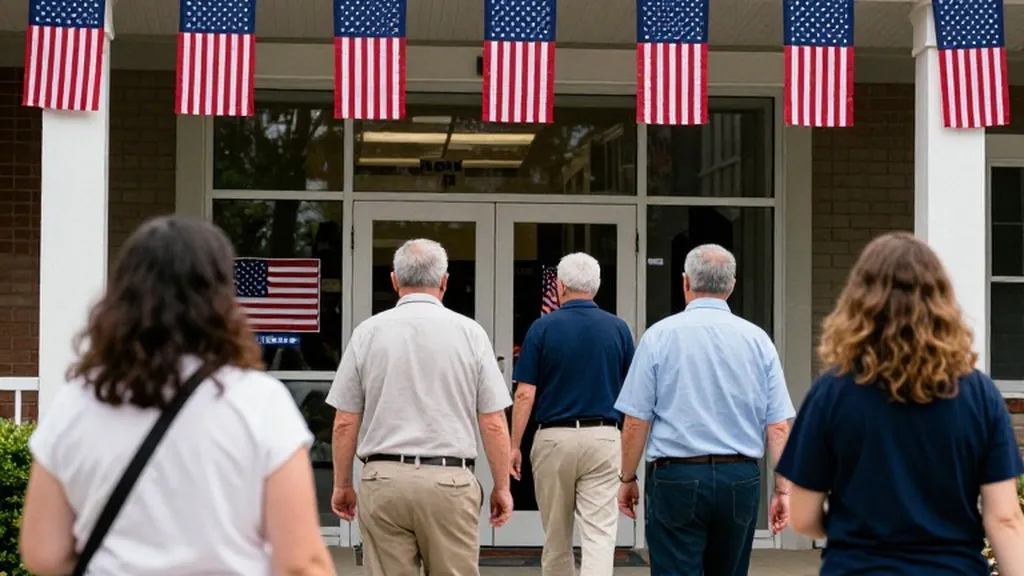
The United States is currently in the midst of its midterm elections, a critical moment that will determine which party controls Congress for the final two years of President Donald Trump's second term. The Associated Press describes today's vote as a referendum on the president's performance, noting that many voters are struggling with high prices and expressing anger over an unpopular war with Iran. According to AP-NORC polling, thirty-five percent of U.S. adults approve of Trump's job performance, while about seven in ten say the country is heading in the wrong direction. This context sets the stage for a day of high stakes and logistical complexity for millions of Americans heading to the polls.
Voters should verify their specific polling location by visiting vote.gov or checking with their state election office. Ballotpedia provides a detailed list of polling hours for every state, and these times vary significantly. For example, Alabama polls open at 7 a.m. and close at 7 p.m., while Alaska closes at 8 p.m. California and Colorado, which rely heavily on mail ballots, see polls open at 7 a.m. and close at 8 p.m. and 7 p.m. respectively. In New York, polls remain open from 6 a.m. to 9 p.m., offering one of the longer windows for in-person voting. In contrast, Kentucky and Indiana close as early as 6 p.m., requiring voters in those states to arrive earlier in the day.
Identification rules are another critical factor that varies by state, and voters are advised to check their specific state's requirements before leaving home. While some states require a photo ID, others may accept non-photo identification or allow voters to sign an affidavit. The Associated Press notes that the Trump administration has continued to make claims about voting fraud, including allegations that noncitizens vote in large numbers. However, a federal judge temporarily barred the administration on Monday from carrying out a plan intended to prevent noncitizen voting. Critics of the plan argued that it risked disenfranchising eligible voters and infringed on the authority of states to manage their own elections.
The U.S. Postal Service has taken significant steps to ensure that mail ballots are counted on time. Reuters reports that the agency added extra hours, staff, and special lines to handle the volume of incoming mail. This is particularly important in states like Oregon, Utah, and Washington, where voting is conducted largely by mail. In these states, the deadline for mail ballots to be postmarked or received often extends beyond Election Day, but the physical processing of these envelopes must be completed quickly to allow for accurate tallies. The Postal Service's additional resources are designed to mitigate delays that could otherwise impact the final count.
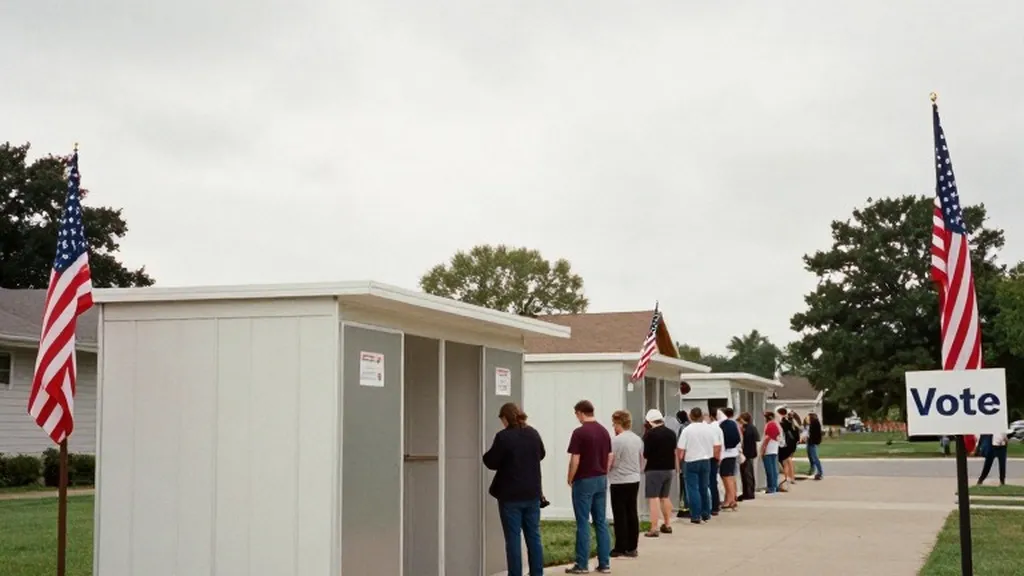
Voters who are already in line when polls close are entitled to cast their ballot, a rule that applies across the country. This provision is crucial in states with high turnout, where lines can extend well past the closing time. For instance, in Florida, where polls open at 7 a.m. and close at 7 p.m., voters in both Eastern and Central time zones should monitor the specific local time for their county. In states like New Hampshire, polling hours vary by town, with polls opening by 11 a.m. and closing no earlier than 7 p.m. Voters in these areas should confirm their local schedule to ensure they do not arrive too late.
The election also carries significant implications for the U.S. Senate, where thirty-five seats are up for grabs. Ballotpedia identifies thirteen competitive Senate races, including contests in Alaska, Florida, and Georgia. In Georgia, Senator Jon Ossoff is facing off against Republican Representative Mike Collins. The Associated Press notes that economic strain and tariffs have made states like Maine competitive, where Senator Susan Collins is running against Troy Jackson. These races are closely watched because a net gain of four seats would give Democrats a majority, while Republicans can afford to lose only two to maintain their current control.
Governor races are also pivotal, with thirty-six governorships on the ballot. Republicans currently hold twenty-six of these offices, and Democrats hold twenty-four. The Associated Press highlights several competitive governor races in states such as Texas, Florida, and Iowa. In Georgia, Republican health care executive Rick Jackson is competing against former Atlanta Mayor Keisha Lance Bottoms. The outcome of these races will determine whether Democrats can hold a nationwide majority of governorships for the first time in two decades, a goal that has eluded the party since 2010.
The financial stakes of this election are historic. Reuters reports that the 2026 elections are likely to be the most expensive in history, with Republican committees outspending their Democratic counterparts. This spending surge is partly driven by Trump-affiliated groups and significant contributions from Elon Musk. At the candidate level, however, Democrats have outraised their opponents. The Associated Press notes that eighty-eight percent of Republican general election television ad spending was directed toward states and districts that Trump won in 2024, indicating a strategic focus on consolidating support in areas where the president has a strong base.
Voters are also keeping an eye on the administration's legal moves. The Justice Department has threatened to prosecute local election officials, a move that Democrats fear could lead to interference and intimidation. In response, a judge ordered the administration to stop demanding that California election officials segregate ballots cast by people on lists of suspected noncitizens. This legal battle adds another layer of complexity to the election day process, as both parties prepare for potential challenges to the results. The Associated Press notes that if Democrats win even one chamber of Congress, investigations and possible impeachment proceedings could become likely, further raising the stakes for today's vote.