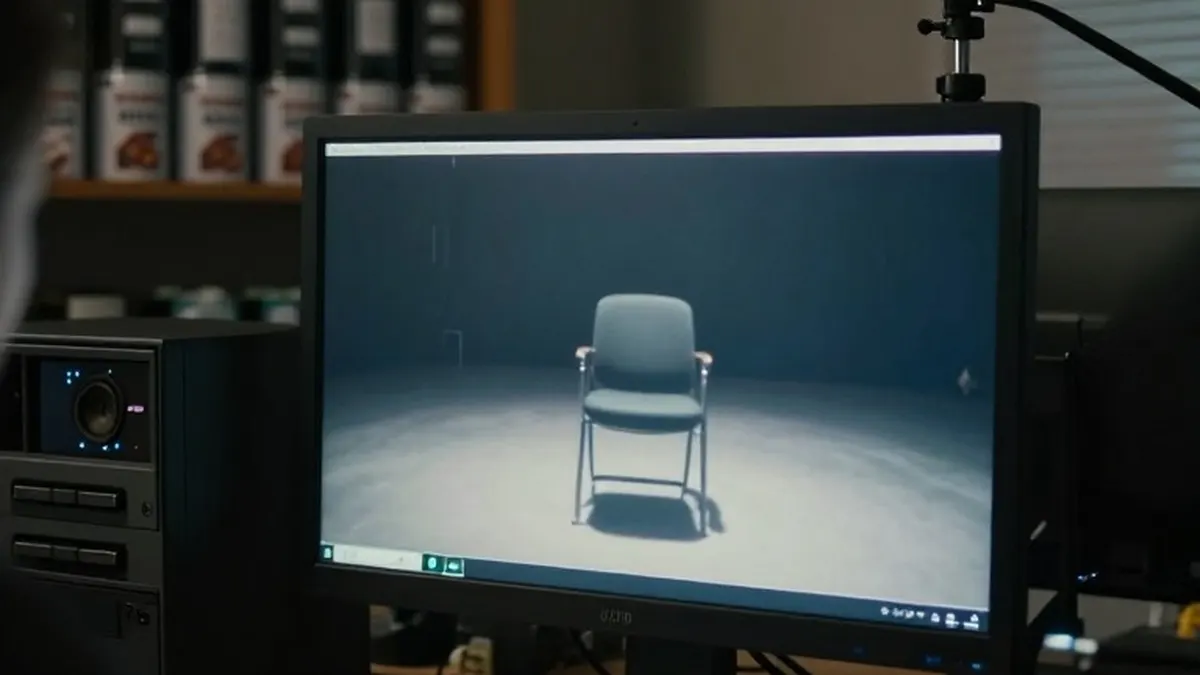
Errol Morris, the Oscar-winning director of "The Thin Blue Line" and "The Fog of War," has revealed that he filmed a two-hour Interrotron interview with Elizabeth Holmes that has never been made public. He told Variety exclusively that he is now seriously considering releasing it, as interest in the Theranos founder surges again.
The 78-year-old said the footage was shot when Holmes was at the peak of her fame. By his account, almost no one has seen it apart from himself and the people in his office. "I am sincerely interested in putting that out as an unedited film," he said, adding that it offers a comparison of "Elizabeth before and Elizabeth after."
The renewed attention comes from "You Can See Everything," the Nathan Fielder and Lance Oppenheim documentary about Holmes. Morris said he has not been able to watch it. He has contacted the appropriate parties but has been turned down so far, and he asked the interviewer for a screener.
What he did watch, for the first time, was Alex Gibney's 2019 film "The Inventor: Out for Blood in Silicon Valley." Morris was surprised to find himself in it. He noted that the film opens and closes with his interview of Holmes, and said he does not know how Gibney obtained the outtakes from his work.
Morris was hired in 2015 to direct a series of Theranos advertisements, which critics have said helped build Holmes's mystique. He bristled at the word "promos," saying he is a commercial director who has made probably 1,000 spots. According to Gibney's film, Holmes and her chief creative officer, Patrick O'Neill, chose him because of the Apple commercials he made for Steve Jobs. Morris rejected the accusation that he knowingly represented a fraud, saying he joins many others who were on the Theranos board at the time. When he worked with her, he said, Holmes was on the cover of Forbes and other magazines, and he had no reason to think she was a fraud. That changed as time went on.
He said he tried for years to make a documentary about her, but she was under indictment and heavy litigation was underway. He held back the interview because the company collapsed and she was prosecuted, and because he had moved on. Now, he said, he feels strongly that it is an interesting document of what she was like when everything was going her way.
Morris said his main interest is self-deception rather than a simple verdict of guilt or innocence. He was recently interviewed by John Carreyrou for a New York Times article and said the reporter understandably sees knowing fraud and a deserved prison term. Morris acknowledged that Holmes lied "many, many times," and that medical results make her case different from other Silicon Valley exaggeration because people's lives are affected. But he wonders whether she saw her statements as lies.
He also addressed his past comparison of Holmes to Joan of Arc, which he said was about self-deception and not punishment. Morris does not believe God spoke to Joan, he said, but she believed it and went to the stake because of it.
Asked for his takeaway after rewatching the Holmes interview, Morris answered plainly: "That she was a true believer."