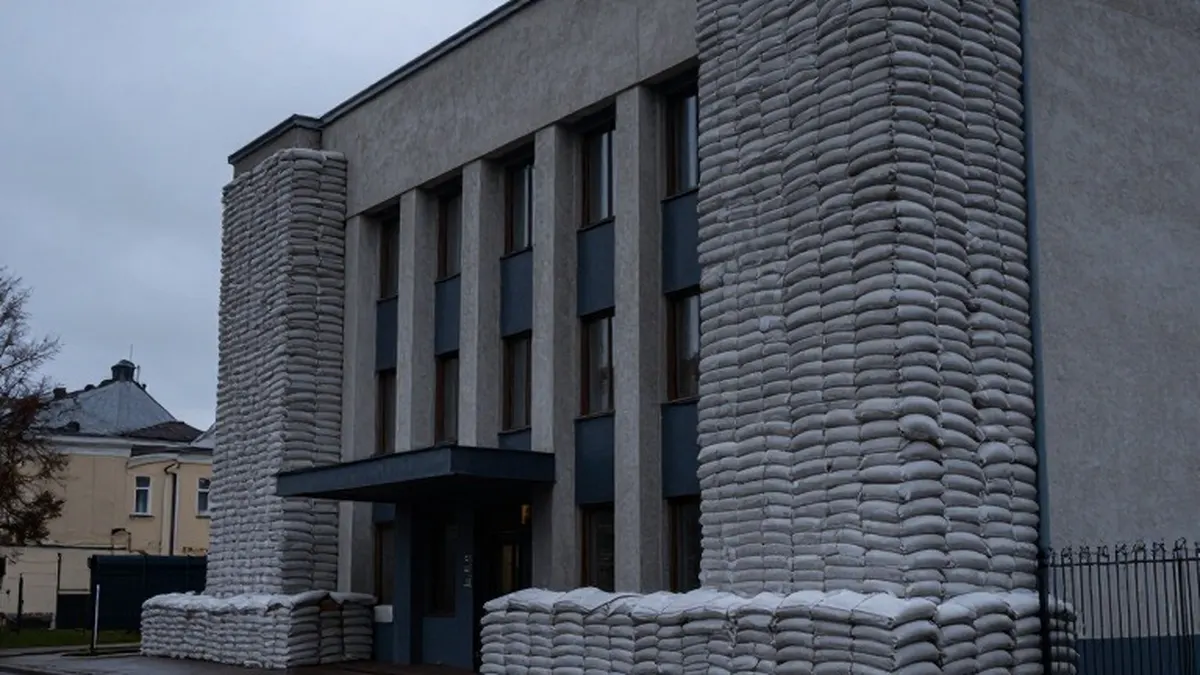
Staff at the EU Delegation in Kyiv are carrying on with their work even as Russia steps up its attacks on the capital, the European Union's ambassador to Ukraine, Katarína Mathernová, has said. She described the mission's daily reality in an interview with The Guardian, as reported by European Pravda.
The mission is shoring up its outer walls with sandbags, Mathernová said. Inside the building, corridors have been fitted with soft seating so employees have somewhere to sit out air raids, while folding beds and extra showers have been made available for staff as the attacks on the city intensify.
Asked about the recent wave of strikes, which has brought earlier power cuts and left her own building without water, Mathernová said she sees the escalation as a deliberate signal from Moscow. "I think they are warning shots. They [the Russians] are more and more brazen and callous… The level of attacks are much higher than last year, and the power cuts earlier. We've had no water in our building. The soft underbelly of a modern city is its sewage system."
Mathernová also gave a glimpse of her own routine under fire: when Russian strikes hit, she beds down on a mattress in the bathroom of her hotel room.
Beyond the immediate danger to the capital, Mathernová said the strategic goal of Kremlin leader Vladimir Putin is to destroy the European Union. The recent threats directed at embassies in Kyiv, she said, are meant to push some diplomats from the Global South into leaving Ukraine.
Most ambassadors say their continued presence in the capital sends a powerful signal of solidarity with Ukraine's embattled leadership. Every EU embassy has previously announced it will remain in Kyiv, and the delegation's arrangements reflect a determination to keep working in place.
Mathernová has previously recounted that numerous friends and colleagues of hers, both Ukrainians and foreigners working for the EU delegation, are living in cold apartments, with some spending nights in unheated shelters. The accounts point to the toll the intensified attacks are taking on daily life in the capital.
In a separate account, Boris Ruge, the German ambassador to Ukraine, said Moscow had issued threats in advance of German Chancellor Friedrich Merz's visit to Kyiv.