Simon Stiell, the executive secretary of the United Nations Framework Convention on Climate Change, has called on negotiators at the COP31 summit in Turkey to avoid tactical delays. He described the process of reaching an agreement as tough but vital work, emphasizing that collective success requires compromise from every participating party. As the summit enters its second week, Stiell urged delegates to move quickly toward the most difficult issues to prevent a stalling of progress on stopping global warming.
Delegates from more than 200 nations are currently gathered in the Mediterranean city of Antalya. Their primary objective is to prevent the planet’s temperature from rising by two degrees Celsius, which is equivalent to 3.6 degrees Fahrenheit. The gathering takes place against a backdrop of significant civil unrest, with thousands of environmental activists and civil society members from around the globe protesting in the downtown area to highlight the consequences of the climate crisis.
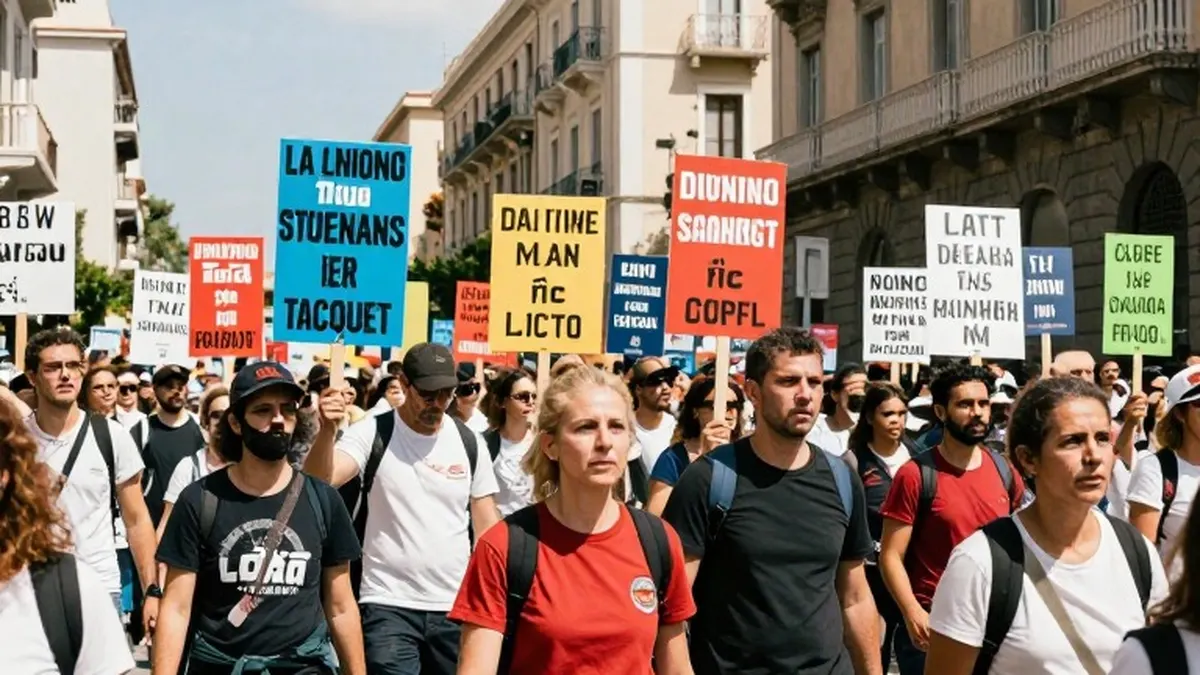
On Saturday, tens of thousands of protesters marched through the streets of Antalya, demanding greater attention to climate protection and human rights. Organizers noted that many participants were dismayed by the perceived lack of progress and the way the climate crisis is being sidelined in global discussions. The Turkish authorities permitted the large rally to proceed, a notable decision in a country that frequently restricts large public gatherings.
Zaki Mamdoo, an environmental activist from South Africa, expressed frustration to DW regarding the global agenda. He stated that the pursuit of profit at all costs continues to govern the trajectory of the world, creating a strong need for activists to push back. Luisa Nebauer, the main organizer of Germany's Fridays for Future movement, also voiced her concerns. She lamented the absence of German Chancellor Friedrich Merz and several other European leaders from the conference, arguing that the planet is destabilizing by the hour.
Nebauer emphasized the urgency of the situation, telling DW that the world will not have a chance to solve its crises unless leaders show up. Alongside the main march, a parallel People's Climate Summit is being held in Antalya this weekend. This event involves hundreds of domestic and international civil society groups, providing a platform for broader discussion outside the formal negotiation tracks.
The climate agenda has faced challenges as governments prioritize other immediate threats such as inflation, wars, deindustrialization, and debt. Consequently, many nations are watering down their commitments to the clean energy transition and the billions of dollars required to help developing nations adapt. The United States has snubbed the talks for the second consecutive year under President Donald Trump, who has previously called climate change a hoax and promoted the continued use of fossil fuels.
Negotiators also face pressure from major fossil fuel-producing nations to avoid setting stricter targets for a faster phaseout of oil and gas. This dynamic has led to growing frustration among climate advocates in Antalya, who view delaying tactics as a barrier to an ambitious deal. The summit is currently focused on unlocking finance and investment, reducing the use of super-pollutants and methane, and ensuring global food security.
Host nation Turkey is pushing a plan to expand global electrification. However, some environmental groups have expressed disappointment that the proposal does not explicitly push for increased electricity use from renewable sources. A UN report released last month warned that the world is set to exceed the 1.5 degrees Celsius warming threshold within a few years. This limit, established at COP21 in 2015, is widely considered by scientists to be the point beyond which extreme climate effects become increasingly likely.
According to Chris Bowen, the President of Negotiations for COP31 from Australia, a first draft of the deal text is expected to emerge next week. This development will be a critical milestone as delegates work to finalize the language that will guide future climate action and financial support for vulnerable nations.