The Philippines has secured the top prize in the inaugural Eurovision Song Contest Asia, a landmark event hosted in Bangkok that brought together eleven competing nations. The victory marks the culmination of decades of discussion regarding the expansion of the iconic music competition to the Asian continent. Nineteen-year-old singer Carmelle, the youngest participant in the lineup, took the crown with her empowering anthem Sobra-Sobra, which featured a distinctive rap section.
Carmelle accumulated a total of 211 points to claim first place. Her score was composed of 118 points from the public vote and 93 points from the jury. She finished ahead of Thailand’s MANG x DAOU, who placed second with 170 points. The voting mechanism mirrored that of the traditional European contest, allocating 50% of the total score to the public and 50% to national juries, with additional points derived from a global vote.
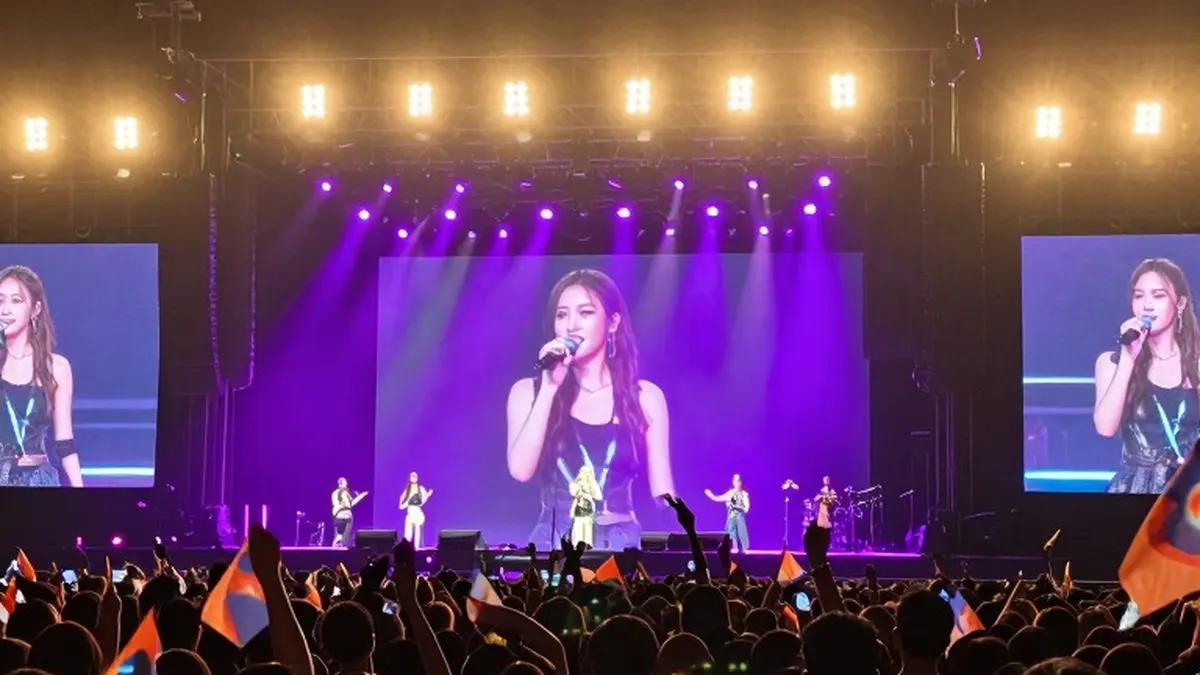
The atmosphere at the One Bangkok Arena was charged with excitement as the crowd rallied behind the contestants. Despite strong performances from several other countries, Carmelle emerged as the clear favorite with both the judges and the audience. Thailand’s MANG x DAOU delivered an emotive duet titled Aroma, which received a particularly enthusiastic response from the home crowd. Other memorable performances included Beatmosphere from Bangladesh, who utilized beatboxing to replicate drum and bass sounds without a traditional backing track, and Thinla from Laos, who performed Bae while wearing traditional hilltribe attire.
A technical glitch during the broadcast caused the music video for the Laotian entry to play unintentionally a second time. This error meant that Bae was the final performance the audience heard before the voting began. The final leaderboard saw Vietnam finish third with 164 points, followed by Malaysia in fourth with 152 points. Laos ranked fifth with 139 points, while Bhutan placed sixth with 126 points. The Republic of Korea took seventh with 113 points, Mongolia eighth with 94 points, Nepal ninth with 69 points, Cambodia tenth with 61 points, and Bangladesh finished last with 35 points.
The broadcast also featured appearances by notable international artists. Dara, the winner of the 2026 Eurovision Song Contest in Europe, performed her winning track Bangaranga alongside a new song titled Bad Idea. Thai celebrity Jeff Satur also joined the stage, delivering a performance of his song Black Tie that highlighted his vocal range. These guest appearances added to the prestige of the inaugural event and drew attention from viewers across different regions.
International fans traveled to Thailand to witness the historic moment. Zelie Pereira, a fan from Scotland, expressed her delight with the outcome of the vote. She was joined by Michael Peters and Scarlett Massie, both from England, who praised the high standard of the performances. Massie described the event as amazing, while Peters highlighted the quality of the dance, sets, costumes, and singing. The group confidently suggested that the competition should be known as Asia Vision for future editions.
While the enthusiasm for the contest is evident among dedicated fans, questions remain about the long-term viability of the event. The arena was crowded but not completely full, and the audience began to disperse shortly after Carmelle lifted the trophy. It is currently unclear how committed regional broadcasters are to sustaining the competition and expanding the participant list beyond the initial eleven countries. The success of this first edition will be a key indicator for the future of Eurovision in Asia.