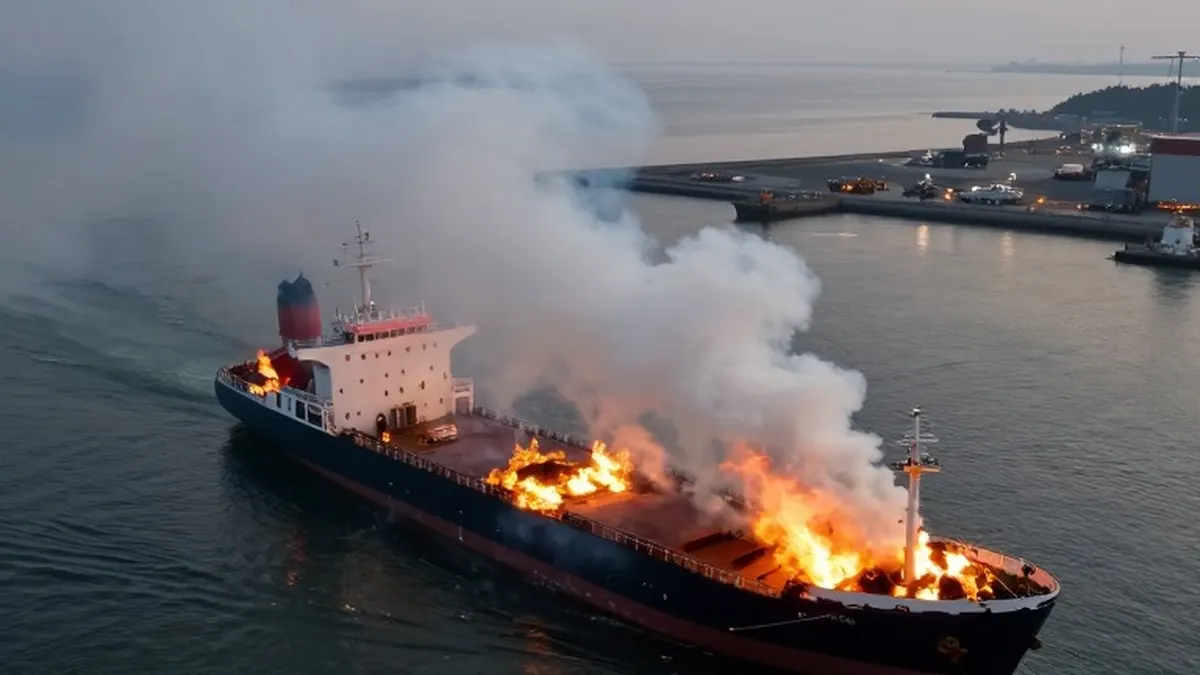
A Russian ship docked at the Benghazi naval base port experienced a significant explosion following a suspected drone attack, according to statements from Libya's eastern government. The incident occurred at dawn on Sunday, November 22, 2026, while the vessel was stopped at the facility to refuel and resupply during its return journey to Russia, as reported by Libyan state media.
The Government of National Stability, which is based in the east, confirmed that the Russian ship was utilizing the Benghazi port under the terms of an existing maritime agreement. Authorities stated that the site has been secured and that no casualties were reported in the immediate aftermath of the blast. Moscow has not yet issued a public comment regarding the specific incident.
Visual evidence supports the official accounts of the damage. Satellite imagery from Planet Labs PBC, reviewed by BBC Verify, captured a boat on fire at the Benghazi port at 05:47 GMT. A separate image taken several hours later appears to show the same vessel partially submerged in the water. Additionally, videos posted on social media and geolocated by BBC Verify depict the ship engulfed in flames and thick smoke while the sky remained dark.
The eastern government said that an investigation into Sunday's incident is currently underway. Local authorities are coordinating with their Russian counterparts to determine the exact source of the suspected attack and to identify the party responsible. The collaborative effort aims to clarify the circumstances surrounding the strike on the commercial or naval asset.
In a broader statement, the Government of National Stability emphasized that Libya is not a party to the ongoing war between Russia and Ukraine, nor is it involved in any other conflicts beyond its borders. This clarification appears intended to define the diplomatic and military context of the incident, distinguishing the local situation from wider geopolitical tensions.
Separate from the events in Benghazi, Libya's internationally recognized government in Tripoli, the Government of National Unity, issued a warning against hosting foreign forces. In a statement published by state media, the GNU cautioned against allowing external military entities to use Libyan facilities. The government expressed concern that such activities could increase risks associated with involving ports and civilian infrastructure in operations related to external conflicts.
The Government of National Unity noted that these risks create serious fears regarding the safety of national assets and the lives of citizens. The statement highlighted the potential threat to civilian populations and critical infrastructure when foreign military operations intersect with local facilities. This warning reflects the ongoing tension between the two rival Libyan governments regarding the role of foreign powers within the country.
Libya has been fractured by violence and instability since the overthrow of leader Muammar Gaddafi in 2011. This period of turmoil led to the establishment of opposing governments, with the eastern and western administrations often holding conflicting positions on national and international matters. The current incident in Benghazi adds a new layer to these complex internal and external dynamics.
Geographically, the port of Benghazi is located more than 2,000 kilometers, or approximately 1,243 miles, away from the Russian capital of Moscow. The distance underscores the reach of the maritime routes used by the vessel and the logistical implications of the stopover in Libya. The proximity of the port to other regional activities may also be a factor in the ongoing investigation by both Libyan and Russian authorities.