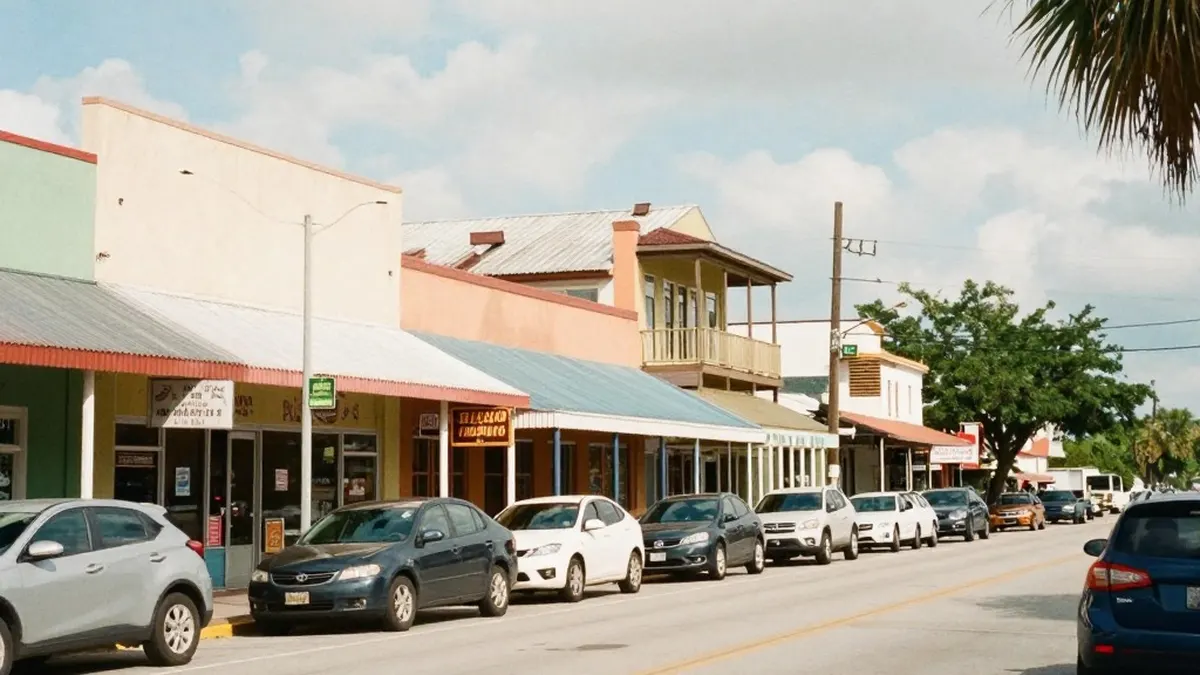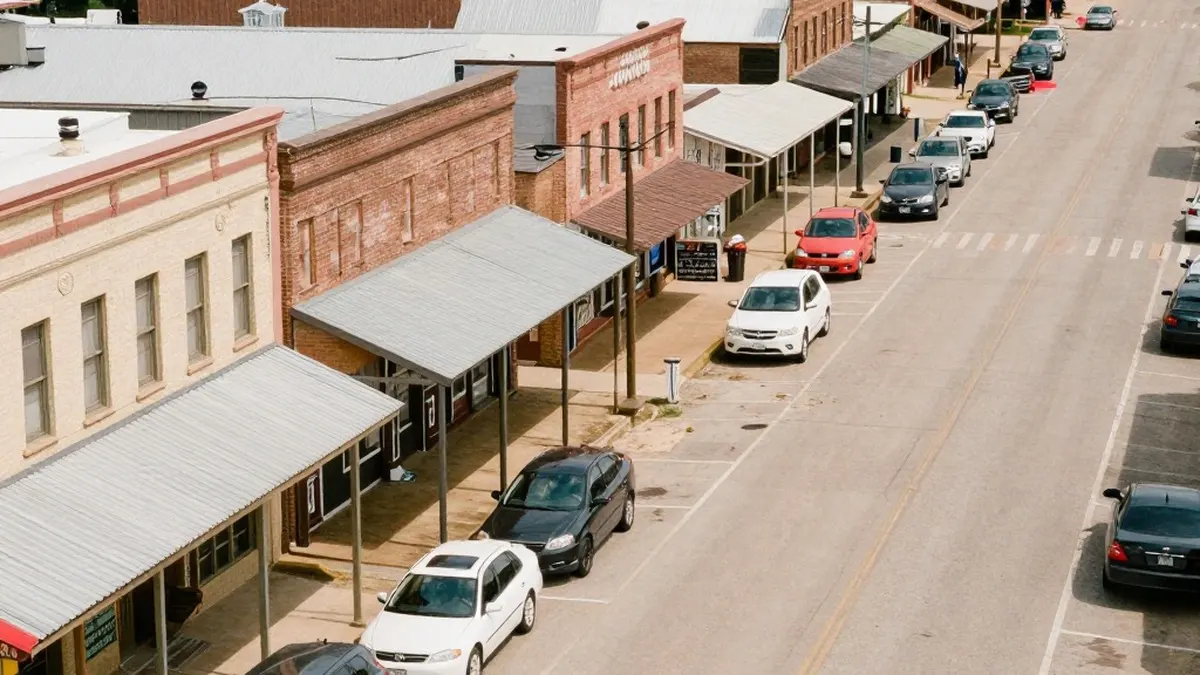
For playwright Luis Alfaro, the son of farmworkers with deep family roots in Delano, California's Central Valley has always been a place of contradictions. Its soil is remarkably fertile, yet the land can be brutal to those who labor in it, a tension he has returned to again and again in his work.
That tension is personal. Alfaro's grandfather, who built a local Pentecostal church in Delano, was killed alongside two of his sons when a train struck them in the region's notorious, blinding Tule fog. "There's something so profoundly powerful and hurtful about the land," Alfaro said, "and then there is the juxtaposition that it feeds us and nurtures us."
Alfaro, a Chicano playwright who received a MacArthur Fellowship genius grant in 1997, revisits the valley in his newest play, Speaking in Tongues, which premiered Oct. 17 with the Latino Theater Company at the Los Angeles Theatre Center. Blending drama with comic banter, the play follows a crisis of faith in a town shaken by poverty, immigration enforcement and a shifting climate.
The story unfolds at a church beside a cornfield in Earlimart, a small Tulare County community, where a pastor has gone missing and left behind a gifted wife, played by Evelina Fernandez, who secretly wrote his sermons. The play also depicts immigration raids that deeply unsettle the agricultural community, while some younger family members depart for a secular life in Los Angeles.
The title carries several meanings, but at its core it points to the Pentecostal phenomenon of spontaneous speech, which Alfaro calls "elevated language that's created by spirit, meaning it's built in absolute faith." He noted that in the conservative Pentecostal tradition, women are barred from preaching, so the play centers on a woman who possesses the ancient gift yet is forbidden to practice it.
Alfaro said climate pressures weigh on the region as well, noting the valley "goes from drought to flooding to drought to flooding," with consequences for agriculture across the nation and much of the world. The play's inspirations also include private grief: the recent deaths of his parents and his brother's death from cancer. When his father was dying, he asked to be buried in the Indigenous Nahua tradition, without a casket, and the family honored his return to an ancestral path with funeral rites performed largely in the Nahuatl language.
"My dad let go of his Catholicism and his Pentecostalism and all of that organized religion, and he was really like an Indio," Alfaro said. "He really went back to his Indigenous self, and I think about that a lot."
Alfaro's parents moved to Los Angeles in the early 1960s, and he was raised in the dense Pico-Union neighborhood, though he spent many summers in Delano. Speaking in Tongues is his fourth play set in the area. "There's a notion in the play that when someone thinks about their past, they're not thinking about the 1970s, they're thinking about 939 years ago," he said, "and the 22 generations that it took to get me here today."
The production is directed by Jose Luis Valenzuela, artistic director of the Latino Theater Company, which commissioned the work. It is the ninth of 11 plays developed through the company's Circle of Imaginistas program, part of a broader effort to explore culture, immigration, displacement and political fear. Another play in the series, Yamel Cucuy, premiered earlier in October and mixed live drama, puppetry, Indigenous percussion, Mexican folklore and modern horror to tell the bilingual story of a young woman hunted by immigration agents.
Beyond questions of faith, the play draws on contemporary images of aggressive immigration enforcement and its toll on families. Alfaro, an associate professor of dramatic writing at the USC School of Dramatic Arts, said political engagement has long defined his art. "So much of my early art life was about politics," he said. "Every choice I make, and everything that I do, is built around how I make my art and how I live my art."