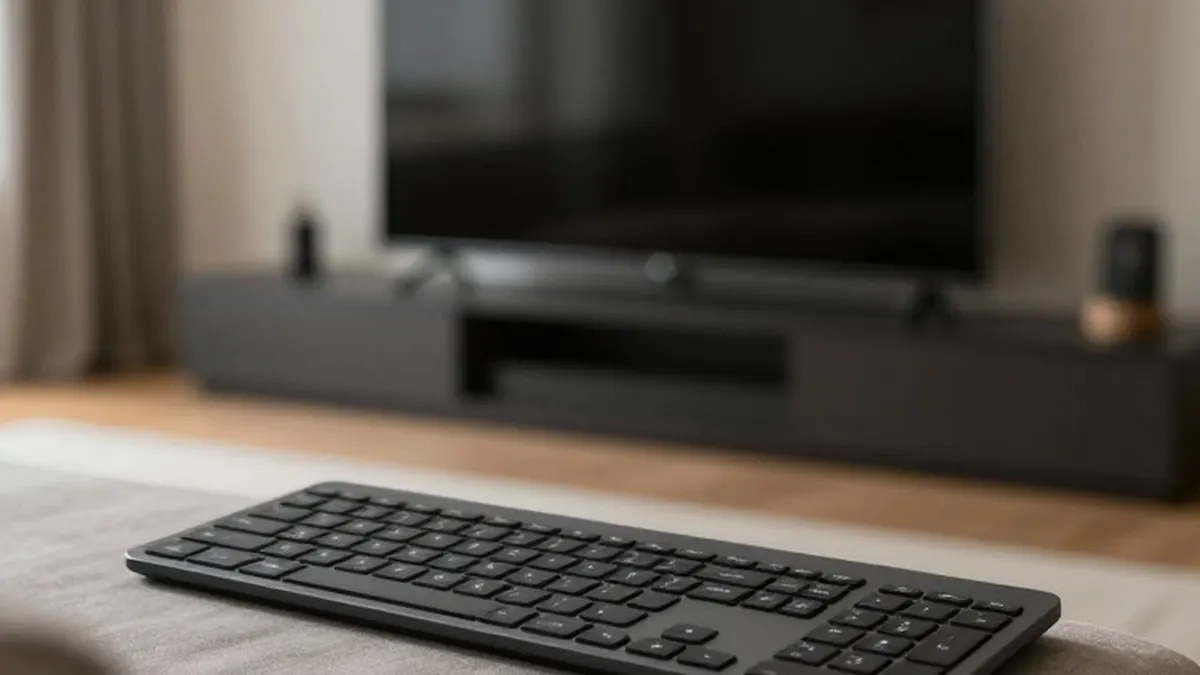
Framework is now taking preorders for its Wireless Touchpad Keyboard, an all-in-one couch keyboard the company first announced earlier this year as a better alternative to Logitech's K400.
The keyboard went up for preorder on November 17 at a price of $99, with Framework requiring a $50 deposit that is fully refundable. That makes it close to three times the cost of the $35 K400, though the company is betting that its upgrades will justify the premium.
According to The Verge's Sean Hollister, who went hands-on with the keyboard in April, Framework has delivered on its goal of beating Logitech's couch keyboarding experience. The catch, it turns out, is simply that buyers will pay more for it.
Rather than designing the device from scratch, Framework reused hardware it already builds. The keyboard uses the same keyboard module found in its Laptop 12, paired with a precision 120Hz touchpad and controller that appears across the company's computer lineup.
Connectivity is handled primarily over Bluetooth, which Framework describes as the easiest way to pair with PCs running Windows, Linux, or macOS. The keyboard also works with mobile devices, game consoles, and streaming boxes.
Users can hop between as many as four wirelessly connected devices with a single button press, and one of those connections can run through an included USB receiver. Anyone who wants a more responsive link can plug the keyboard directly into a device using a USB-C cable.
Battery life is one of the more striking claims. Framework says the replaceable 1,200mAh battery will keep the keyboard running for well over a year when used sporadically from the couch. Heavier users who type on it for hours each day at a desk should expect closer to over a month between charges.
For tinkerers, the keyboard runs open source firmware based on a fork of ZMK, which allows for customization and key remapping. That fits Framework's broader focus on repairable and user-configurable hardware.
Whether shoppers decide the extra cost is worth it over Logitech's budget option will likely come down to how much they value the higher-quality components, multi-device switching, and the ability to swap the battery when it eventually wears out.