French Foreign Minister Jean-Noel Barrot accused the Islamic Revolutionary Guard Corps on Monday of orchestrating a recent cyberattack that targeted commercial refrigeration units in French supermarkets. The minister stated that the incident would carry significant consequences for the country involved.
In a parallel legal move, the Paris prosecutor's office announced that it had requested international arrest warrants. These warrants target the leader of Shahid Kaveh, an offensive cyber unit linked to the IRGC, along with two of his deputies.
Should these accusations be validated, the series of hacks would rank among the most disruptive cyber operations of the ongoing conflict with Iran. The war began in February and has been characterized by sporadic reports of digital disruption. Previous incidents cited in the context include interference with the Los Angeles transit system in March, attacks on US water treatment plants in July, and disruptions affecting ships bound for the United States in August.
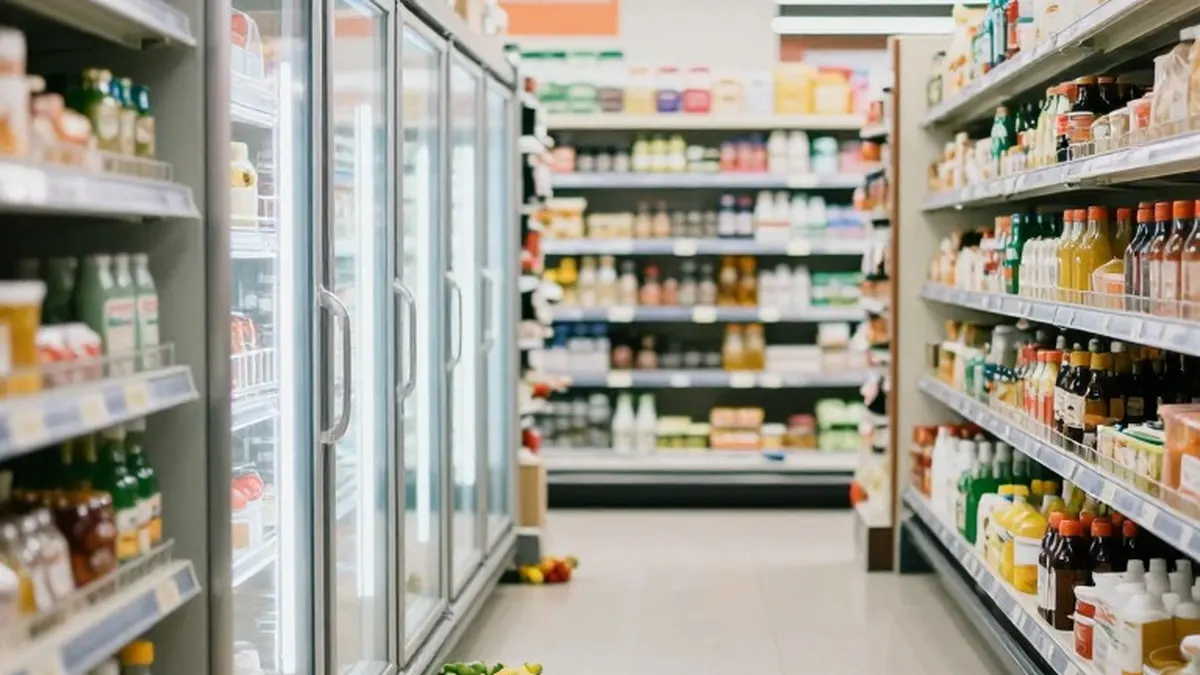
The specific cyberattack in question occurred on October 11. It involved the override of temperature controls in commercial fridges located in hundreds of establishments. Cybersecurity experts previously told Reuters that the breach appeared relatively simple to execute. The manufacturer of the affected units noted that many were obsolete or running outdated firmware, which likely facilitated the intrusion by hackers.
The attack caused the internal temperature of refrigerators and freezers in hundreds of French supermarkets to rise to as high as 50 degrees Celsius overnight. This spike in heat led to food spoilage and started fires in multiple locations. The Paris prosecutor's office described the event as a large-scale attack affecting connected refrigerators at several major food retailers across France.
A source within the office of Prime Minister Sebastien Lecornu indicated that the government has instructed France's National Cybersecurity Agency, known as ANSSI, to conduct a full investigation into the matter. Neither the French foreign ministry nor the Paris prosecutor's office responded immediately to requests for further comment. Additionally, Iran's mission to the United Nations did not return messages seeking clarification, consistent with its routine practice of denying malicious cyber operations.
The impact of the cyber intrusion extended beyond French borders later in November. On November 2, a similar attack struck supermarket groups Ahold Delhaize and Colruyt in Belgium and Luxembourg. It also affected Swedish grocers ICA and Coop, as well as at least one store of the furniture and food retailer IKEA.
Engla Ingwall, a sales manager at an ICA franchise in Stockholm, described the damage during a Reuters visit on Monday. She noted that the attack occurred at 2 a.m., but the issue was not noticed for several hours. Ingwall stated that everything was destroyed and that all freezers had reached 50 degrees Celsius due to the cyberattack.
A spokesperson for ICA, a privately held company, confirmed that the firm was aware of the incident. The statement noted that a limited number of stores were affected overnight, with the problem specifically impacting their refrigeration and freezer systems.