Frank Miller has welcomed a slowdown in comic book adaptations, arguing that the attraction of film and television deals had put the identity of comics at risk. Speaking to Variety during his return to Lucca Comics and Games this week, the writer and screenwriter called for the medium to reassert its purpose as a literary form.
Miller, whose work includes “300,” “Sin City” and “Batman: The Dark Knight Returns,” appeared at the event as the latter marked its 40th anniversary. He also introduced “Frank Miller: American Genius,” a documentary by Silenn Thomas examining his influence on popular culture. His visit included discussions of his creative process, political outlook and forthcoming collaborations.
Asked whether comic book creators had become too focused on securing movie and television deals, Miller said the appeal went beyond money to include fame and recognition. He described those incentives as overwhelming, saying comics were “really in danger of losing their souls in the process.” He also linked the dominance of superhero adaptations to advances in screen technology, which allowed filmmakers to reproduce spectacular imagery that had once distinguished comics from other media.
For Miller, the central concern of his own work remains the nature of heroism. He described his career as an ongoing effort to define and reconsider the hero, whether through the physically ugly Marv in “Sin City” or the suffering of Hartigan in “Sin City: That Yellow Bastard.” Moving away from the idea that a hero must speak for society, he said, opens the way to exploring the human spirit.
Miller also said contemporary politics offered abundant material for dark satire, even as reality made some of his earlier fictional exaggerations harder to surpass. He compared the United States to Rome, arguing that its reach, wealth and power had left it without a center. He framed that assessment within a broader view of an aging international order and political upheaval beyond America.
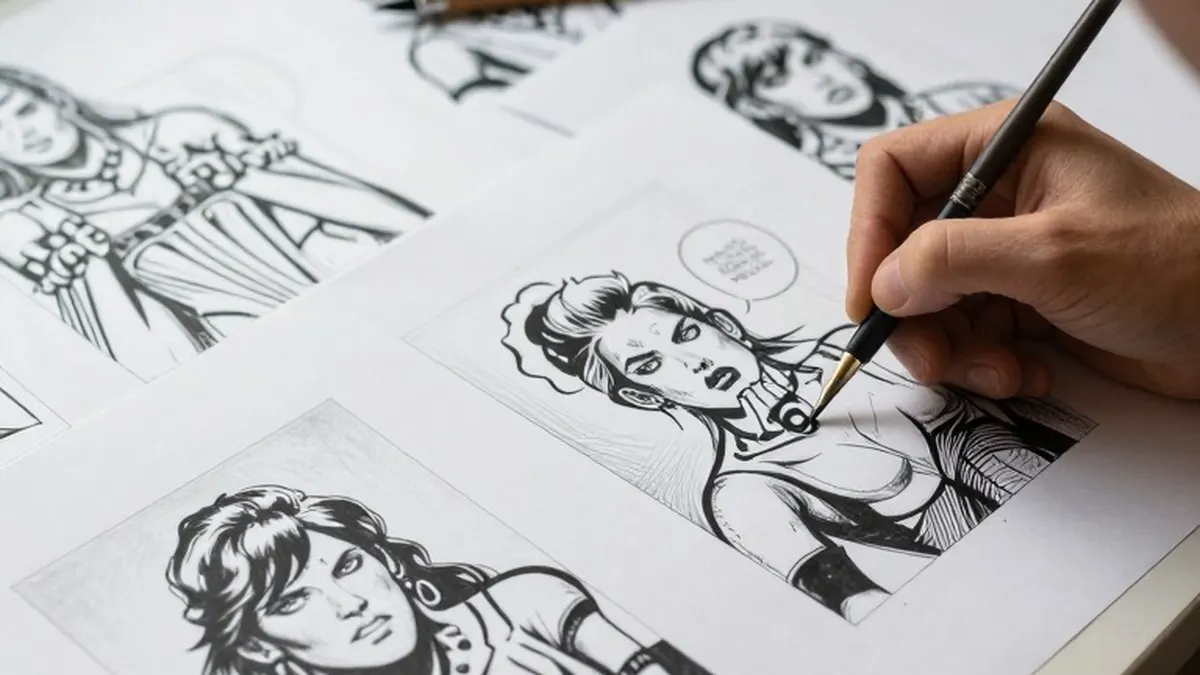
Discussing his working habits, Miller said he sometimes draws with street noise in the background or listens to world news on NPR. Occupying the verbal part of his mind helps him approach the drawing more freely, he explained. He makes precise illustrative decisions on tracing paper before executing the finished drawing in a more relaxed state. Plotting and writing dialogue, by contrast, require his attention to language.
Miller said he was working with Italian artist Milo Manara on a “Sin City” story, making an exception to his practice of drawing those stories himself. During his stay in Lucca, he also announced another collaboration with Japanese artist Peach Momoko, with whom he previously worked on Marvel’s “Tears of the Spider Queen.”