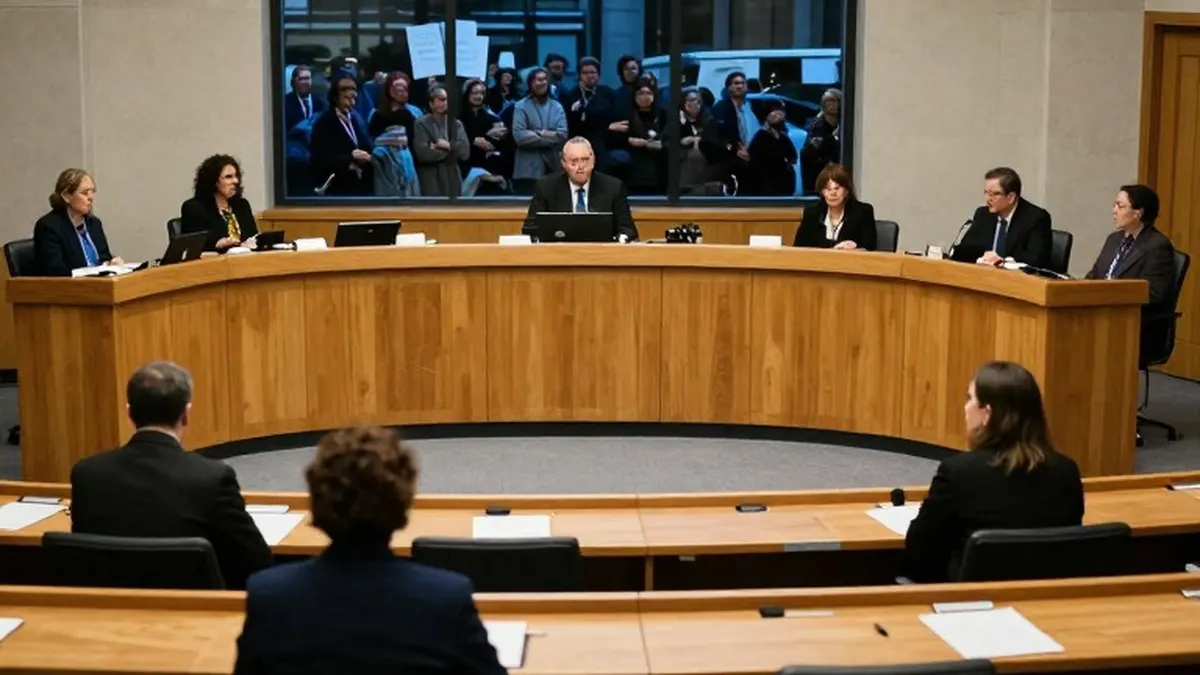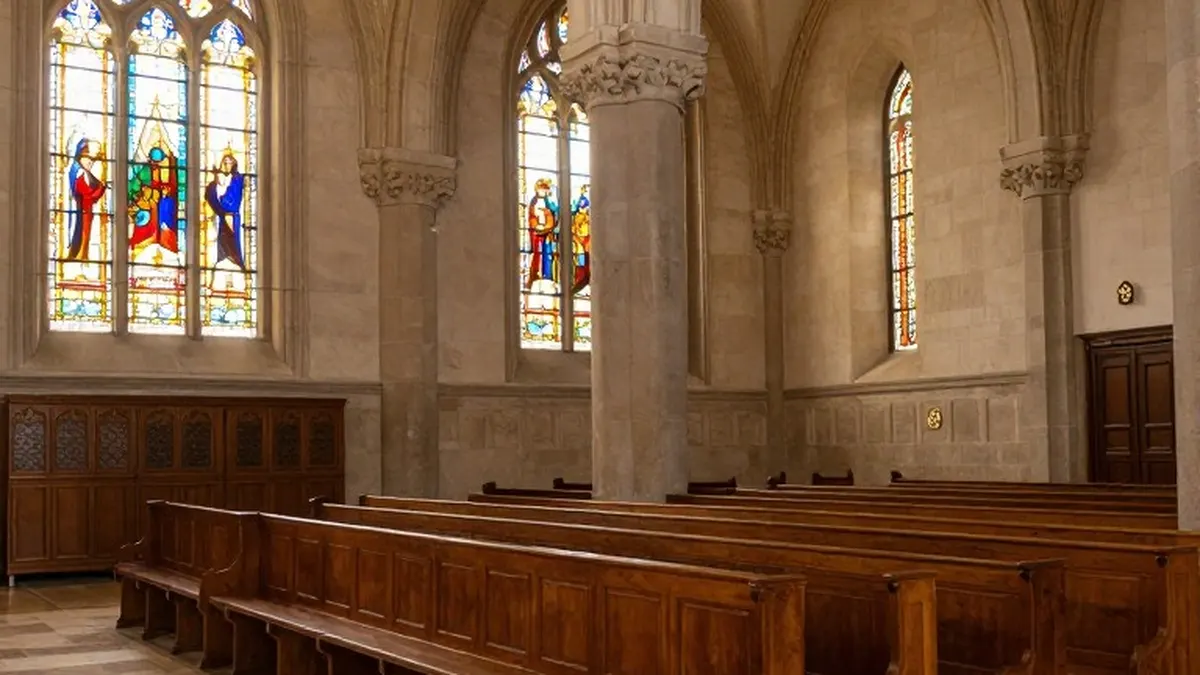
Approximately 150 senior police leaders gathered inside the Neue Synagogue in Berlin on November 5, 2026, to commemorate the 88th anniversary of Kristallnacht. The event marked a significant shift in how law enforcement honors the night of broken glass, as officials stood inside the historic building in solidarity with Jewish congregants rather than guarding it from the outside. Representatives from the United States, Canada, Germany, and other European nations participated in the ceremony, which was organized by the Rutgers University Miller Center on Policing, the German Police, the University of Center for Public Safety and Justice, and the International March of the Living.
The gathering is part of an international initiative titled Operationalizing Never Again: Not on Our Watch. This program aims to help police confront the painful history of their role during the Holocaust and apply those lessons to modern challenges. Paul Goldenberg, chairman of the international delegation, noted that antisemitism has evolved into targeted violence against a religious community. He emphasized that police must act decisively to protect those at risk, stating that never again must be a commitment reflected in every action, not just words remembered.
The Neue Synagogue holds a special place in this history. During the pogrom of 1938, police commander Wilhelm Krutzfeld defied Nazi orders to let fires burn, saving the building from destruction. Krutzfeld and his officers chased away attackers and extinguished the flames, preserving what was then Germany's largest synagogue. The German Police recently published a book detailing this courageous act, highlighting the importance of community policing and the personal connection between officers and the people they protect.
Holocaust survivor George Shefi, who was seven years old during Kristallnacht, shared his testimony at the event. He recalled sheltering in his family's apartment in Berlin's Schoeneberg district for three days. Shefi was later sent to England as part of the Kindertransport, a program that rescued approximately 10,000 children from Nazi-occupied countries. For the past two decades, he has shared his story with more than 12,000 students in Germany. He recently received the Federal Order of Merit for his dedication to Holocaust education.
Phyllis Heideman, president of the International March of the Living, described Shefi as a living embodiment of history. She noted that survivors view the current rise in antisemitism as a return to the dangerous atmosphere of prewar Germany. Heideman pointed to a recent vote by the city council of Heidenau to ban future installations of Stolpersteine, small brass memorial stones, on public walkways. The organization called this decision a grave warning sign and an act of erasure.
Jochen Kopelke, president of the European Federation of Police Unions, stressed the need to keep the memory of Kristallnacht alive to understand the long-term planning behind the Holocaust. He advised young officers to build relationships with the communities they serve, arguing that knowing the people you protect gives you the strength to defend them. Sven Huber, a representative of the German Police, shared his personal connection to Jewish life, which deepened after a trip to Israel in 1997. He created a memorial in Gorlitz to honor 147 Holocaust victims and emphasized the duty of the current generation to carry the message forward.
The ceremony opened with a performance of the song Our Town is Burning, written by Mordechai Gebirtig in 1936. The haunting melody served as a call to action for the attendees. The event underscored the urgency of police involvement in safeguarding democratic values and religious freedom in a time of renewed tension.
Historical context provided during the event highlighted the systematic escalation of antisemitic violence from 1933 to 1938. Restrictions on Jewish professionals and citizens intensified, culminating in the state-sponsored pogrom where nearly 100 Jews were murdered and 30,000 men were rounded up. This period of terror laid the groundwork for the broader horrors of the Holocaust, reminding modern officials of the critical role law enforcement plays in protecting vulnerable populations.