Hard as it may be to justify after events in Leipzig, there was a clear logic behind Manchester City's decision last summer to abandon a decade-long policy for recruiting goalkeepers and sign Gianluigi Donnarumma. When a team's greatest defensive strength is how its possession keeps opponents away from goal, the priority in a No. 1 is someone who can keep and progress the ball. Ederson was the dream fit for that model, and even an aging Claudio Bravo was tolerable.
That thinking changed when Rodri suffered an anterior cruciate ligament injury in September 2024. Suddenly City could not shut down the opposition or block counterattacks, leaving teams to simply hit and hope far more often. Having allowed around seven and a half shots per game in each of the previous four seasons, City conceded 9.34 in 2024-25 and 9.71 in 2025-26. With Enzo Maresca now in charge and having concluded that Elliot Anderson is enough of a midfield, that figure stands at 10.56 in the Premier League, and 11 shots allowed per game in the Champions League.
A side allowing that much pressure on its goal needs someone who can keep the ball out, and in principle Donnarumma was exactly that player, the one who carried Paris Saint-Germain through so many crucial moments on the way to their first Champions League title. The problem is that he no longer appears to be that player.
In Leipzig on Wednesday night, City's outfield players managed to cover for their increasingly error-prone goalkeeper, with Erling Haaland scoring his 13th goal in nine meetings with the Bundesliga club to secure a 3-2 victory. The team had not been able to cover for Donnarumma when he let Nicolas Jackson's shot slip through his gloves at Villa Park, nor when he was beaten by Desire Doue and Vitinha in PSG's heavy win at the Etihad.
Those mistakes point to a physical decline. Donnarumma may still be only 27 years old, but his movement in recent months reflects every one of his 12 years as a first-team player and 553 career appearances, with his 6ft 5in frame no longer offering the maneuverability or burst it once did.
Antonio Nusa's goal, Leipzig's second equalizer, arguably belongs in the category of shots Donnarumma might have got down to quicker. It came from a 0.2 xG shooting position and was struck fiercely enough to carry a post-shot value of 0.65, meaning a save would have been an excellent one. Yet this is a goalkeeper recruited for his shot-stopping above all else, so expecting excellence is reasonable.
He was far more culpable for the first equalizer, drifting three yards off his line while Riedle Baku was in a crossing position, an attempt to take the easy way out. A quicker shot-stopper might have dealt with it, and replays suggested Baku saw the gap and picked it out precisely, leaving Donnarumma little room to claim misfortune.
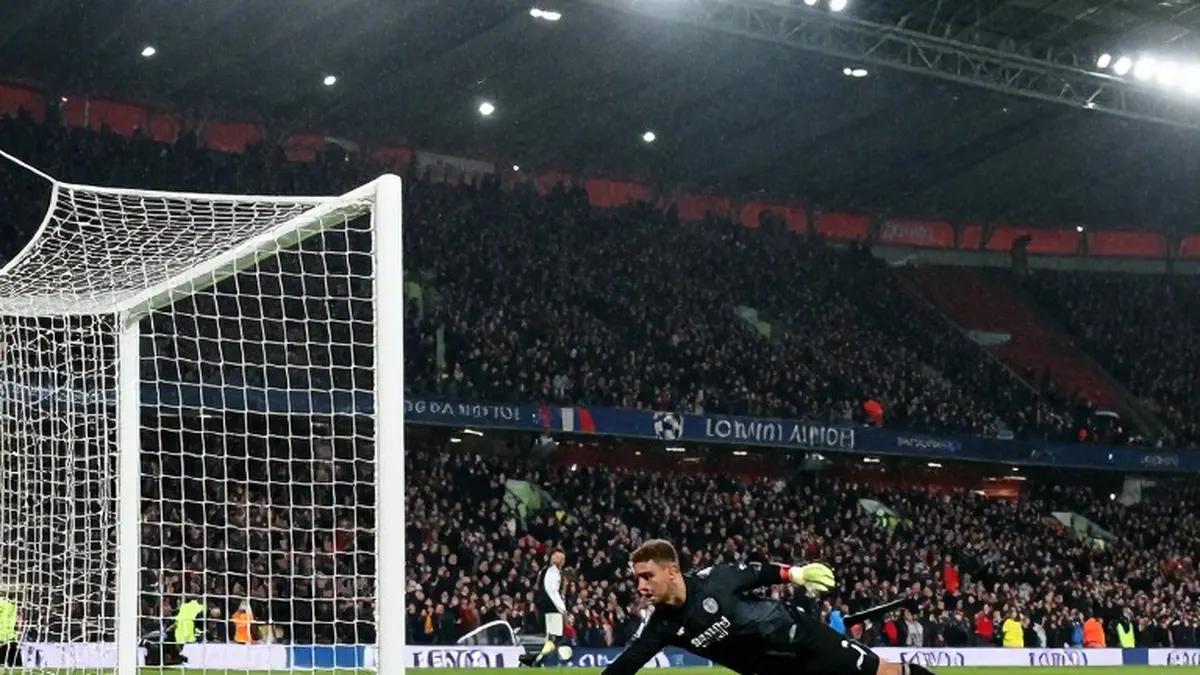
To his credit, Donnarumma produced strong moments as well, including a smart diving save to deny Christoph Baumgartner's long-range strike in Leipzig. The same is true of his season and his City career overall: across 56 Premier League and Champions League appearances, he has conceded six fewer goals than the post-shot xG value of the shots he has faced, and after ranking among the better pure shot-stoppers in last season's Premier League, he remains around that level this term.
Taken as a whole, Donnarumma has been fine. The issue is that he was not bought to be fine. When a club tolerates a goalkeeper who contributes very little in possession, it is because it expects the best in the world at keeping the ball out of the net, and it seems a long time since Donnarumma could legitimately claim that title.