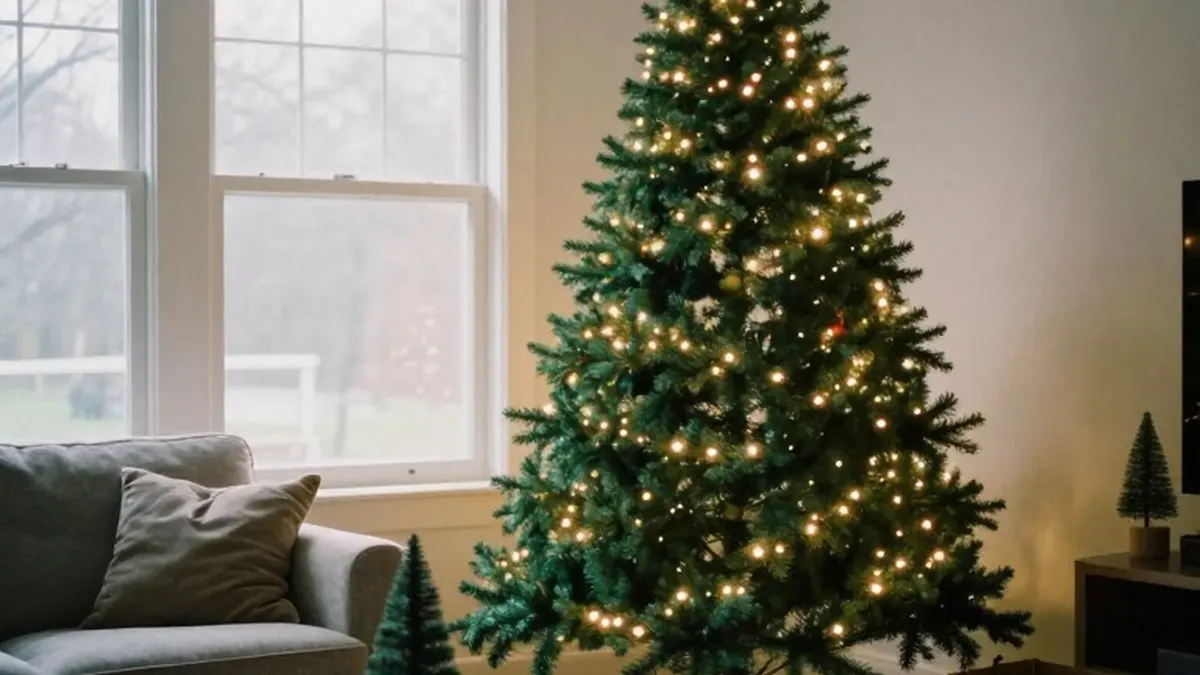
Real Christmas trees bring a fresh pine scent into the home, and buying one can support a local tree farm. They also shed heavily, leaving a mess that few people enjoy cleaning up once the holidays end. For shoppers who want to avoid buying and handling a new tree every year, an artificial one may be the answer, according to a buying guide from NBC Selected.
Because an artificial tree is a long-term purchase, the guide stresses choosing one that suits both personal taste and the available space. Models range from tabletop versions to trees taller than 12 feet. Shoppers should decide where the tree will go before buying, and a taller tree may require a stepping stool for decorating. Green is the choice for those after a realistic look, but trees also come in white, black, neon and other shades, and some are sparkly or patterned.
Fullness is largely determined by the number of branches and branch tips. Product pages often list a tip count, and a higher number typically means a fuller tree, though fluffing the branches also matters. Many trees come pre-lit, powered by batteries or a plug-in attachment, usually in warm white but sometimes in other colors or with twinkle functions. Pre-lit trees are often more expensive than unlit ones.
Storage deserves thought before checkout. Artificial trees must be assembled and taken apart every year, and they usually ship in a box with the branches compressed. That is typically how the tree will need to be stored afterward, so buyers should make sure a closet or other space can hold it. A 12-foot tree that fits in a living room may not fit in a closet, even broken down.
Jami Warner, executive director of the American Christmas Tree Association, says an artificial tree lasts about ten years on average and up to twenty with proper care. She recommends keeping it in a box or bag to guard against dust and dirt, in a cool, dry place away from direct sunlight, which can discolor it over time. A container of baking soda or unused coffee grounds stored with the tree may help keep it smelling fresh.
On the environmental question, Bert Cregg, a Michigan State University horticulture professor who researches Christmas tree production, says the impact of either type is "negligible" compared with most of what people do in the rest of their lives. Artificial trees can be reused for years, but they are largely plastic and can end up in landfills. Cregg suggests buying a live tree from a locally owned family farm or reusing an artificial tree as long as possible. Secondhand trees are often available, and Warner advises donating a tree that is still in good condition rather than throwing it away.
Artificial trees are not automatically a safer choice for people with allergies. Dr. Nina Shapiro, a pediatric ear, nose and throat specialist at Westside Head and Neck in California, says reactions to real or artificial trees may stem from mold, ragweed pollen and dust rather than the tree itself. The longer an artificial tree sits in a home, the more likely dust and mold are to develop. She recommends wiping down any tree, along with ornaments and lights, with a damp cloth before setting it up, cleaning outdoors if possible, and storing an artificial tree in a tightly zipped bag.
Pet owners face their own concerns. Dr. Zay Satchu, chief veterinary officer and co-founder of Bond Vet, says eating the branches or needles of a live tree, or drinking its water, can cause problems ranging from a mild stomach upset to organ failure if fertilizer is ingested. Pets may treat real or artificial trees, ornaments, lights and tinsel as toys, and swallowing them can be dangerous. Satchu suggests checking ASPCA's Animal Poison Control and asking a veterinarian for guidance.
Aluminum trees are making a modest comeback for their retro look, Warner says, but they are flammable and conduct electricity, so traditional lights could cause voltage spikes or a fire. She points to LED lights, battery-operated lights or a color wheel that shines light on the tree without touching it as safer options.
The guide's picks span pre-lit and unlit trees from 4 to 15 feet, each with an average rating of at least four stars from 100 or more reviews. They include a National Tree Company spruce-style tree over 7 feet tall with a 52-inch base, a slim alpine-style tree from Balsam Hill offered in six heights, and a pre-lit tabletop model with 71 branch tips and 35 multicolor lights.