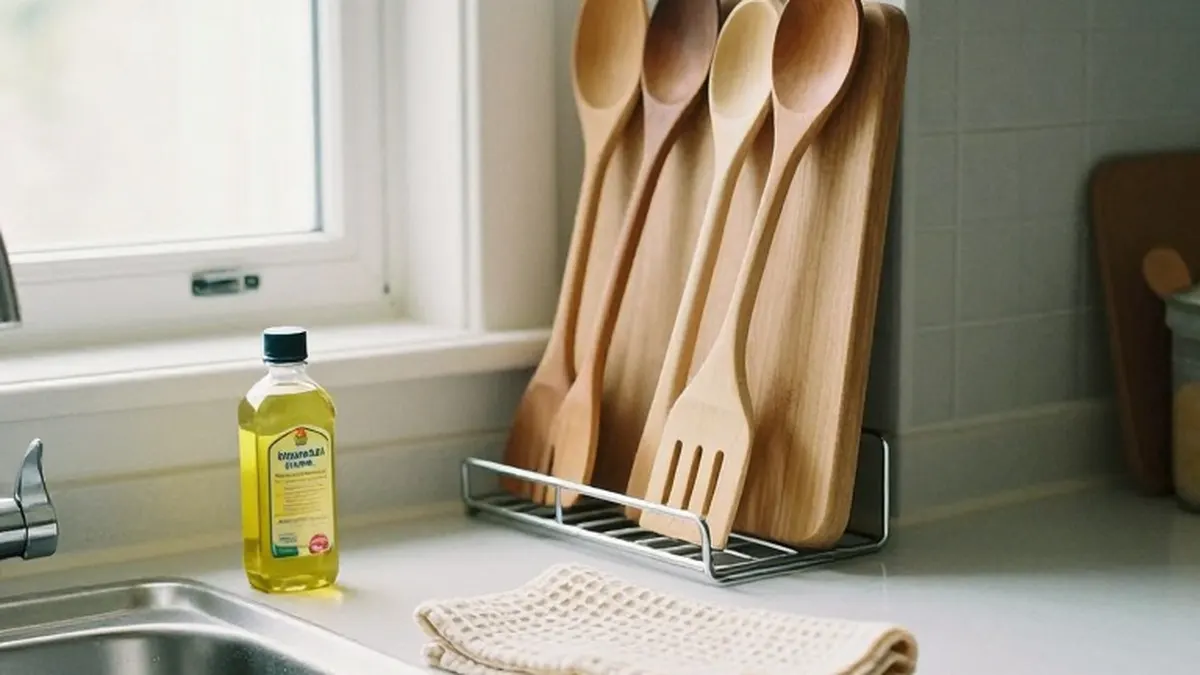
Many kitchens hold a few wooden spoons and spatulas that have been in use for years and never seem fully clean, especially when seasonings or food have left stains behind. Wooden utensils are a popular alternative to toxic black plastic ones, but they need a bit more care if they are going to last. NBC Selected spoke with cleaning experts about how to remove residue and keep wooden tools, including cutting boards, in good condition.
Robin Murphy, chief cleaning officer at the home cleaning company Maid Brigade, says drying is just as important as washing. She recommends warm water, dish soap and a sponge or soft brush. "Wash them after use, rinse well, and dry them with a clean towel," she says, adding that items should air-dry completely before they are put away.
Kadi Dulude, owner of the home cleaning company Wizard of Homes, stresses the value of a brush or sponge for reaching grooves and joints where food can hide. She advises against laying utensils flat on a wet cloth or leaving them anywhere air does not circulate, because mold and mildew can grow.
The experts' routine starts with rinsing a utensil in warm water right after use to clear away residue. Next, scrub gently with a small amount of mild dish soap, focusing on the surfaces and ends that touch food. Then rinse thoroughly, pat the piece dry with a towel, and set it on a drying rack so air can reach every side.
For older utensils that look dry and faded, both Murphy and Dulude suggest food-grade mineral oil made for conditioning wood. Once the utensil is completely dry, rub a small amount onto the surface with a cloth, then let it dry fully before storing or using it again. The oil restores moisture without leaving an oily feel or making food oily. The experts compare it to seasoning a cast-iron skillet or using moisturizer to help restore the skin barrier.
Both experts also say to keep wooden utensils out of the dishwasher, even if the label calls them dishwasher safe. Dulude says the heat and humidity can cause items to warp or split, and that handwashing is the way to extend their life. Murphy adds that water expands as wood dries, which can lead to cracking and splintering.
Knowing when to retire a utensil matters too. Dulude says deep cracks are a sign to stop using it, since food and moisture can get into them and contaminate the next thing being prepared. If the problem is only a small imperfection or some roughness, light sanding followed by food-grade mineral oil may save it.
Some products should be avoided altogether. Murphy warns that pure bleach and abrasive cleaners such as powders or pastes can damage the surface of the wood. She also advises against vegetable or olive oil for conditioning, because they turn rancid over time, which is why food-safe mineral oil is the better choice. Since utensils often touch those cooking oils anyway, she notes, thorough cleaning is all the more important.