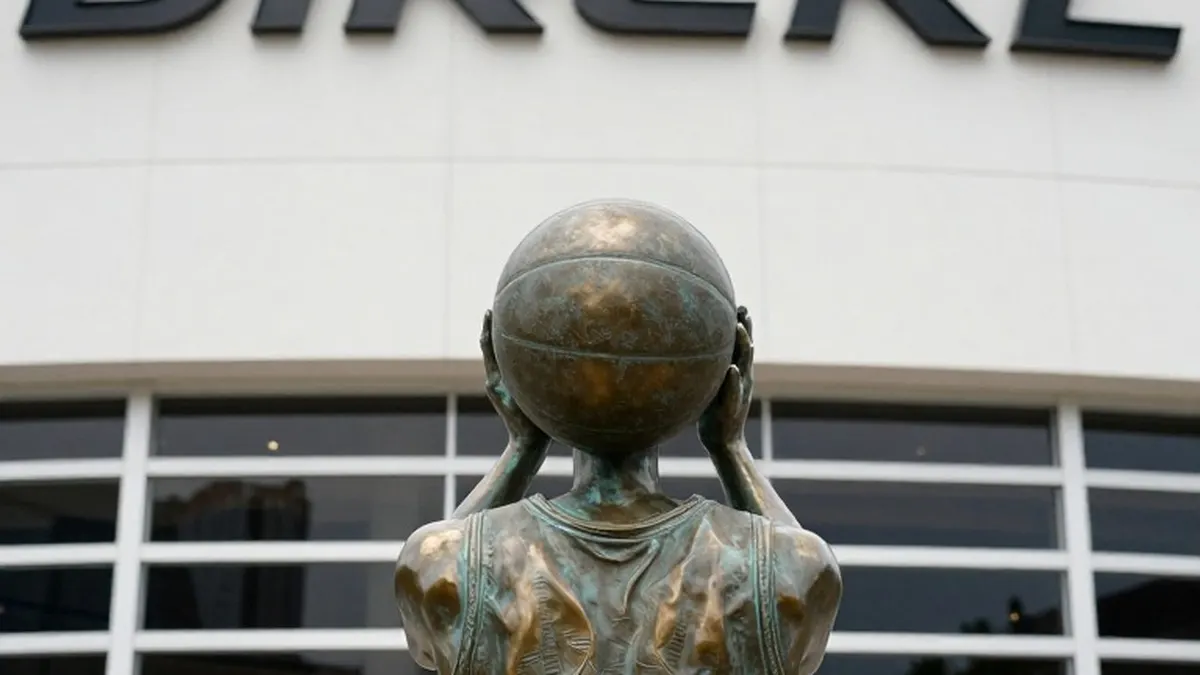
The Miami Heat revealed changes to the statue honoring Dwyane Wade on Friday, October 30, two years after its unveiling drew widespread criticism over its facial features. Wade said he agreed to have a replacement head created for the sculpture outside the arena where the team plays.
The original face was widely criticized for bearing little resemblance to Wade, who played most of his Basketball Hall of Fame career with Miami. He was also a major contributor to all three of the franchise's NBA championship teams. The reaction to the statue began almost immediately after it was unveiled.
In an essay published Friday, Wade explained that the response prompted him to consider whether the statue was giving viewers the connection it was meant to convey. He said discussions with everyone involved led to an agreement to change the head. For Wade, improving the likeness offered a way to respond to people who felt the original version fell short.
The alterations were finished over the past few days. A plywood box covered the sculpture while the work was underway, preventing the public from watching the changes take shape. The Heat shared photographs of the updated statue Friday, shortly before Wade's essay was released.
Wade said revisiting the sculpture was not intended to dismiss the original work or slight the artists who created it. Instead, he described the decision as a response to feedback and an acknowledgment that the statue holds meaning for people beyond its subject. His explanation emphasized listening to those reactions and being willing to reconsider the result.
The statue commemorates the conclusion of a March 2009 game against the Chicago Bulls. Wade hit the winning shot as time ran out in double overtime, then jumped onto a courtside table while Miami fans cheered. He shouted, "This is my house." The sculpture's pose recalled that celebration, but its original face became the focus of criticism.
In his essay, Wade said Miami fans deserved to recognize the feeling of that night when they looked at the statue. He credited their support with helping make the moment possible and expressed hope that the revised sculpture would offer both a closer likeness and a sense of shared ownership. As he wrote, "It may be my likeness, but it will always be our house."