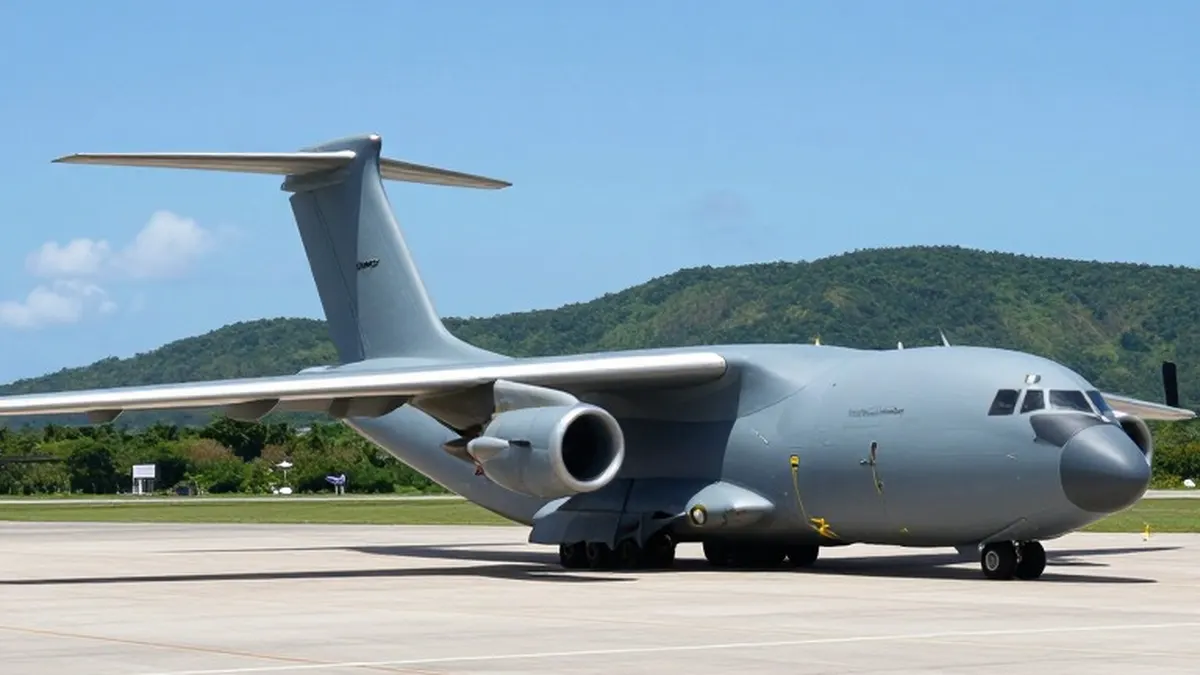
Defense Secretary Pete Hegseth formally transferred a Lockheed C-130 Hercules military transport aircraft to Colombia on Wednesday. This delivery marks a significant step in the Trump administration's effort to strengthen its defense partnership with the Latin American nation. The ceremony took place in Bogotá, where Hegseth met with key Colombian officials to discuss ongoing security challenges in the region.
In a video released by the Pentagon on Thursday, Hegseth emphasized the shared threats facing both nations. He noted that communities in both countries are threatened by gangs, violence, drugs, and narco-terrorism. The Secretary expressed a desire for safe streets and a prosperous future for families in Colombia, stating that the delivery of the C-130 serves as a demonstration of U.S. commitment to the country.
During his visit, Hegseth held meetings with Colombian Defense Minister Jorge Mora and Foreign Affairs Minister Omar Bula Escobar. The discussions focused on Colombia's role in the Americas Counter Cartel Coalition, known as A3C. Colombia joined this coalition in August, and Hegseth commended the nation for its leadership and its commitment to countering transnational narco-terrorist organizations. The Pentagon indicated it had no further details to provide regarding the specifics of the trip.
Earlier in the day, the defense secretary was in Venezuela, where he met with acting President Delcy Rodríguez in Caracas. During this meeting, the two signed a military partnership agreement aimed at helping to counter foreign actors and narco-terrorists. This move follows a broader Pentagon strategy to partner with A3C members for joint military operations against alleged drug traffickers and transnational cartels.
Colombian President Abelardo De La Espriella, a known ally of President Trump, has been a willing partner in these efforts. The country possesses one of the most advanced militaries on the continent, making it a crucial partner for regional security initiatives. The alignment between the two governments is evident in their recent collaborative military activities.
Following the meeting with Hegseth, Foreign Minister Bula Escobar urged the Colombian Congress to approve stepped-up military cooperation with the United States. This push for legislative approval aims to facilitate a more robust joint fight against drug trafficking. The diplomatic push comes as both nations seek to formalize and expand their operational ties.
Recent military exercises have highlighted the growing cooperation between the two forces. The U.S. and Colombian militaries recently completed a major training exercise named Southern Vanguard. This operation brought together approximately 350 U.S. military personnel and more than 400 Colombian Army soldiers. The scale of the exercise underscores the depth of the bilateral military relationship.
Hegseth described the aircraft delivery as more than just the transfer of equipment. In the Pentagon video, he stated that signing over the C-130 is a symbol of increased capabilities. He framed the gesture as a representation of the fight that both countries are determined to take shoulder to shoulder against cartels that threaten their respective nations.
The diplomatic and military engagement is part of a larger pattern of interaction between U.S. and Colombian leadership. In late August, U.S. Southern Command Commander Marine four-star Gen. Francis Donovan met with Defense Minister Mora. This meeting took place in a port city located in the southwest corner of Colombia, further illustrating the active and multi-level nature of the security partnership.