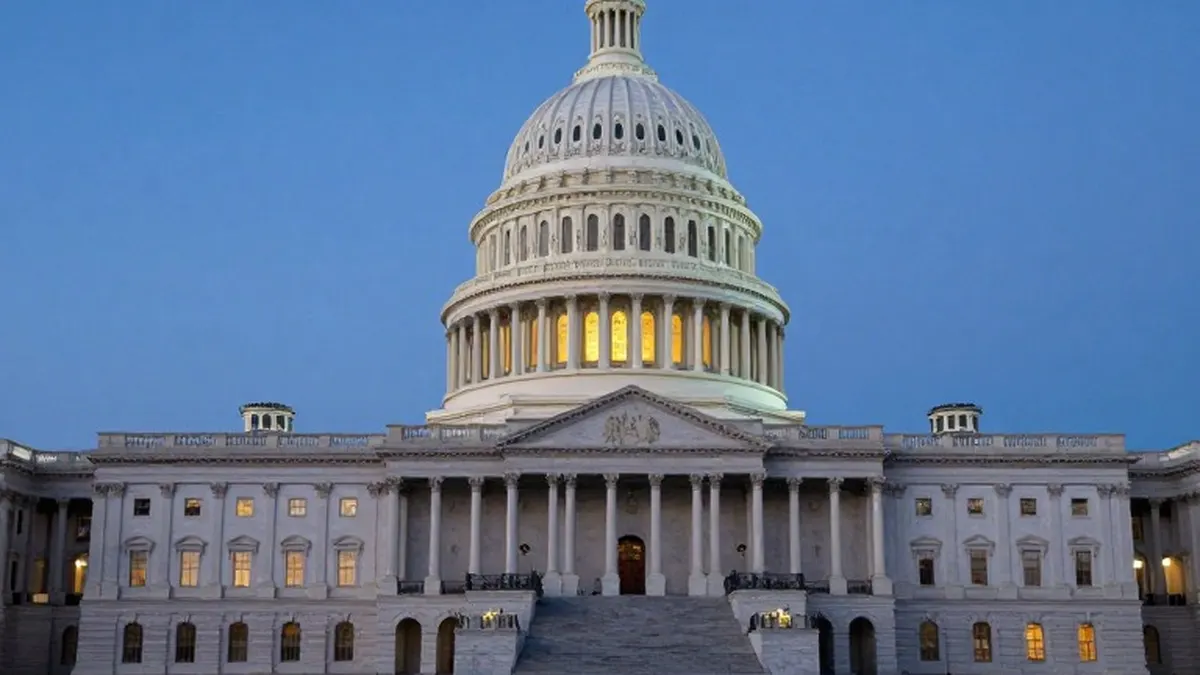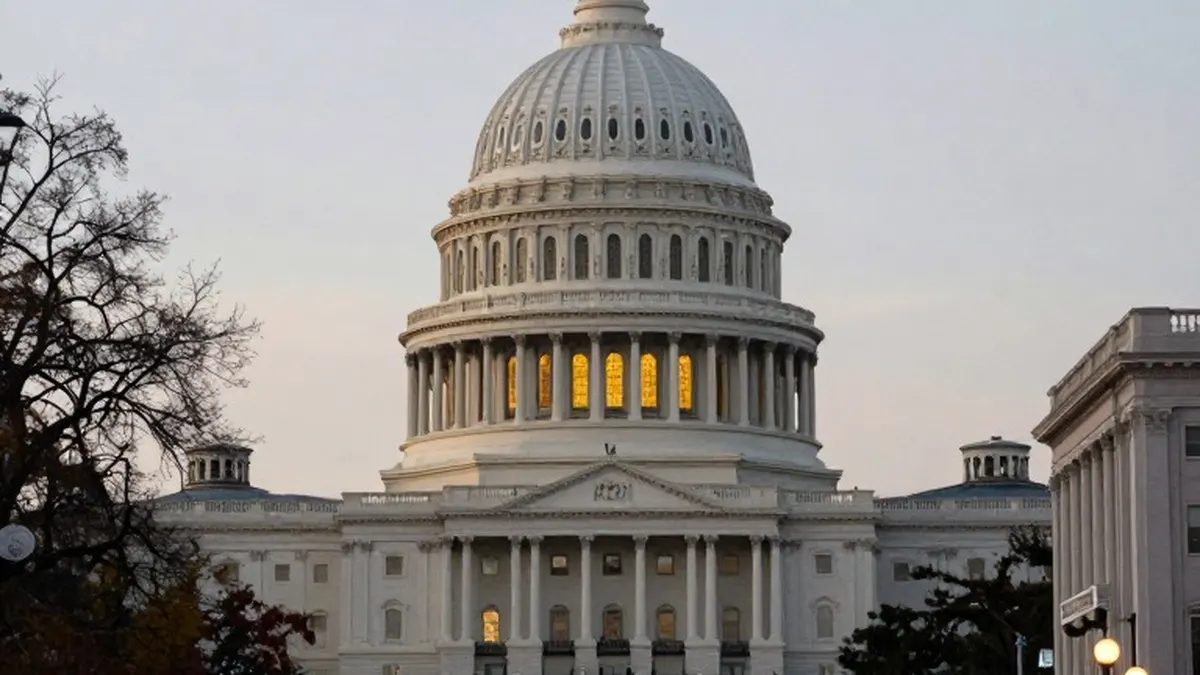
The Democratic sweep in the midterm elections could open the door to shifts in economic policy on trade, spending priorities and artificial intelligence. But economists caution that the most powerful forces shaping the U.S. economy will not change simply because control of Congress did. Affordability pressures, elevated government spending and growth that leans heavily on the artificial intelligence boom are all expected to persist, and each carries its own risks.
"It's in a very kind of fragile place, and I don't know that it would take a lot to push the economy off the rails, and recession becomes a much greater risk," said Mark Zandi, chief economist at Moody's Analytics. "That isn't the case at the moment, but I don't think that's gone away." Zandi said he was concerned before the election about inflation, an underwhelming labor market and geopolitical threats, and that those worries remain.
Democrats scored upset victories in House and Senate contests as well as governor and other state races. Yet economic and foreign policy is largely set by the executive branch, and President Donald Trump remains far apart from his Democratic adversaries, though he said Wednesday he expects to work with them. "I don't expect any change in economic policy. The Iran war, the tariffs and trade policy, the heavy-handed immigration policy, all are done under executive order. They're not legislatively driven," Zandi said, adding that those policies will likely keep restraining growth while adding to inflationary pressures and interest rates.
Zandi described the AI hyperscaler build-out as central to economic growth but also a potential danger. "The risks are decidedly to the downside because the growth is so dependent on AI, and the AI growth effects are so dependent on the equity market, and the equity market is so dependent on the valuations," he said. Local opposition to data centers emerged as a notable election issue, particularly for Democrats, according to CNBC polling, and could become another economic headwind, though it ranked below the cost of living, corruption and other concerns.
The election unfolded against a split economic picture. GDP grew at a 3.4% annualized pace in the third quarter, consumer spending rose 3.8%, the unemployment rate sits at 4.2% and layoffs are near their lowest level since 1969. But rising prices have overshadowed those figures. Consumer price index inflation hit 3.7% in September, up sharply from 2.3% in April 2025 when Trump announced sweeping reciprocal tariffs, and up from 2.4% in late February when the U.S. and Israel launched attacks on Iran, a war that has sent gas prices soaring. Inflation adjusted wage growth turned negative, down 0.7% from a year earlier in September, according to the Bureau of Labor Statistics.
Trade may be one area of potential compromise. Gary Cohn, who directed the National Economic Council during Trump's first term, said Wednesday that "there's become a much more universal view on tariffs and what they're good for," arguing that protecting U.S. workers and manufacturing, especially from China, has been good policy. While he said shutting down borders with Canada and Mexico has "probably not been so good," he sees room for a deal in which tariffs are passed through Congress and become law rather than executive orders that a future president could rescind.
Democrats are also likely to push to reverse spending cuts to SNAP food stamp benefits and Medicaid approved under the One Big Beautiful Bill Act, Morgan Stanley analysts told clients. But the firm noted that policy uncertainty since the start of Trump's second term has been tied to executive rather than legislative action, so policies on tariffs, geopolitics, trade, deregulation and export controls are likely to persist.
Fiscal pressures are not going away either. The national debt stands at $40.5 trillion, up more than $4 trillion since Trump took office in January 2025, and net interest totaled $1.05 trillion in fiscal 2026, more than any category except Social Security and Medicare. The deficit ended the year just shy of $2 trillion, about 6.1% of GDP, a level Morgan Stanley expects to continue. Goldman Sachs chief economist Jan Hatzius said Democrats are likely to use any debt ceiling standoff to win concessions, with limiting the Iran war, tariff rollbacks, reversing spending cuts and expanded health benefits high on their priority list.
Despite the headwinds, most of Wall Street expects growth to continue. "My sense is that the economic expansion will continue to roll on, featuring above trend growth near 2½ percent," said Joseph Brusuelas, chief economist at RSM, who also sees a chance to reset the trade agreement among the U.S., Mexico and Canada after a year and a half of tariff tensions. "We only have a 15% probability of recession over the next 12 months," he said. "The outcome of the election was immaterial to that estimate."