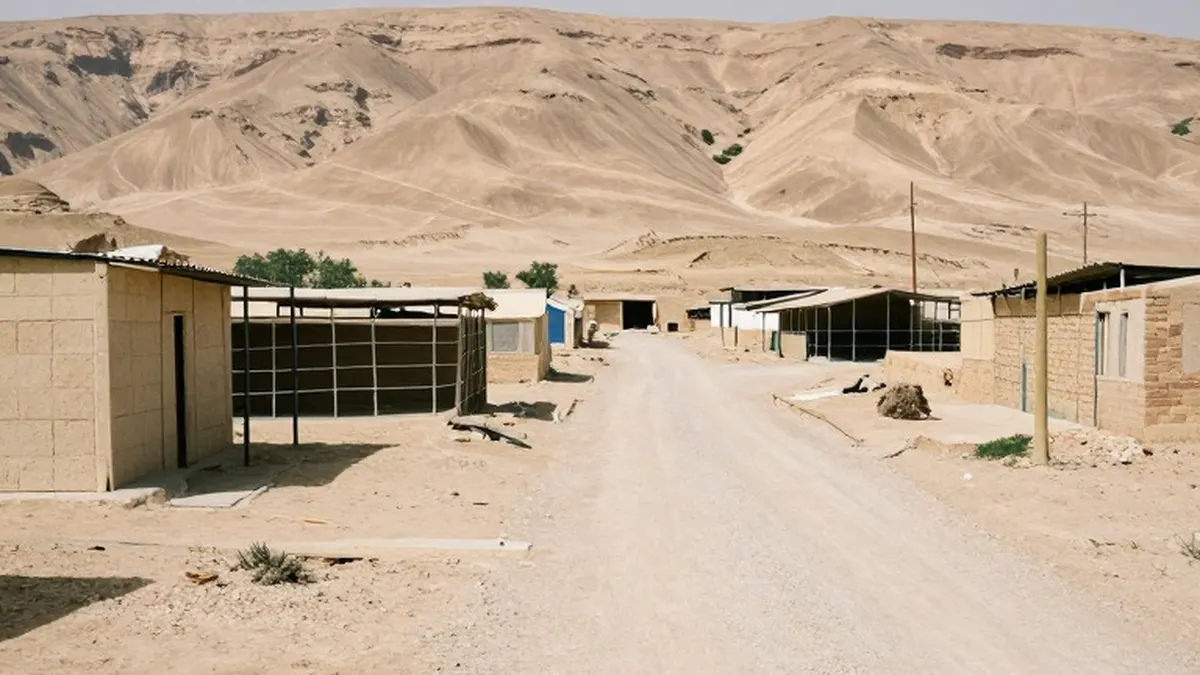
Israel’s High Court of Justice issued a conditional order on Thursday requiring authorities to explain why they should not take concrete measures to enable a displaced Palestinian Bedouin community to return to the southern Jordan Valley. Residents of Ras Ein al-Auja say settler violence drove them from their homes, and they remained unable to return approximately nine months after leaving.
The order seeks answers on proposed measures including limits on Israeli entry into the community’s living area, the evacuation of illegal outposts and protection for returning families. Supreme Court President Isaac Amit and justices Dafna Barak-Erez and Yechiel Kasher issued it after a Monday hearing. The respondents must file an affidavit by December 1, with another hearing to be scheduled in the first half of December. The conditional order seeks explanations ahead of a further ruling.
Authorities accept that they are responsible for protecting the residents and say they are willing to coordinate their return. They have nevertheless said they cannot maintain a permanent force at the site and have expressed concerns about civilian guards operating outside their control. Residents argue that protection would disappear when soldiers departed. The court found that their fears were supported by past events and said the prolonged inability to return required correction.
Six residents and the Center for the Advancement of Peace Initiatives filed the petition in March 2025. It alleged a sustained pattern of harassment, takeovers of grazing land, damage to infrastructure and livestock theft linked to the establishment and growth of nearby illegal settler outposts. According to the petitioners’ account, summarized by the court, the whole community eventually left: approximately 110 families with more than 1,000 members. They said they had lived there for about 70 years.
The justices stressed the military commander’s obligation to protect residents and preserve public order in territory under belligerent occupation, which the authorities did not contest. The order asks why Israelis should not be barred from the petitioners’ residential and living area unless their entry is coordinated with the petitioners. It also addresses evacuating illegal outposts within the area claimed as the community’s living space and demolishing or blocking a nearby unauthorized road.
The proceedings follow an intervention in February, when the court directed authorities to help arrange a return to a defined part of the community and report on enforcement within 60 days. In its position reported in May, the state supported an army-coordinated return but opposed a permanent security presence, restrictions on Israeli entry and private security arrangements.
The petitioners responded that a short military escort would leave them facing the conditions that had caused their departure. They also warned that restrictions on rebuilding homes and livestock structures dismantled when they left could make a meaningful return impossible. Thursday’s order requires authorities to specify how they intend to protect residents during their return and afterward.
Separately, Dror Etkes, founder of settlement-monitoring organization Kerem Navot, told The Jerusalem Post that 166 settler outposts had been established across the West Bank since the start of 2025. His overall count of 440 includes outposts subsequently legalized or undergoing legalization, but excludes reported sites he has not personally inspected.