
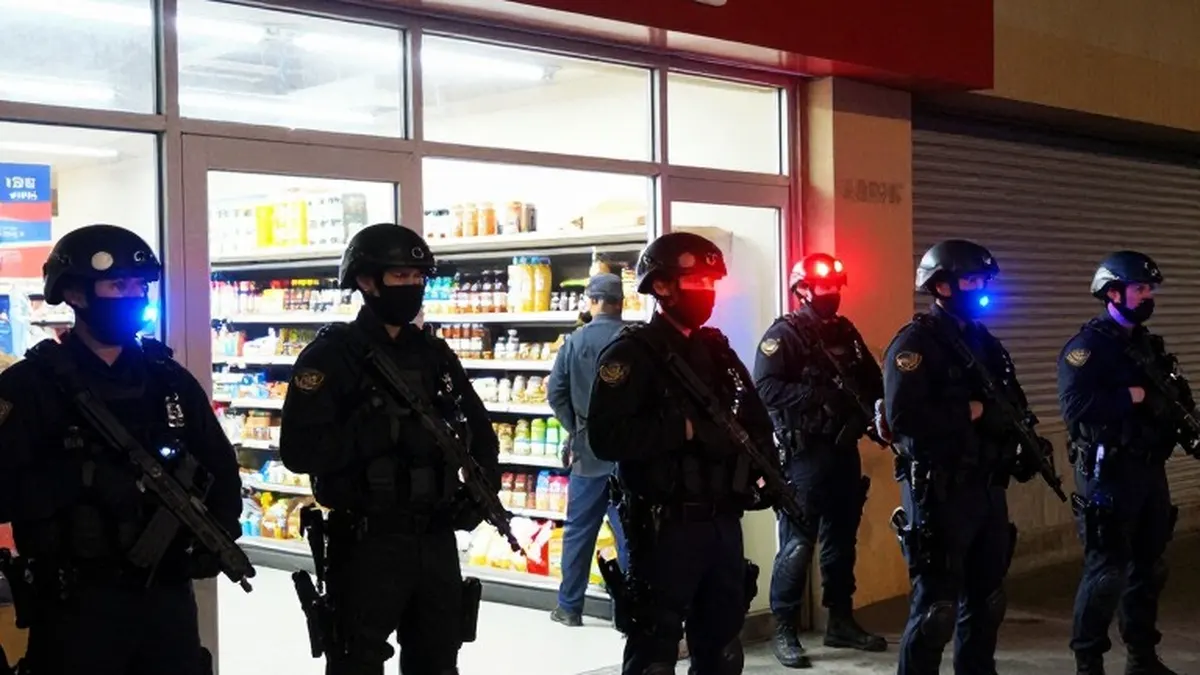
A tense standoff unfolded in the coastal city of Cartagena, Colombia, where a group of armed men took approximately 25 people hostage inside a supermarket. The incident began when the suspects attempted to rob an armoured vehicle but were forced to flee into a nearby store after security camera operators alerted police to the crime.
President Abelardo de la Espriella announced on Tuesday that all available police and armed forces have been deployed to the scene. He confirmed that initial reports indicated around thirty people had been kidnapped, though five older women had already been released. The president emphasized that special units and all capabilities of the various security forces are now active in the area.
Visual evidence from the scene, captured by Reuters, showed heavily armed police and military personnel surrounding the Exito supermarket located in the La Castellana neighbourhood. Additional unverified footage circulating on social media appeared to depict individuals inside the market kneeling against the windows with their hands bound, highlighting the precarious situation of the captives.
The crisis has placed significant pressure on De la Espriella, who campaigned on a platform promising a strict crackdown on crime. His administration is currently dealing with a series of high-profile incidents that underscore the country's persistent struggles with violence and insecurity.
The president made his public remarks from Villavicencio, a city he visited following a recent car bombing. The government has attributed that explosive attack to an armed group, adding to the list of violent events occurring during his tenure.
Political opponents have quickly seized upon the supermarket incident to criticize the current security strategy. Former left-wing President Gustavo Petro, who served as De la Espriella's predecessor, blamed failures in the new administration's security platform for the situation.
Petro posted on social media that the root cause of such violence is the impoverishment of the population resulting from the collapse of the tourism sector. He argued that destroying tourism through state-sanctioned violence and making death a central theme in presidential discourse has dismantled a dynamic source of wealth.
The former president noted that the tourism industry once attracted seven million foreign tourists, serving as a vital economic engine. He suggested that the desecration of corpses and the focus on mortality in political discourse have further hindered the sector's recovery.
De la Espriella assumed office after defeating Senator Ivan Cepeda in a run-off election held on June 21. Cepeda had been the handpicked successor of Petro, making the political rivalry between the two factions a defining feature of the recent electoral landscape.
As the standoff continues, the Colombian government faces scrutiny over how it handles the crisis and whether the deployment of special units will lead to a swift and safe resolution. The incident serves as a stark reminder of the security challenges facing the nation under its new leadership.





