Retail sales in Great Britain experienced a significant increase in October, driven by a public rush to purchase emergency supplies following a government warning. The Office for National Statistics reported that the volume of goods sold rose by 0.7 percent on a month-on-month basis. This growth defied the consensus of economists, who had predicted that sales would remain flat during the period.
The surge in consumer activity was largely attributed to the government's Be Ready campaign. This initiative encouraged households to stockpile enough supplies to last 72 hours in the event of a major emergency, such as extreme weather, a cyber incident, or other serious disruptions. As a result, many consumers, often referred to as preppers, focused their spending on items designed to last without refrigeration.
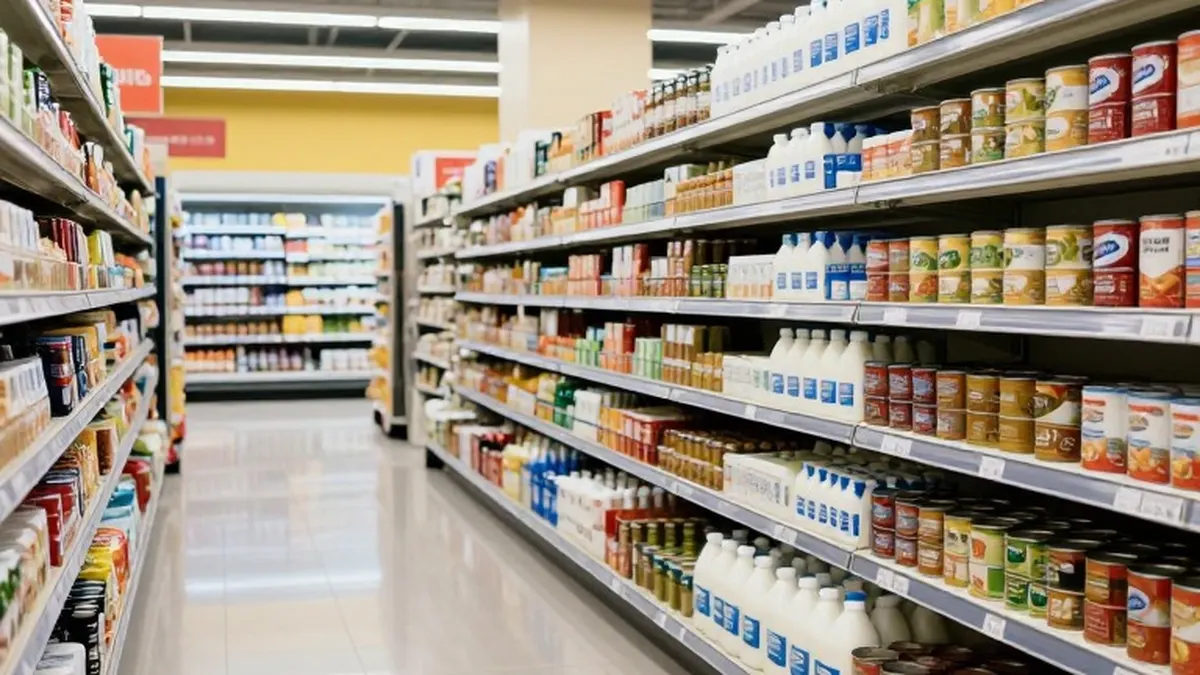
Grant Fitzner, the chief economist at the ONS, confirmed that supermarkets reported higher sales of long-life food items. Specifically, tinned food and UHT milk saw a notable boost in demand directly linked to the government's preparedness messaging. This trend helped to offset previous concerns about the state of the retail sector.
The October figures represent a welcome recovery for the industry after a disappointing September. The ONS revised its data for September downward, changing the reported decline from 0.4 percent to 0.6 percent. The earlier weakness was partly caused by poor online sales of autumn and winter clothing, which suffered due to unseasonably warm weather conditions.
Within the food sector, sales at supermarkets and other food stores increased by 0.8 percent in October. This marked the fastest rate of growth since April, when sales had risen by 1.4 percent. The strong performance in the food category was a key driver behind the overall positive retail numbers for the month.
Non-food retail categories also showed strength, though with varying levels of growth. Textile, clothing, and footwear stores recorded a 1.5 percent month-on-month increase. Meanwhile, other non-food stores, including those selling sports equipment, games, and toys, saw a 3.1 percent rise. This was the biggest increase in this category since January, aided by a higher number of visits to galleries.
The total non-food store category, which encompasses department stores, clothing shops, and household goods retailers, grew by 1.1 percent in October. Non-store retail sales, which primarily consist of online transactions but also include street stalls and markets, also rebounded with a 0.9 percent rise. A turn in the weather helped drive sales of autumn and winter ranges in this sector.
Not all sectors experienced growth, however. Sales volumes of motor fuel fell by 2.2 percent, marking the steepest decline since April. This drop was attributed to rising prices at the pump, which dampened consumer demand for fuel during the month.
Erin Brookes, the European retail and consumer lead at Alvarez & Marsal, noted that the October results exceeded expectations despite low consumer confidence. She highlighted that households are facing growing financial pressure from higher interest rates and inflation. Nevertheless, the data suggests that consumers remain willing to spend as the critical Black Friday and Christmas trading period approaches.
While retailers are feeling optimistic about the festive season, they continue to navigate a challenging environment. Brookes pointed out that the sector is caught between increasingly price-sensitive consumers and mounting operating costs, creating a complex landscape for businesses aiming to maximize holiday sales.