A film festival inspired by African philosophies, including ideas about how lessons from the past can shape the present and near future, is set to take place in Manchester later this month.
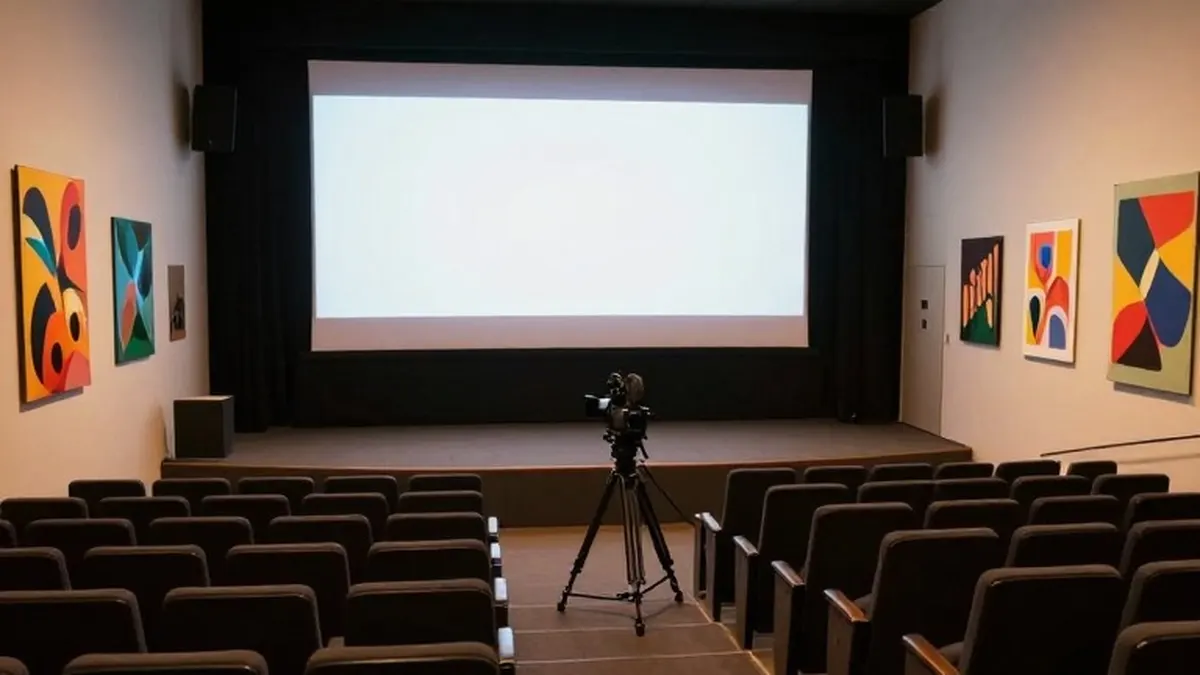
See My World, a day celebrating independent creators from across the African diaspora in the north of England, will be held at the Contact theatre on 21 November. The event forms part of See My World's year-round programme showcasing pan-African arts, culture and events.
The festival reflects the determination among Manchester's creatives and activists to build on the legacy of the 1945 Pan-African Congress in the city, which connected leading figures of postwar independence movements around a shared vision of liberation. The event follows last year's 80th anniversary commemorations of that congress.
Tunde Adekoya, See My World's CEO and artistic director, said the festival takes inspiration from across the spectrum of pan-African thought. That includes the work of two Kenyan writers: John Mbiti, an Anglican theologian who died in 2019, and Ngũgĩ wa Thiong'o, author of the groundbreaking 1986 book Decolonising the Mind, who died last year. Both writers rejected the colonial conceit that African thought was inferior, emphasised the importance of community, and saw reclaiming African ways of knowing as essential to a people's self-understanding.
Their approaches differed. While Mbiti sought common ground between African religions and Christianity, Ngũgĩ was a Marxist who argued colonialism was driven by cultural and economic conquest, with language used as its sharpest instrument. He famously abandoned English to write in Gikuyu, a Bantu language mainly spoken in Kenya, and criticised the role missionary Christianity played in colonial rule.
"It's a day dedicated to pan-African and global majority films from the north of England with exclusive premieres of documentaries we've been working on, which weave together expressions of liberation through art forms like poetry and dance," Adekoya said. "The whole idea is that it's like a playground in search of strategies of liberation, using the festival as a way to explore different philosophies."
He added: "John Mbiti explores the philosophy and spiritual understandings of time through the concept of Sasa na Zamani, in which the past informs everything that happens moving forward. That reflects how we constantly go back to pan-African histories to inform how we progress."
Film-makers were invited to submit works of up to 30 minutes across all genres, with no screening fees charged. Alongside submissions, the festival will premiere documentaries produced by See My World itself. These include Homage, described as a cinematic love letter to dance that traces a culture through present-day portraits of dance artists and archival material from Manchester, telling a story of joy, loss, migration, rhythm and resistance. Another film, Poetic Justice, explores how pan-African thought and Manchester's poetry scene speak across decades.
Adekoya said the team wanted to break from convention: "When we think about decolonisation, we think about how structures have been created to alienate and exclude communities. So we thought our film festival would look more at how we make film accessible and how stories that deserve to be seen get seen." Throughout the day there will be exhibitions, explorations of performances, discussions, Q&As, insights into directors' processes and workshops.
"We've been looking for literature and concepts that inform us and give us an understanding of who we truly are," Adekoya said. "As works from thinkers like John Mbiti have come into our sphere, they have really emboldened us to think differently about our place in the world and what we do." The See My World film festival runs from 2pm to 11pm on Saturday 21 November at Contact theatre, Oxford Road, Manchester.