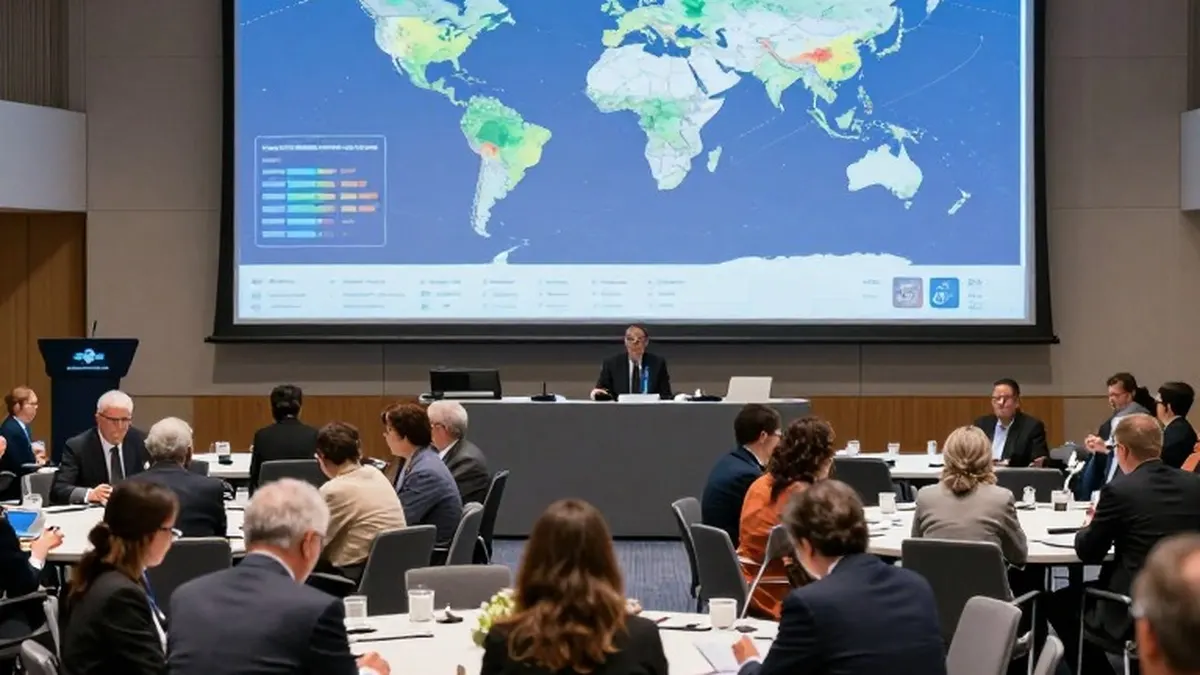
Climate change minister Chris Bowen is set to lead negotiations at the upcoming United Nations climate conference, facing the challenge of representing a nation that is a major exporter of coal and gas. Delegates from nearly 200 countries are expected to gather in the Turkish resort city of Antalya on Monday for two weeks of discussions. The summit takes place against a backdrop of geopolitical instability, with the conflict in the Middle East driving an oil price crisis that has increased living costs worldwide.
The conference, known as Cop31, begins two months after climate scientists confirmed that global heating will reach at least 1.8 degrees Celsius. A primary objective of the talks is to secure support for a new 2035 electrification goal. This target, backed by both Turkey and Australia, aims to ensure that 35 percent of final energy use globally comes from electricity rather than fossil fuels. The two nations reached a compromise regarding the conference structure, with Turkey serving as the president of the conference and Australia presiding over the negotiations themselves.
Australia holds a significant position in global energy markets. It is the world's second largest exporter of coal used in power stations and the largest exporter of coal for steelmaking. Additionally, approximately one fifth of global liquefied natural gas exports originate from Australia, placing it on par with Qatar and behind only the United States. The Australian government projects that the export value of these three fuels will reach 141 billion Australian dollars, or 98 billion US dollars, in the current financial year.
Bowen has outlined three main areas of focus for the negotiations: minimizing the overshoot of the 1.5 degree Celsius Paris agreement goal, improving access to climate finance for poorer nations, and advancing the new electrification target. Ocean protection is also expected to be a significant theme. However, climate advocates have questioned whether Australia can effectively urge the world to reduce fossil fuel use while maintaining its own substantial export industries.
In response to these concerns, Bowen stated that all countries are navigating the energy transition and that Australia's domestic shift away from coal in electricity generation has been recognized internationally. Bill Hare, chief executive of Climate Analytics, noted that while countries agreed in 2023 that a transition was necessary, the current agenda lacks specific plans for phasing out fossil fuels. Hare suggested that Australia could use its presidency to continue developing a fossil fuel roadmap, arguing that such a process is central to limiting the climate crisis.
Hare emphasized that fossil fuels account for about 75 percent of global emissions, making a rapid transition essential to limiting temperature overshoot. He urged Bowen to be brave in addressing this critical issue. Meanwhile, domestic politics in Australia present a complex challenge. The opposition Coalition has pledged to scrap the 2050 net zero target, while the One Nation party rejects the science of climate change. Prime Minister Anthony Albanese will need to navigate these internal divisions when he addresses a two day leaders summit during the talks.
Experts suggest that reaching a consensus on a comprehensive cover decision may be difficult. Frank Jotzo, an economist at the Australian National University, expressed doubt that all participants would agree to map a route away from fossil fuels, noting that countries opposed to such a plan often succeed in removing it from the agenda. He predicted that the Australian presidency would focus on an orderly procedure to avoid surprises. Despite this, more than 500 Australian scientists and academics have written to the prime minister, urging an end to new coal and gas approvals and requesting a legislated phase out plan.
The scientists argued that Australia cannot credibly lead on climate issues abroad while expanding fossil fuel production at home. Kathryn McCallum, director of strategy at the Climate Action Network Australia, highlighted that the Albanese government has approved 38 coal, oil, and gas projects since taking office in 2022. These approvals include extending the life of the North West Shelf gas facility in Western Australia until 2070. McCallum stated that many are questioning Australia's seriousness on climate action due to these developments, placing the government in the spotlight as it seeks to balance corporate interests with global climate goals.