Hundreds of employees at the US robotics company Boston Dynamics have signed a petition demanding that executives stop a sale of the firm's robot dogs to US Immigration and Customs Enforcement. Company leaders have stood by the deal, though they have said the robots will not be weaponized.
According to the source reporting, a Department of Homeland Security contract awarded $1.3 million on September 25 to Radeco, a Connecticut company, to provide ICE with modified versions of Boston Dynamics' four-legged robots. Workers sent the petition, which carried more than 300 signatures, to company executives in early September. Half of the signers chose to remain anonymous. Copies were also shared with The Boston Globe and the public radio station WBUR.
The letter describes the personal toll the news has taken on staff. "Many of us have gotten messages from friends and family, asking us in disbelief and horror if this news is true, and how we can live with ourselves if it is," the petition states. It adds: "The risk for Boston Dynamics is simply too great to continue with this deal."
The signers portray themselves as employees who normally "love showing off what we do to our friends, family and the world." They also say they "love challenging ourselves to innovate and change the perception of what robots can do." The roughly 300 signatures come from a workforce of approximately 1,400 people at the company.
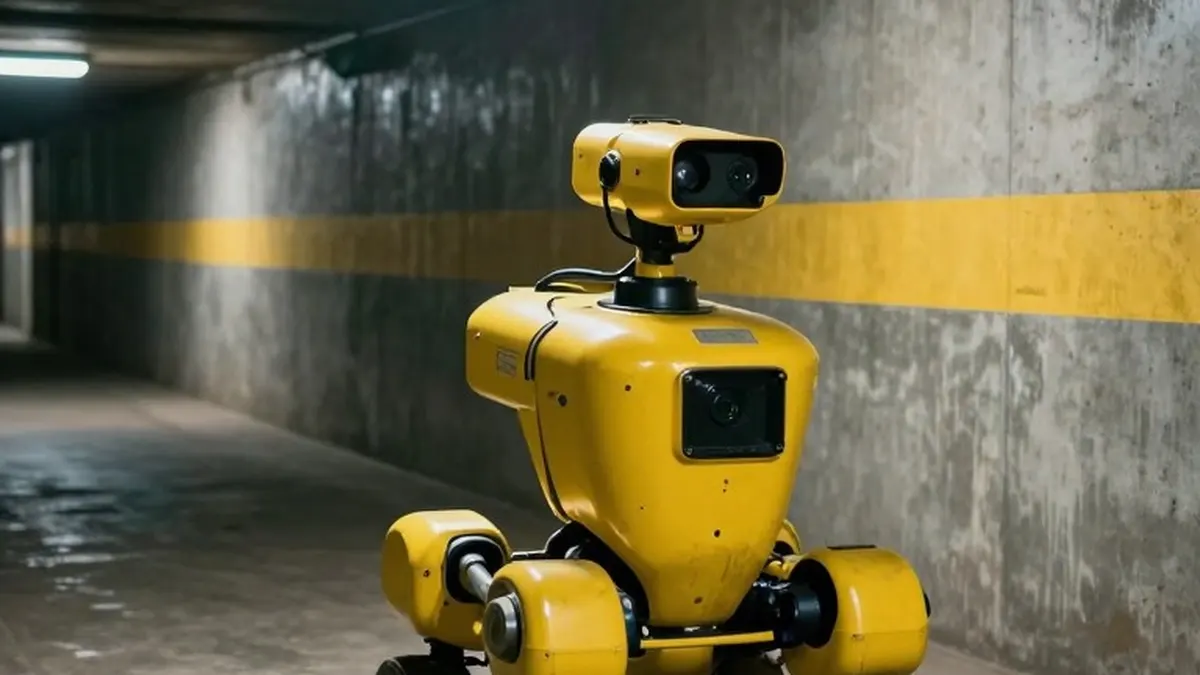
The contract covers four Boston Dynamics Spot robots that Radeco has modified and markets as a platform called Cerberus. The contract describes the machines as intended to "detect radiation, toxic gas leaks and explosive threats in urban environments or disaster zones." They are also meant to support other remote observation and inspection missions.
A centerpiece of the upgraded robot is an oxygen sensor. It is intended to "ensure the air quality is breathable when personnel are placed in confined spaces such as tunnels." The Cerberus version of the robot dog also carries a camera with 30-times zoom, 360-degree cameras and infrared thermal imaging.
The dispute shows a gap between how the contract frames the robots, as tools for hazard detection and inspection, and how many of the company's own employees view the sale to an immigration enforcement agency. Executives have maintained their position while pledging that the robots will not be weaponized.