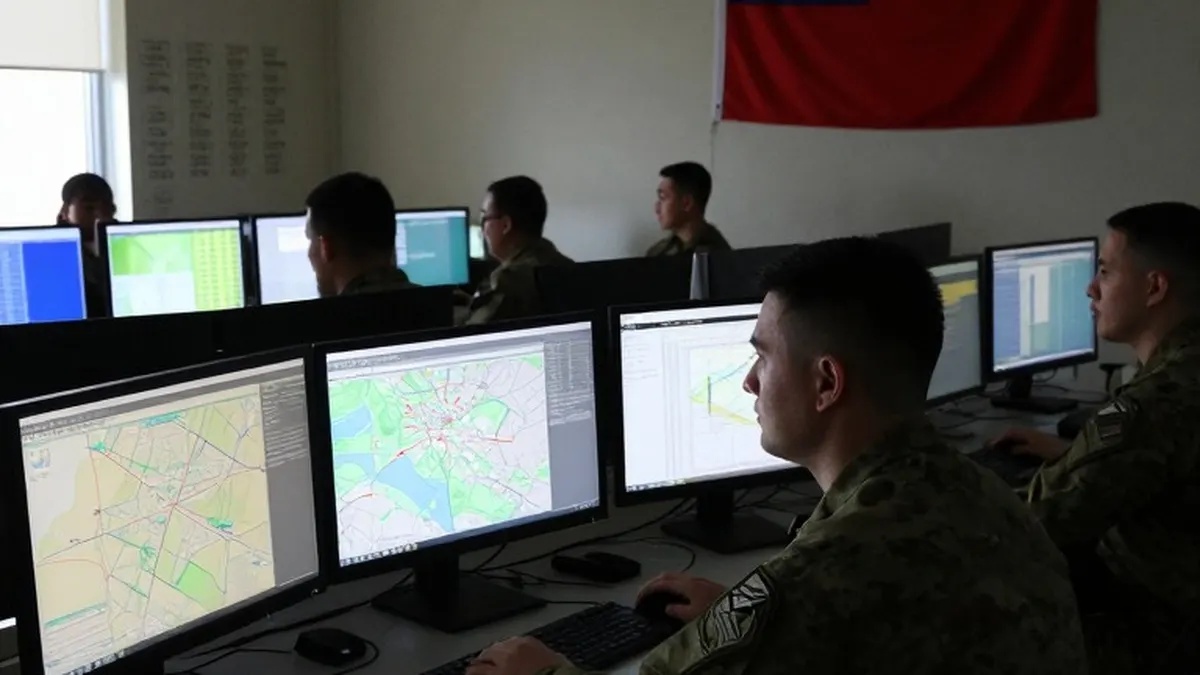
A senior officer in the Israel Defense Forces Southern Command has explained the rationale behind a series of precise strikes targeting Hamas brigade commanders and other senior figures in the Gaza Strip. Speaking to Walla on Wednesday, the commander stated that the military is seeking to prevent the terrorist organization from rebuilding its capabilities ahead of potential decisions regarding the future of Gaza.
Lt.-Col. A., who leads the Fire Center within the Southern Command, provided insight into the ongoing operations. He described the unit as operating continuously on a 24/7 basis since October 7. The officer noted that tight coordination between intelligence and firepower, combined with increasingly sophisticated methods, allows the IDF to strike targets with high precision even in densely populated areas.
The commander addressed criticism regarding collateral damage, rejecting allegations that the IDF deliberately targets civilians. He accused Hamas of systematically exploiting the civilian population and sensitive facilities, such as hospitals, for tactical advantage. He pointed to a recent strike at Nasser Hospital in Khan Yunis, where the commander of the Hamas Khan Yunis Brigade was seriously wounded, as a key example of this dynamic.
Regarding the Nasser Hospital incident, Lt.-Col. A. stated that individuals presented as innocent civilians among the casualties were actually terrorists. He mentioned that the military had issued multiple warnings to the hospital beforehand, urging them not to allow terrorist activity within its premises. He argued that Hamas treats harm to civilians as part of its agenda and operates from within the civilian population.
The officer also discussed the targeted killing of the commander of Hamas's Rafah Brigade. He emphasized that this operation was planned with particular care and executed near shelter areas where the organization was active. The strike was designed to target only the commander and an accomplice in a vehicle, with the specific aim of minimizing harm to uninvolved civilians.
Questions were raised about how the Shin Bet, Israel's security agency, identifies mistakes made by Hamas leadership that enable these operations. Lt.-Col. A. suggested that Hamas commanders must move outside their tunnel networks to plan attacks and rebuild capabilities. This movement exposes them to Israeli intelligence and subsequent strikes.
He noted that while Hamas has not disappeared, it is no longer the same entity it was on October 7. The group is constantly seeking to grow stronger, and the IDF does not underestimate this threat. The officer stated that his unit's mission is to act relentlessly to ensure Hamas does not regain the conditions necessary to return to its previous state of power.
Systematically targeting the chain of command, according to the officer, makes it significantly harder for Hamas to advance operations and threaten both IDF troops and Israeli civilians. Lt.-Col. A. shared a personal perspective on the significance of these strikes, noting that he has a son serving in the Givati Brigade. He said that each successful targeted killing provides a sense of security for soldiers on the front lines and reduces the threats they face.
During the interview, the officer pointed to a flag hanging in the Fire Center that bears the names of friends killed in the war. He said the team operates only against direct or indirect threats to troops and citizens, with the goal of ensuring the events of the past will not happen again. He stressed that personnel remain highly motivated and have been involved in planning since the first day of the conflict.
Addressing the military's heightened readiness for various scenarios, including a decisive military operation, Lt.-Col. A. stated that efforts have not eased. Although the intensity of operations has somewhat decreased, the morale of the troops remains very high. He noted that whether the military activates more or fewer operational cells, the commitment to the mission remains strong.