India has set a target to integrate at least ten million individuals into its artificial intelligence workforce through the recently launched National AI Talent Mission. This ambitious goal was outlined by Lt. Col. Vikram Singh Bhati, the director of the National Council for Vocational Education and Training, during a discussion on the evolving media landscape.
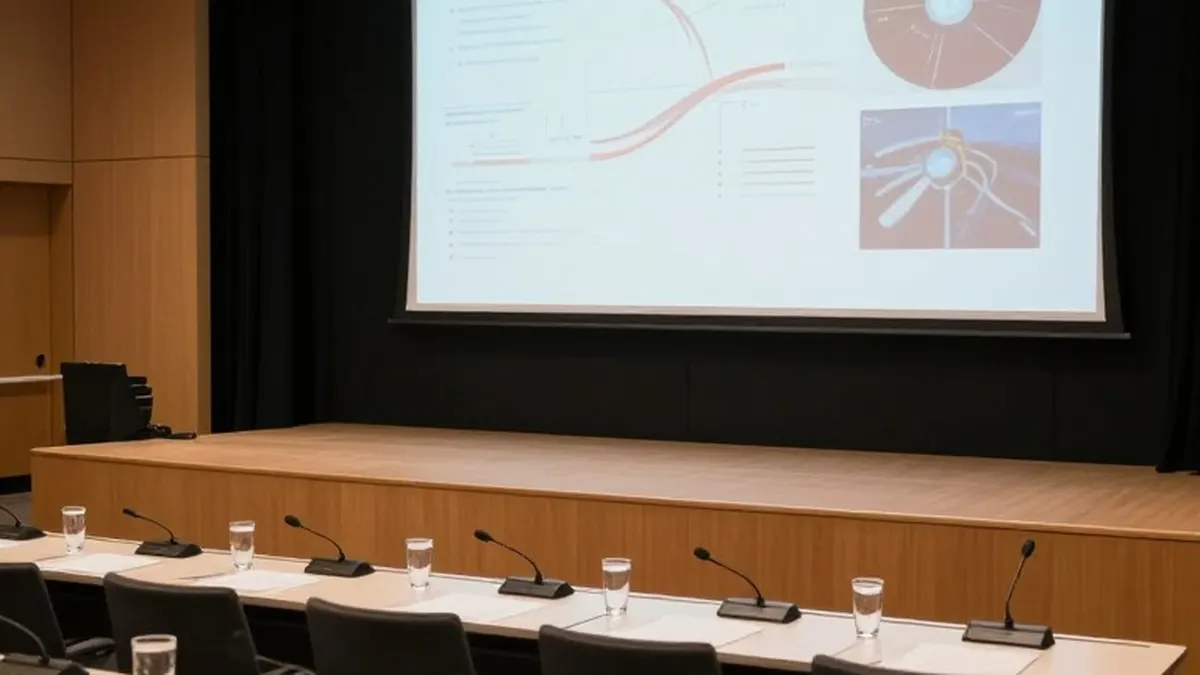
Bhati presented these figures at a panel titled AI and the Future of Creative Skills: Transforming India's Media and Entertainment Workforce. The session took place at the WAVES Film Bazaar, a market operating alongside the 57th International Film Festival of India in Goa. The event served as a platform for government leaders and industry figures to discuss how technology is reshaping professional requirements.
The panel was moderated by voice-over artist and actor Vijay Vikram Singh. The discussion included insights from Amit Meena, director at the Ministry of Skill Development and Entrepreneurship, and K. Satish Nambudiripad, former director general of public broadcaster Doordarshan. Nambudiripad currently serves as chairperson of the Centre for Creative Economy and Public Policy at the National Institute of Technology Calicut. Biren Ghose, founder and CEO of Astra Studios, also contributed to the conversation.
Bhati explained that the government's initiative began with the introduction of the SOAR scheme, which stands for Skilling for AI Readiness. He emphasized the importance of corporate involvement in this transition. Bhati urged the industry to adopt apprenticeship models, suggesting this approach would help both existing employees and new entrants adapt to the changing technological environment.
Amit Meena highlighted how artificial intelligence is altering the entire production chain, affecting stages from initial conceptualization to final release. He described the technology as a force that is democratizing the creative process. Meena stressed the critical need to reskill current workers to ensure they remain effective in this new operational context.
K. Satish Nambudiripad offered a cautionary perspective, warning that AI tools tend to homogenize output. He argued that India's rich folklore, regional languages, and cultural nuances risk being flattened if training programs do not specifically account for the country's diversity. To illustrate this point, he noted that if five people use AI to write a concept note, the results are likely to be identical.
Nambudiripad called for a collaborative approach involving technical institutions, film schools, and the private sector. He advocated for skilling initiatives to extend beyond major metropolitan areas and reach smaller tier-two and tier-three cities across the nation.
Biren Ghose observed that creative skills are shifting from pure execution to imagination. He noted a transition from simple software proficiency to the broader concept of technology orchestration. Ghose remarked that professionals previously wondered when tools would catch up with their ideas, but now they find themselves trying to keep pace with the rapid advancement of those tools.
Ghose also suggested that creative technology skills should be recognized in sectors beyond film and gaming. He concluded by stating that no technology has ever invented anything on its own, asserting that every invention originates from human ideas.