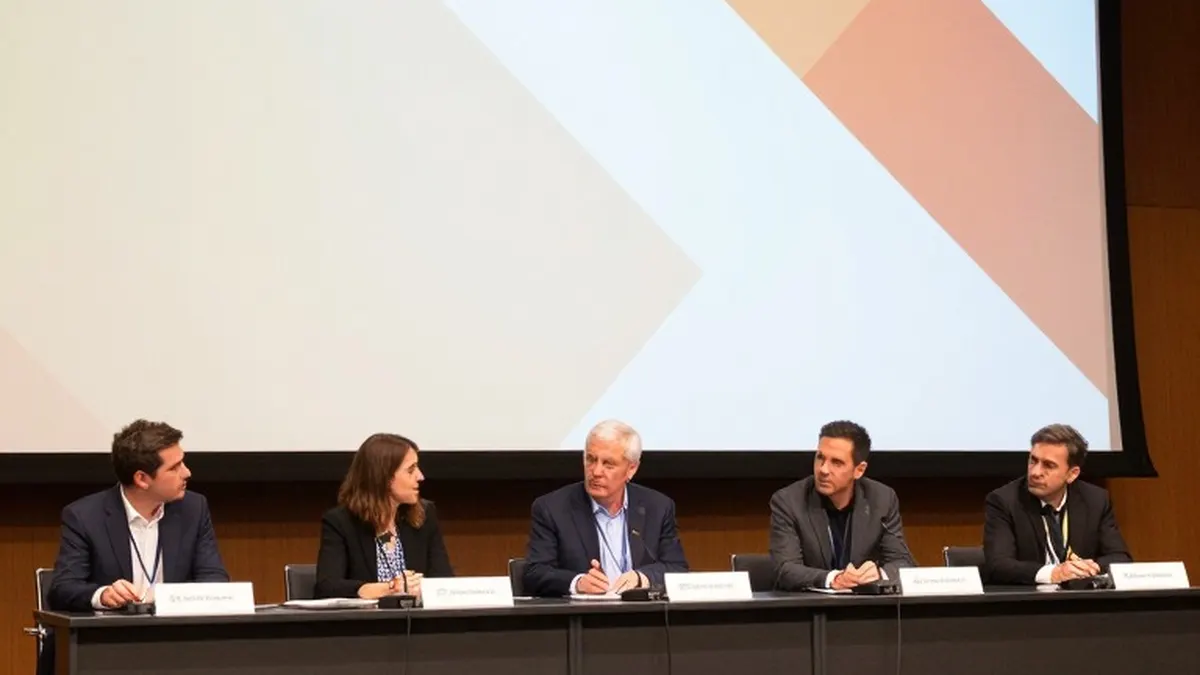
Sudhan Sundaram, the producer behind the 2024 Tamil thriller Maharaja, confirmed on November 25 that a Hollywood agency has approached him regarding remake rights for the film. The announcement was made during a panel at WAVES Film Bazaar, a market event held alongside the 57th International Film Festival of India in Goa. The film, which stars Vijay Sethupathi, was cited by industry leaders as a prime example of the expanding international reach of Indian intellectual property.
Sundaram is the founder of Passion Studios, a production company based in Chennai. The commercial success of Maharaja in overseas markets has been significant, with the film reportedly grossing approximately 910 million Indian rupees, or about 9.6 million US dollars, at the Chinese box office. This performance has placed the title on the radar of major international players looking for fresh narrative material.
The panel, titled From Local Hit to Global IP: Rooted in India, Reimagined for the World, was moderated by film critic Rajeev Masand. It featured several high-profile executives from major streaming and entertainment companies. The speakers included Nikhil Madhok, director and head of originals at Prime Video and Amazon MGM Studios India; Saugata Mukherjee, head of content at Yash Raj Entertainment; Ruchikaa Kapoor Sheikh, director at Netflix India; and Paolo Teta, head of business affairs at LSPG. Together, they analyzed the current state of Indian cinema on the world stage.
Nikhil Madhok observed that the ongoing debate about whether Indian stories are truly traveling globally indicates that the industry has not yet achieved a consistent breakthrough. He compared the situation to the Korean content boom, noting that India has not yet had its defining global moment. However, he expressed optimism, stating that the journey has begun and the industry is well on its way to achieving that status. Madhok also emphasized that authentic, locally rooted stories are more likely to stand out internationally than those based on existing trends or formats. He pointed to Prime Video series such as Made in Heaven and Raakh as examples of productions that exceeded expectations by staying true to their origins.
Ruchikaa Kapoor Sheikh argued that India has always been a powerhouse of storytelling, and the rise of streaming platforms has significantly reduced language barriers. She suggested that universal themes such as love, heartbreak, and maternal affection resonate across cultures. Consequently, she questioned the traditional distinction between local and global content, noting that audiences are increasingly drawn to these universal human experiences regardless of their geographic origin.
Saugata Mukherjee highlighted that Indian films like Mother India from 1957 and Dilwale Dulhania Le Jayenge from 1995 have maintained international audiences for decades. He noted that while streaming has blurred the lines between local and global markets, a key difference remains: stories finding viewers abroad versus intellectual property being actively remade for other markets. Mukherjee pointed out that India has not yet produced a show that has been remade into 50 different languages, suggesting there is still room for growth in this specific area of IP utilization.
The discussion also touched upon the balance between creating franchises and focusing on standalone films. Madhok stressed that the primary goal should be to create a compelling film and establish strong characters. He advised that extensions should only be considered if there is a worthwhile story to tell, rather than for the sake of commercial extension alone. Mukherjee agreed, suggesting that some narratives derive their strength from being self-contained and should not be forced into a franchise model.
The panel also identified animation as a promising sector for Indian storytelling, given the country's rich tradition of folk narratives and cultural heritage. Paolo Teta added a practical perspective on the business side of global expansion. He urged filmmakers to engage with legal and commercial frameworks early in the production process. Teta argued that understanding these structures early does not constrain creativity but helps make informed decisions about future rights. He specifically advised producers to involve lawyers early to avoid costly complications later, emphasizing the need to recognize and reward original writers if a property is later adapted or remade.
As the Indian film industry continues to expand its global footprint, the case of Maharaja serves as a notable milestone. The approach from a Hollywood agency for remake rights underscores the growing confidence in Indian narratives. Industry leaders at the WAVES Film Bazaar agreed that while the path to consistent global dominance is still unfolding, the foundation is being laid through authentic storytelling and strategic business planning.