The year 2026 was supposed to be when Wall Street's trillion dollar wager on artificial intelligence finally delivered. Instead, it has become a test of nerves for investors.
AI stocks climbed to record highs in the first half of the year, lifted by bumper earnings from US hyperscalers such as Google's parent Alphabet, Meta and Microsoft. Anthropic and OpenAI, two of the biggest names in the field, both announced plans to go public, following SpaceX's heavily hyped June flotation, which briefly made Elon Musk the world's first trillionaire. AI models, meanwhile, kept improving at difficult tasks in the race to match human intelligence.
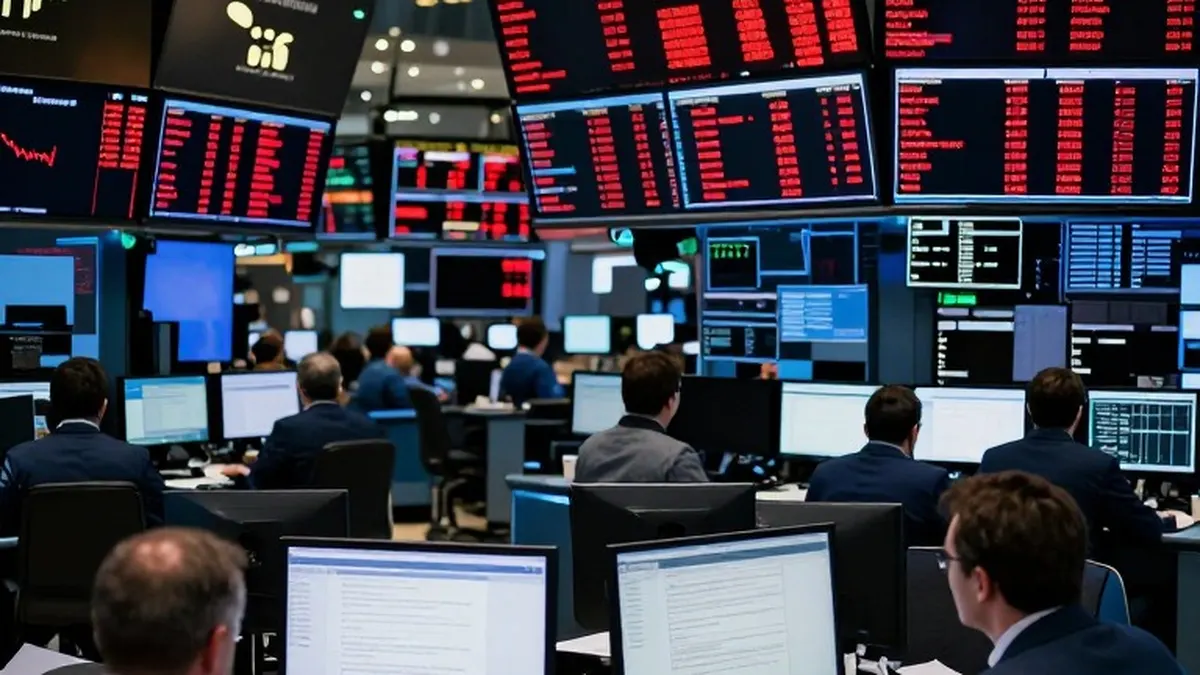
The mood darkened in the second half. Although chipmaker Nvidia's shares pushed higher last month, many hyperscalers and chip and memory firms saw violent swings in their stock prices. After the Democrats won control of the United States Congress in last week's midterm elections, technology shares sold off sharply, with the so called Magnificent Seven, a group that includes Meta, Apple, Amazon and Tesla, shedding more than $1 trillion in value in a single trading day.
The pressure intensified this week when Nvidia shares fell nearly 10 percent over two days after news that the company's board, working alongside the FBI, is investigating chief executive Jensen Huang's ties to a woman suspected by US intelligence of being a Chinese spy. Huang resigned on Thursday when a second alleged marital affair came to light, sending the stock lower again.
Behind the turbulence is a growing fear that the enormous sums being poured into AI will not generate matching returns. Goldman Sachs estimated in September that hyperscalers need about $300 billion in annual AI revenue to break even on their spending, a shortfall of roughly $230 billion. Political pressure to restrict the spread of AI data centers has added to the unease. "We're not in Kansas anymore," Dennis Dick, chief market strategist at the Canada based Stock Trader Network, told DW. Investors, he said, are now telling companies to "show me the money."
Others argue it is premature to call the end of the boom. Kit Rees, investment strategist at London based wealth manager Quilter, described last week's rout as a "healthy correction." "We're still in the very early innings of the AI build-out," she told DW. "There's still a lot of excitement around this technology and investors will want to have a slice of the pie." Goldman Sachs estimates that on top of roughly $800 billion in capital spending this year, hyperscalers plan to invest a further $1.2 trillion in 2027 and $1.4 trillion in 2028.
Against this backdrop, Anthropic still intends to hold its initial public offering later this month, while OpenAI has pushed its listing into next year. The Claude maker said on Tuesday it would offer 825 million shares priced between $70 and $78 each. The company, which had once targeted a valuation above $2 trillion, now believes it could be worth around $1.2 trillion to $1.3 trillion.
Dick said the timing left him puzzled. "Is this the best timing?" he asked, adding that the valuation hinges on whether Anthropic can reach a Goldman Sachs forecast of more than $600 billion in revenue by 2030. "If you get to a company with $600 billion in revenue, [a] $1.3 trillion [valuation] doesn't sound that bad," he said. "But when you're talking about a company with currently $52 billion in revenue, it sounds like it's overvalued." Others are more optimistic. "Anthropic is a once-in-a-generation company," Vivek Seth, chief executive of Shaires Holdings, told Bloomberg this week. "Its IPO will establish a market-clearing valuation as conditions stabilize."
Rees said investors should look for clearer signals before concluding the bubble is bursting, such as slowing AI related revenue or weaker appetite for financing AI projects through debt or equity. Some signs are emerging: borrowing costs for AI infrastructure firms like CoreWeave and Oracle have jumped, and the price of insuring Nvidia's debt against default rose 76 percent in a month, CNBC reported last week. Even so, Oracle, Meta, Microsoft and Alphabet have announced new AI bond deals worth $67 billion since the end of last month. Regulation is another watchpoint, after New York and Texas temporarily paused new data center approvals this summer. Texas Governor elect Gina Hinojosa, a Democrat who takes office in January, wants laws to keep data centers' heavy power and water use from driving up household bills.
Economist Gary Smith, author of the upcoming book "AI Mania: Blather, Bluster, and the Bubble of All Bubbles," compares the boom to past frenzies over railroads, cars, television and the internet, and warns of a "frightful crash." When the dot com bubble burst in 2000, the Nasdaq lost nearly 80 percent of its value, though bubbles often run longer than expected. Joachim Klement, head of market strategy at UK investment bank Panmure Liberum, told Bloomberg last month that his "core conviction is that the AI bubble will either burst in 2027 or in 2028, so sometime in the next two years."