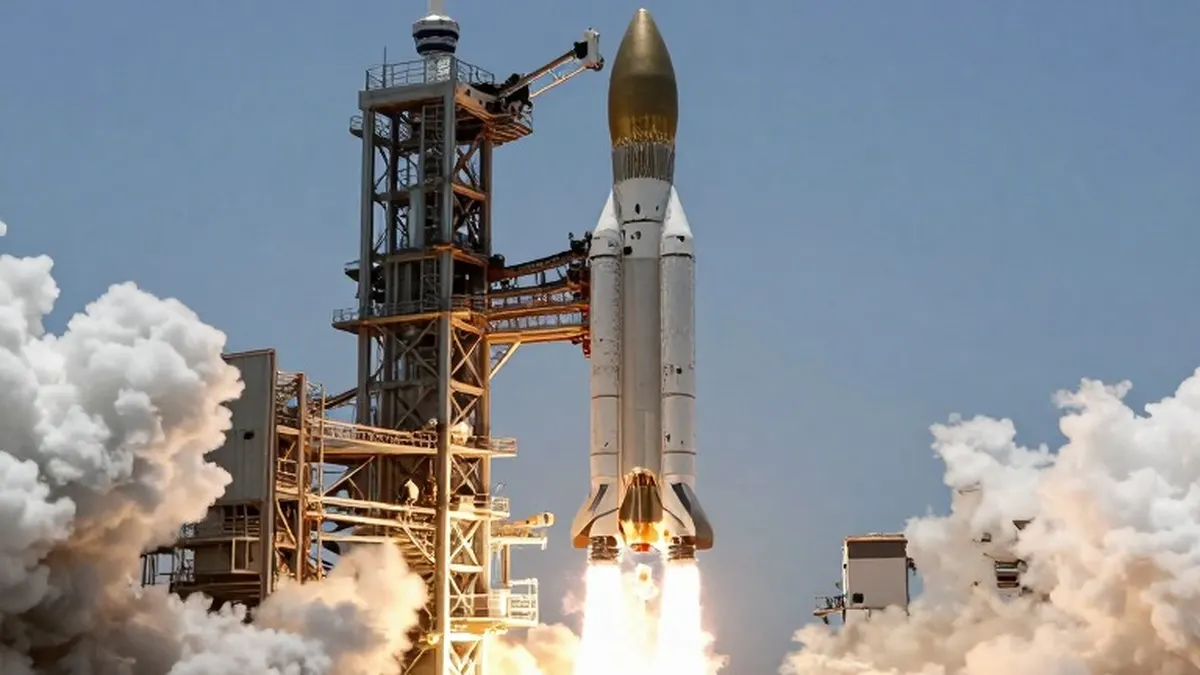
SpaceX successfully sent its Starship spacecraft into orbit on Friday, but an attempt to recover both parts of the launch system suffered a setback when the booster exploded above the Gulf of Mexico. The upper stage continued its mission, with a return to Earth scheduled for Saturday, November 14.
The uncrewed flight lifted off from the company’s South Texas Starbase site. Both the booster and the spacecraft initially launched successfully, but the booster later changed course during its return journey. Instead of reaching the launch site for recovery, it headed toward a designated area over the Gulf, where it exploded above the sea surface.
The cause of the unsuccessful controlled landing was not immediately known. SpaceX’s Dan Huot said: "Not sure right now why we weren't able to bring it back." Meanwhile, the spacecraft reached orbit and began releasing its payload of 26 satellites for the company’s Starlink network, completing another objective of the flight.
SpaceX planned to catch the returning spacecraft with mechanical arms at the launch pad on Saturday. A successful maneuver would mark the first recovery of the upper stage in this way after a journey back to Earth, potentially allowing it to fly again. Although boosters have been recovered on earlier launches, the upper stages from all 14 previous Starship missions ended in the ocean, either intentionally or following failures.
Standing 124 meters, or 407 feet, tall, Starship is the world’s largest and most powerful rocket system. It combines a spacecraft with a booster beneath it, and both components were designed to be fully reusable. While Friday’s mission carried no people, the system is intended to transport both crews and cargo. Recovering both stages was the new objective for this launch.
Full reusability is central to SpaceX’s effort to lower the cost of spaceflight. The company, owned by technology billionaire Elon Musk, currently relies mainly on its smaller Falcon rockets. Those vehicles are only partly reusable because their second stages cannot be recovered. Musk has said he expects Starship flights to take place weekly by early 2027.
The Starship project has attracted billions of dollars in NASA funding, alongside investment of at least $15 billion from SpaceX. Its main goal is to land astronauts on the Moon by 2028. Technical challenges still facing the program, however, could push that timetable back.