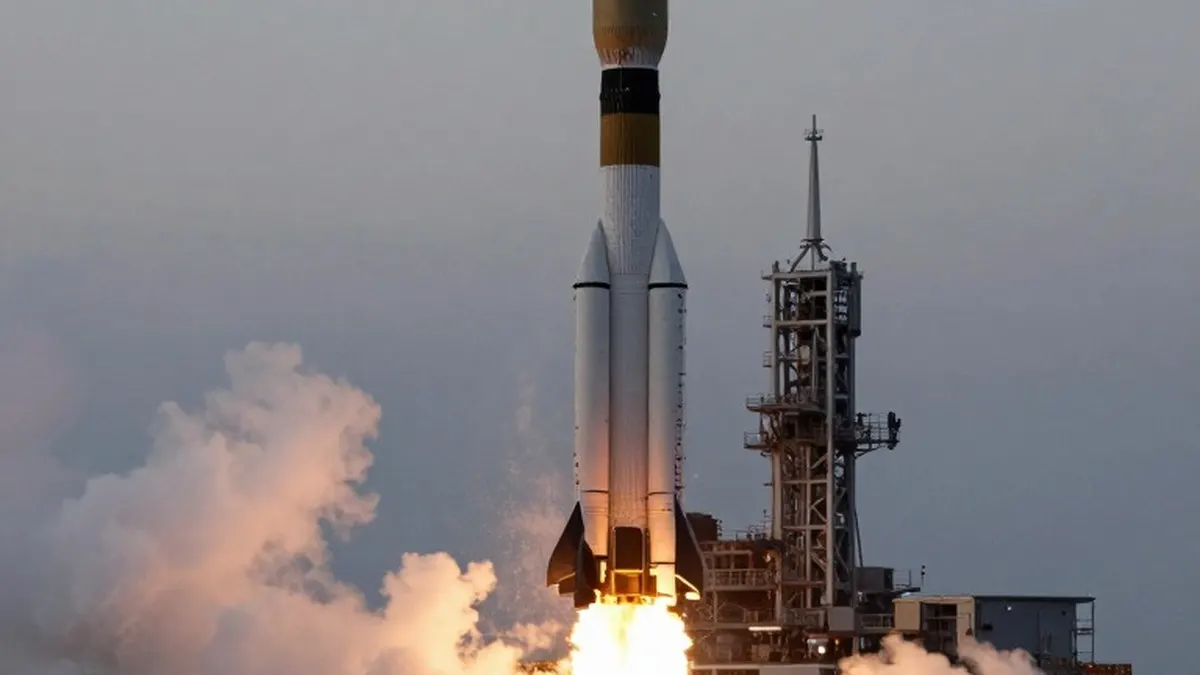
SpaceX conducted a significant test of its Starship rocket on Friday, marking the fifteenth flight of the vehicle. While the mission achieved its primary orbital objectives, the company did not succeed in its bid to recover both stages of the rocket. The launch took place at 4:47 p.m. local time, corresponding to 5:47 p.m. Eastern Time, from the facility in South Texas.
This specific mission was the first attempt by Elon Musk’s company to catch both the booster and the upper stage spacecraft. The plan required precise maneuvers to secure the components for reuse. However, SpaceX aborted the recovery of the booster during the flight. Instead of landing on a designated structure, the booster was diverted and splashed down in the Gulf of Mexico, where it burst into flames.
The launch occurred shortly after the Federal Aviation Administration granted authorization earlier that day. In a coincidental event, the FAA issued a nationwide ground stop just hours later due to communication issues affecting multiple air traffic control centers. A spokesperson for the FAA clarified to CNBC that this ground stoppage did not affect the SpaceX license or the specific flight.
Following the booster's splashdown, the upper stage continued its intended trajectory into orbit. The spacecraft is expected to complete approximately fourteen orbits around the Earth. SpaceX aims to land this upper stage back at its Starbase facility on Saturday, a critical step in validating the full reuse cycle for the vehicle.
The success of the Starship program is vital for SpaceX’s long-term goals of transporting cargo and crew to the Moon and Mars. In the immediate term, the rocket serves to expand the company’s Starlink satellite internet service, which currently acts as the primary profit center for the business.
The Starlink constellation already comprises more than 11,000 active satellites in low Earth orbit. A single Starship launch has the capacity to carry up to 60 Starlink v3 satellites, a figure representing roughly twenty times the payload capacity of the earlier Falcon 9 rockets.
During the previous test flight, SpaceX deployed 26 v3 satellites. The company released another 26 satellites during Friday’s mission. In a post on X, SpaceX stated the goal is for Starlink to account for 51% of the global internet traffic.
Analysts from William Blair noted in a report that SpaceX is likely a full decade ahead of its competitors in the launch sector. They suggested that even if the booster catch was unsuccessful, a delay of a few months would not be consequential to the company’s overall trajectory.
The launch comes amid renewed scrutiny of SpaceX’s military-focused Starshield service in Ukraine. President Volodymyr Zelenskyy recently stated that Ukrainian military forces experienced unannounced limits on Starshield capabilities, which hindered their defense against Russian aerial attacks. Similar restrictions were temporarily imposed the previous month.
Several U.S. senators have criticized these restrictions and are urging Congress to conduct an investigation into SpaceX’s operations and decision-making processes regarding the Starshield service.