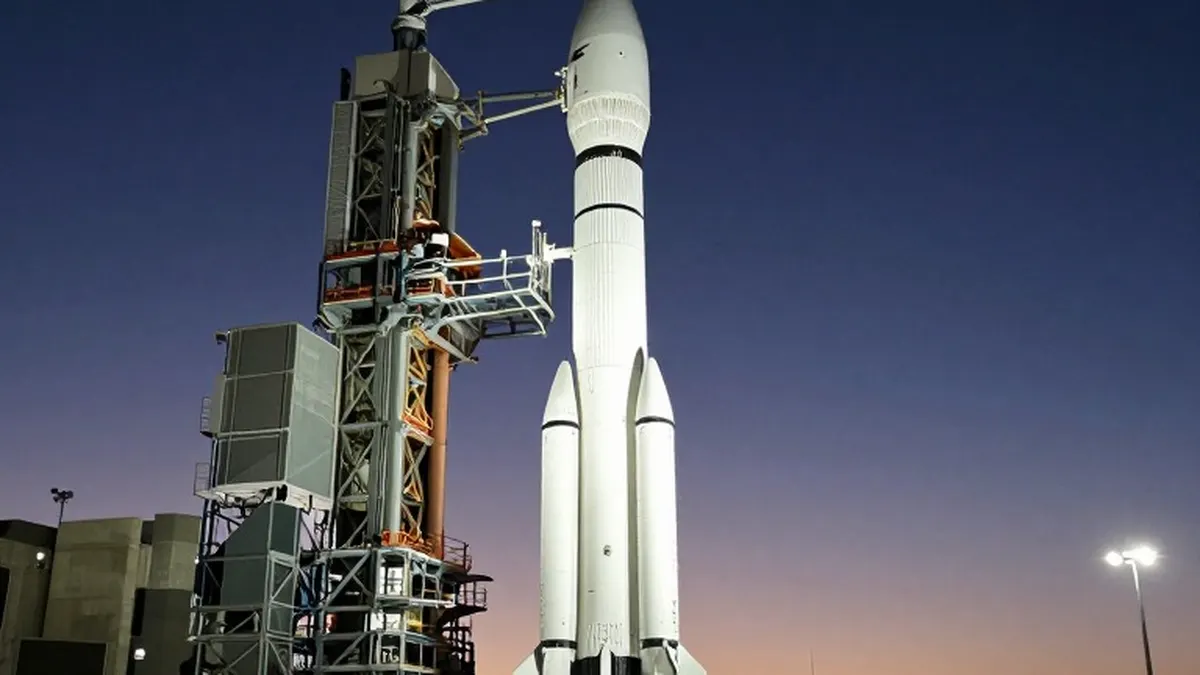
SpaceX is preparing for the most ambitious test of its Starship rocket to date. The company plans to launch the vehicle from a pad in South Texas, circle the Earth, and execute a vertical landing at the same site approximately 22 and a half hours later. This milestone is crucial for a rocket that founder Elon Musk envisions as the primary vehicle for transporting astronauts to Mars in the future.
However, experts warn that the rapid development of Starship could leave NASA in a difficult position. As SpaceX ramps up production and testing of its new giant rocket, it intends to retire the much smaller Falcon 9. This decision is significant because the Falcon 9 currently launches the Dragon capsule, which remains the only American spacecraft capable of ferrying NASA astronauts to and from the International Space Station.
Caleb Henry, director of research at Quilty Space, noted that the Dragon capsule has become the de facto method for astronauts to reach orbit due to its reliability and success. According to a NASA announcement in September, the agency has contracted SpaceX for three additional flights to the station. Assuming these missions are flown consecutively every six months and no further contracts are signed, Dragon flights would only extend through 2028. The space station itself is currently scheduled for retirement in 2030.
This situation represents a dramatic shift from earlier years when SpaceX depended heavily on NASA for survival. In 2008, after multiple Falcon 9 failures, the company was nearly bankrupt. Musk recalled the moment NASA awarded a large contract just before Christmas, saying he blurted out, 'I love you guys!' For the following decade, contracts from NASA and the Pentagon provided a substantial share of the company's revenue.
The financial landscape changed in 2020 with the launch of Starlink, SpaceX's satellite internet service. Subscriptions to Starlink quickly surpassed revenue from rocket launches. Recent financial reports indicate that SpaceX generated approximately $2.1 billion from space launches through September of this year. In contrast, Starlink brought in around $12.8 billion, while the company's expanding AI business contributed roughly $10.9 billion.
Starship is central to these larger business ventures. SpaceX is already using it to deploy powerful V3 satellites for Starlink. Musk has also stated that the rocket could eventually deliver data centers to space. He explained that once Starship flies reliably several times a week, it makes sense to shift engineering resources to achieve launch rates of several times per day, effectively winding down the Falcon line.
Gwynne Shotwell, SpaceX president, compared the Falcon 9 with Dragon to a minivan, arguing that it is unsuitable for the six-month journey to Mars. However, the minivan is currently the only American option for short trips to the space station. Henry pointed out that building space capsules is expensive and time-consuming, and NASA is about the only entity willing to pay for them in a market with little commercial demand for human spaceflight.
The retirement of the Falcon 9 will impact the commercial launch market as well. A Quilty Space analysis suggests a shortfall of approximately 150 launches between now and 2030. The Pentagon has reportedly been seeking alternative rides for national security satellites. The U.S. Space Force stated it has secured Falcon 9 launches through 2028 and is confident other suppliers can fill the gap.
Tim Farrar, president of TMF associates, believes SpaceX's business choices are logical given its scale. He noted that while individual NASA missions are likely profitable, they are small potatoes compared to the company's other revenue streams. Shotwell has implied that Boeing could fill the crewed launch gap. She suggested that Boeing, having been paid significantly to develop its Starliner capsule, should take on more business to fly its vehicle.
The Boeing Starliner has faced numerous technical issues. In 2024, a failed attempt to take astronauts to space resulted in a planned eight-day mission extending to nine months. The crew returned to Earth on a SpaceX vehicle in March of the following year. The next Starliner test flight is scheduled for this winter, with a crewed mission planned for 2028. Farrar acknowledged that while the business logic holds, NASA, which kept SpaceX from going bankrupt, might deserve a bit more loyalty.