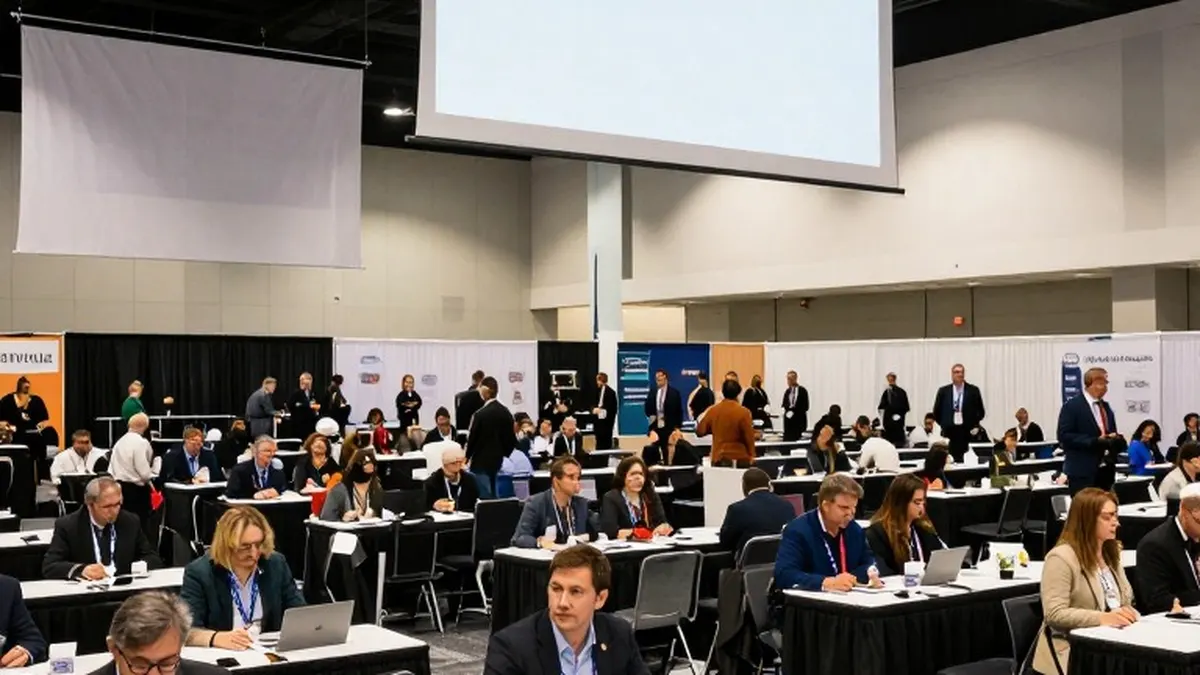
Industry executives traveling to Los Angeles for the American Film Market are reporting a renewed sense of optimism. While the film sector continues to experience disruption, a series of successful independent and specialty releases has altered the box office landscape. This shift has led many attendees to feel a level of confidence that has been absent for some time.
The momentum is being driven largely by the performance of foreign and niche titles. The latest installment in the Godzilla franchise, Godzilla Minus Zero, opened to an estimated $32 million. This figure significantly exceeded the distributor’s initial projection of the mid-$20 millions. Takashi Yamazaki’s sequel, which reportedly cost in the mid-teens, is being described as the biggest live-action foreign-language opening since 2004’s Hero, which started with $17.8 million.
Documentaries are also seeing unprecedented theatrical success. A24’s You Can See Everything, a film by Nathan Fielder and Lance Oppenheim about Elizabeth Holmes, has grossed nearly $80 million in domestic sales. This result is considered rare for nonfiction in a market that has often been difficult for documentaries. The film is currently beginning its international rollout.
Other niche programming has delivered strong numbers as well. Angel Studios’ faith-based film Drummer Boy, directed by Ben and Joel David Smallbone, opened to approximately $9 million. Additionally, Nitesh Tiwari’s Indian epic Ramayana: Rise of a Legend, distributed in the United States by Sony, earned an estimated $8.6 million during its first weekend. This release marks the widest domestic launch ever for an Indian film.
The success of indie horror titles has further contributed to the positive outlook. Recent releases include Obsession, which has earned $500 million worldwide, and Backrooms, which has passed the $400 million mark. The self-distributed Iron Lung has also performed well, grossing over $50 million. These figures suggest that the market is ready for a positive experience at the upcoming market.
Sales agents are noting that audiences are not only attending theaters but are also younger than in previous years. Sarah Lebutsch, head of sales at U.K. group Protagonist Pictures, cited the performance of You Can See Everything as evidence that effective marketing and timing can still drive hits. She emphasized the importance of Gen Z and Gen Alpha attending cinemas together, describing the resurgence of this demographic as a source of great encouragement for the industry.
Government policy is also playing a role in shaping the market environment. California Governor Gavin Newsom is proposing a significant expansion of the state’s film and television tax credit program. The plan would increase the annual credit from $750 million to $1 billion. This incentive has been essential for keeping production projects within the state.
On the federal level, Newsom is supporting a bipartisan effort in Congress to create a national film and television tax incentive. This federal program would stack on top of existing state credits. For independent producers who are assembling financing, the addition of a federal layer would represent a substantial and necessary change to the funding structure.
The presale market, which has historically been the foundation of the American Film Market, also appears stable. Lebutsch noted that presales have consistently worked well for her company at the event. She expects major buyers from around the world to attend to acquire packages. Protagonist will be marketing It’s All Right, a film featuring Paul Bettany as an aging rock star and Asha Banks as a rising singer who is his forgotten daughter.
A key topic of discussion at this year’s market will be the pipeline from online creators to directors. Many of the prominent young horror directors built their fan bases online before achieving theatrical success. Veteran horror producer Steven Schneider, whose Spooky Pictures recently released the hit Hokum, suggested that the industry can learn from creators. He argued that storytelling does not need to be limited to strict traditional forms and that narratives can be expanded through short-form video to build excitement. However, he cautioned that online success does not always translate to cinema, emphasizing that traditional storytelling conventions should be respected rather than dismissed in favor of virality. Despite not every package becoming a massive hit, the return of audiences and the promise of new incentives provide ample reason for the industry to feel hopeful.