The Israel Prison Service is carrying out far-reaching changes to inmate rehabilitation, prison security and the duties of correctional officers, senior officials told Maariv during a visit to Dekel Prison. At the center of the effort is a behavioral rehabilitation program meant to prepare prisoners for reintegration into society.
Wing 5 of Dekel houses the Behavioral Pattern Modification Department, known by its Hebrew acronym SHADEH, which focuses on changing behavior patterns. One inmate, identified as R., who is serving a sentence for domestic violence offenses, is expected to be released in about four months if the parole board approves and he meets the department's requirements.
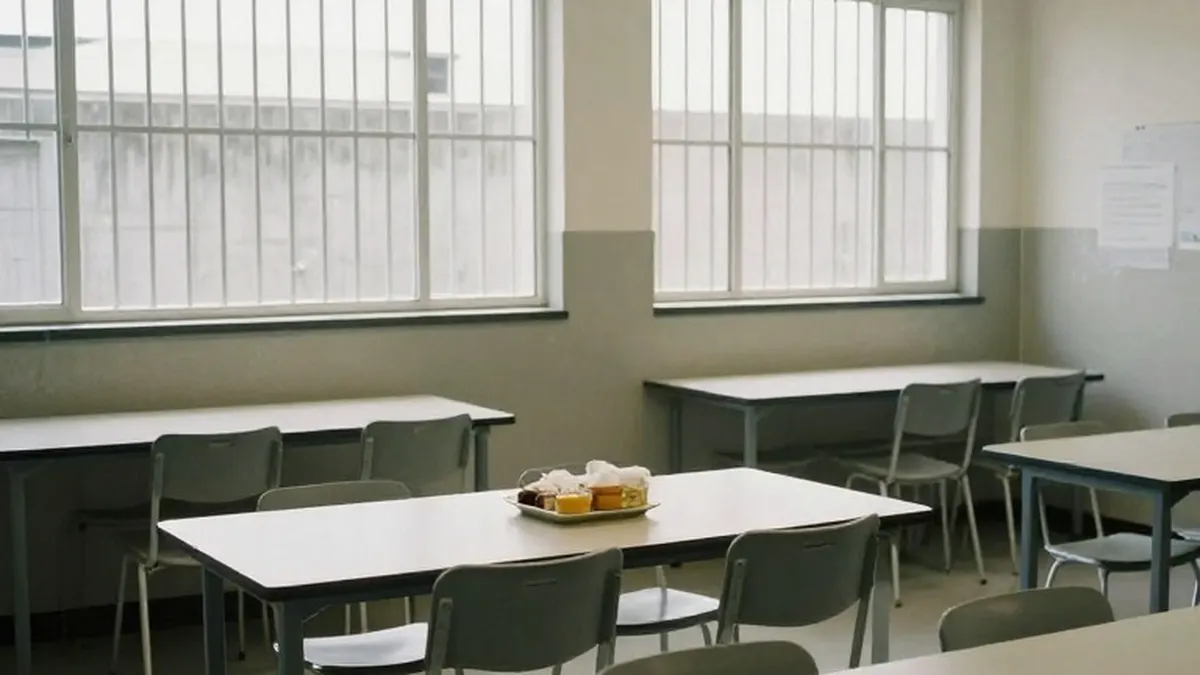
Prisoners who join the program 'receive things here that they have not received anywhere else,' Dekel commander Chief Superintendent Shahar Raymond said. 'There is an educational center here and an attention center for prisoners with attention deficit disorders. We do not treat them with Ritalin here. It is all about the personal work of each and every inmate.' During a farewell gathering for one prisoner in the recreation room, where slightly more than 20 inmates sat with light refreshments, all rose when Raymond entered, a discipline she said they adopt as part of rehabilitation.
Participants must obey the law and rules consistently, maintain appropriate behavior every day, join open group discussions and take part in work and maintenance duties in their living quarters. 'They did not live according to these standards outside prison. Here, they are given an opportunity to meet them and live by them so that society will accept them as people with equal rights,' Raymond said. She recalled a prisoner who was certain the parole board would shorten his sentence, but it did not happen because he failed to meet the program's minimum requirements.
R. said the recent elections barely came up among inmates. 'Now I listen more, including to my children and my family. I learned that in the department,' he said. Another inmate, A., who works at a branch of a factory from southern Israel operating inside the prison, said the focus is on what must be done before release. Dekel houses 700 inmates serving terms of up to seven years; about 40% take part in educational activities, mainly religious studies, or work in factory branches that produce soap, wipes, military clothing and reflective safety vests, and that repaired sleeping bags during the war.
Those in charge of departments and wings are now called correctional officers rather than prison guards. 'There is a difference between what the Israel Prison Service looked like three years ago and what it looks like now,' said IPS Southern District commander Commissioner Yuval Erlich, 46, who joined the service in 2007 and has led the district for nine months. Raymond noted a significant recent rise in women joining the role. Officers now carry advanced equipment, including a Taser for every officer, and Erlich stressed that, unlike soldiers or police who disengage after operations, a correctional officer lives alongside prisoners and remains in constant contact with dangerous criminals.
Under National Security Minister Itamar Ben-Gvir and IPS Commissioner Kobi Yaakobi, the service has established advanced operational divisions and introduced technological systems for continuous monitoring inside prison wings, along with closer surveillance to stop prisoners from directing terrorist and criminal activity from behind bars. 'Simply putting a criminal behind bars is not enough. If he directs crime or terrorism while incarcerated, that must be stopped, and discipline must be enforced,' Erlich said. Senior officials described cases in which intelligence gathered inside prisons was passed to relevant authorities, saving numerous lives.
The adjoining complex that includes Eshel Prison, Dekel Prison and the Oz detention facilities will see two more major projects. A reinforced concrete perimeter wall about four kilometers long and three meters high will be built around the complex, fitted with electronic identification and sensor systems; Bedouin residents living in tents and tin structures next to the compound have been removed ahead of construction. A new women's prison, Neve Tirza, will also be established within the complex, and Kfir Saharonim Prison will be rebuilt and returned to service afterward. Commanders also continually transfer imprisoned heads of criminal organizations, including figures linked to the Zaguri and Latif organizations, to prevent them from creating areas of control.
Security inmates now live under far stricter conditions, remaining in their cells 23 hours a day with one hour of exercise, eating meals in their cells and losing privileges such as family visits and communal dining halls. Criminal prisoners and other categories may still buy from the commissary, receive visitors and join educational and professional programs. Officers have also been authorized to cover their faces during cell operations and remove their name tags. Inmates R. and A., meanwhile, continue waiting for release while adapting to the new behavioral requirements.