Israel’s October 27 election produced another parliamentary deadlock, with neither Prime Minister Benjamin Netanyahu’s coalition nor the main opposition alliance reaching the 61 seats needed for a majority. Netanyahu’s bloc secured 53 seats, five ahead of its principal rival, after one of the highest voter turnouts in decades. Arab parties won a record 19 seats but remained on the sidelines of coalition negotiations.
About 2.38 million Israelis voted for Netanyahu’s coalition, led by Likud, while roughly 2.21 million backed the opposition alliance. The result came despite major controversies surrounding his government. Judicial changes introduced at the beginning of its term in 2022 prompted the country’s largest street protests, and Netanyahu remains on trial in a corruption case that dates to 2019.
The campaign focused primarily on domestic divisions, including the authority of the courts and military service exemptions for the ultra-Orthodox minority. Another central question was whether to investigate the government’s alleged failure to act on warnings before the Hamas-led attacks of October 7, 2023. Analysts said Gaza and the occupied West Bank had little influence on voting decisions because the two main alliances broadly agreed on those issues.
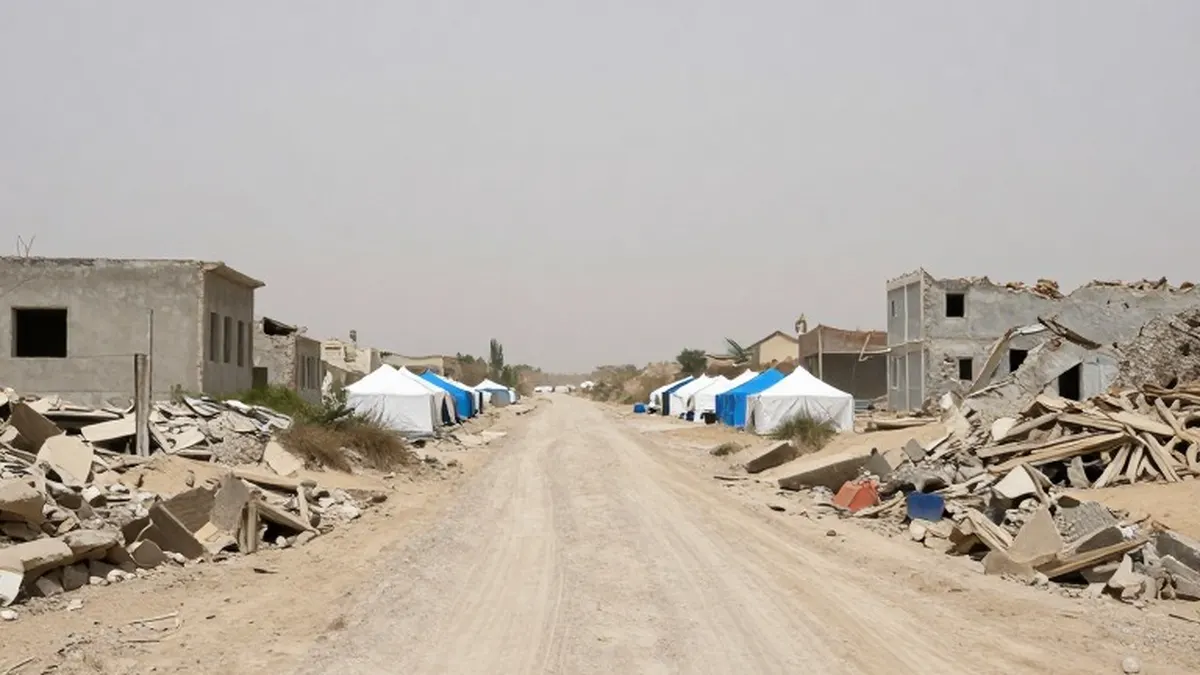
That agreement left limited room for scrutiny of alleged Israeli war crimes in Gaza, where Israeli attacks have killed more than 74,500 people and devastated much of the territory. Violence in the West Bank also received little attention. On October 26, a United Nations commission of inquiry said Israel had committed crimes against humanity there, including extermination, torture and rape.
Israeli sociologist Yehouda Shenhav-Shahrabani told Al Jazeera that a lack of information alone could not explain public attitudes. Many Israelis knew about Gaza’s destruction, he said, although they encountered a selective account of it. He distinguished awareness of suffering from acceptance of its moral and political significance, describing a pattern in which people could regard themselves as decent while accepting a political system that inflicted suffering on others.
Ahron Bregman, an Israeli analyst and senior teaching fellow at King’s College London, pointed to the strength of loyalty among Netanyahu’s supporters. He said their attachment to Likud and hostility towards the left helped sustain support regardless of the prime minister’s shortcomings. Netanyahu has held office for a cumulative 19 years, approximately a quarter of Israel’s existence.
Roi Zur, an academic specialising in voter behaviour at Essex University, said security perceptions were particularly important in mobilising Netanyahu’s electorate. Supporters believed an alternative coalition would be less capable of protecting them, he said. Zur argued that Netanyahu had successfully encouraged fear while presenting himself as the leader strong enough to manage the situation after October 7.
For Shenhav-Shahrabani, the election reflected attitudes extending beyond any individual leader. He said decades of war and occupation had shaped how Israelis understood security, citizenship and democracy. Changing the prime minister, in his assessment, would therefore leave deeper political problems unresolved.