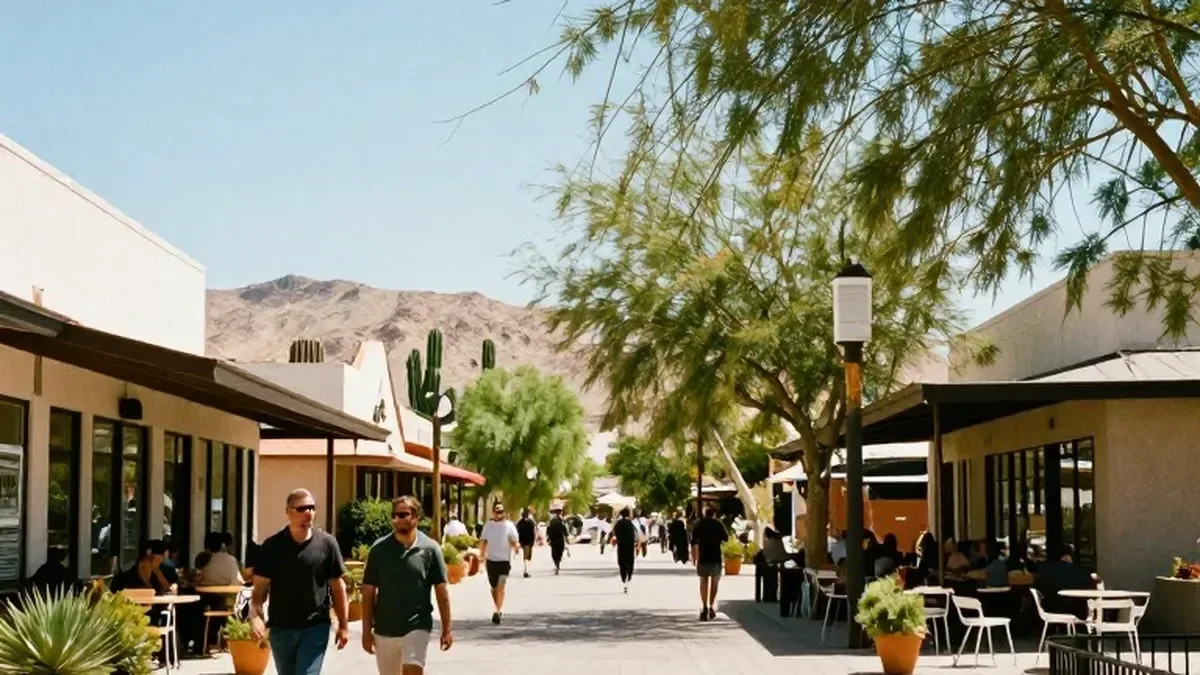
Drivers traveling through the Mojave desert on State Route 14 often pass by stark landscapes that film studios use to depict alien worlds. It is a surprising transition to then encounter a walkable, tree-lined boulevard, yet this is the reality in Lancaster, California. Nine blocks of West Lancaster Boulevard, formerly a section of Highway 14, were redeveloped in 2010 into a mixed-use urban streetscape known as the BLVD.
The city invested 11.5 million dollars to transform this busy thoroughfare into an inviting public space. The previous five-lane road was reduced, with the three center lanes replaced by tree-lined ramblas. This design choice references Spanish terminology for avenues and watercourses, acknowledging that dry stream beds once served as streets in early settlements. The result is a corridor home to 250 public and private enterprises, including banks, museums, a performing arts center, a public library, and various restaurants.
According to the city, the financial returns on this investment have been substantial. Within four years of the project's completion, the area generated more than 270 million dollars in economic output. It also attracted 130 million dollars in private investment, created hundreds of jobs, and spurred the construction or renovation of hundreds of housing units. City Hall is located just one block south of the district, reinforcing its central role in municipal life.
The social benefits of the redesign have been equally significant for residents. John Elford, the manager of the Lancaster public library, noted that while customers were initially angry about the construction disruption, the sentiment shifted rapidly upon completion. He recalled that everyone loved the new space and complaints ceased. The walkable nature of the area encouraged people to leave their cars, leading to new patterns of interaction. Library visitors began browsing fiction and non-fiction sections rather than seeking specific titles, turning the building into a true community gathering space.
This shift has also improved the dynamic between regular patrons and homeless neighbors. Elford explains that residents have come to know their unhoused neighbors personally, sometimes witnessing their progress through the library's social work programs. This familiarity has helped foster a more inclusive environment where people can connect without the pressure of formal introductions.
To maintain the district, property and business owners partnered with the city in 2013 to form the BLVD Association. This property-based improvement district allows businesses to act as caretakers and promoters, funded in part by city taxes. In 2016, the association launched an ambassador program, hiring representatives to walk the area and assist visitors. Brian Morris Jr., one such representative, reports that while occasional issues like begging or break-ins occur, the area remains safe and livable.
Local business owners have also embraced the change. Nicole Stevens, who has lived in Lancaster since 1993, runs a marketplace for local vendors and enjoys bringing her son to the district. She notes that the reimagining has successfully brought small businesses and families together. Similarly, Alex Arreola, a marketer at the Sassy Bird restaurant, credits the walkable environment with helping him build friendships with residents and other owners. He describes the BLVD as a major benefit and the best place in Lancaster right now.
Cultural institutions have found a new home in the district. The Lancaster museum opened in 2012 to highlight the history and culture of California's Antelope Valley. Kim Calderwood, the museum's art program manager, recalls the area as a child and was excited by its transformation into a space with more foliage and businesses targeting younger clients. She notes that many residents are surprised to discover the museum exists, often stumbling upon it while wandering the streets.
The district also supports unique retail experiences. Nanette Rushing, who owns Nantiquez Vintage Flair, describes her shop as a museum where exhibits are for sale. She has been on the BLVD for ten years and describes the street as a melting pot that dictates trends in food, music, and art. As evening approaches, the area comes alive with activity. Resident Frazier Farrell often walks past the farmer's market, which features everything from fresh produce to cemetery plot booths. He enjoys the variety of options available, from bars and theaters to standup comedy and open mic nights.
While some residents complain about the slow speed limits in the district, Calderwood remains a strong advocate for this style of city planning. She believes the BLVD offers a type of urban environment that is rare in the region, providing a welcoming space that encourages community interaction and discovery.