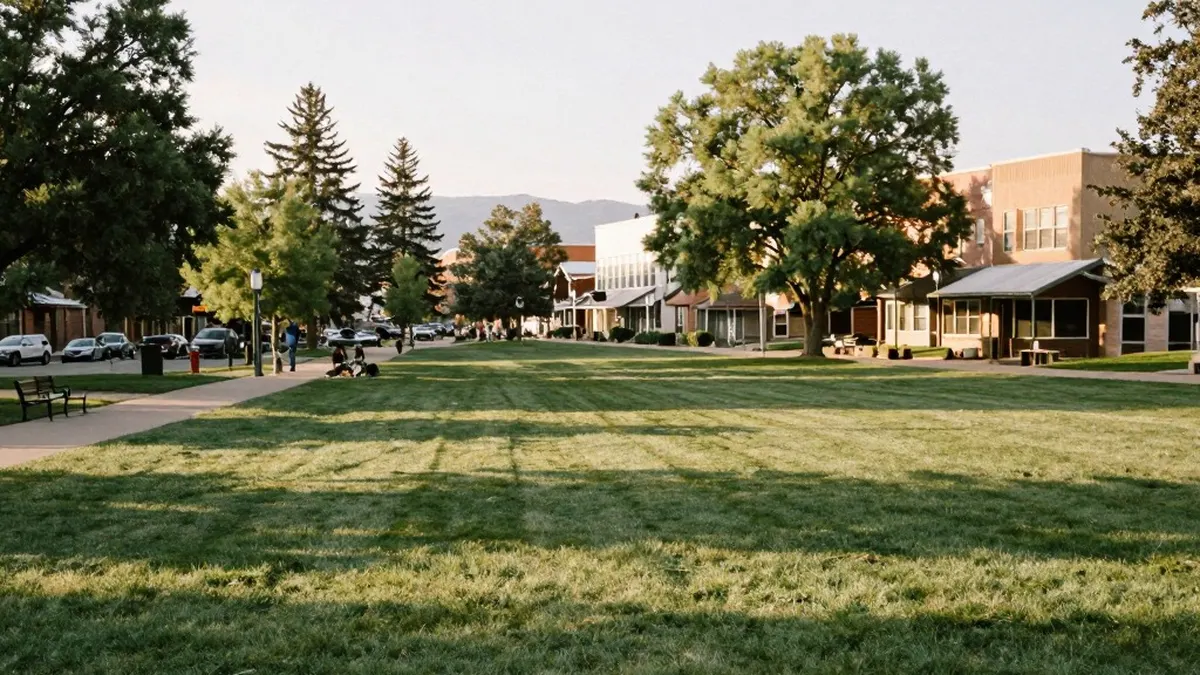
In Jacksonville, Florida, a boarded-up elementary school sits on a 250-acre site formerly known as Brown’s Dump. The location, which once served as a landfill for toxic ash from municipal incinerators, was later developed into residential areas and a school in the 1950s. This history of environmental exposure is now being connected to the city’s high rates of child firearm injuries, revealing a deep link between historical housing practices and current public health crises.
The area was subject to redlining, a systematic practice that marked predominantly Black neighborhoods as high-risk for mortgage lending. As a result, local authorities permitted industries linked to toxic pollution to build in these communities. Generations of Black children lived and played on land contaminated with lead, arsenic, and other substances. Although the federal government and the state of Florida identified the soil as a potential public health hazard in 1999, the cleanup process did not begin until eight years after the school closed in 2001.
Research from the University of Wisconsin-Milwaukee suggests a direct correlation between early lead exposure and later firearm violence. The study found that lead exposure in the first six years of life is positively associated with an increased risk of becoming a perpetrator or victim of gun violence in early adulthood. Lindsay Emer, the lead author of the study, described this connection as a legacy of segregation and a significant environmental injustice for the African American population.
Hospital claims data obtained by KFF Health News and The Trace highlights the severity of the issue. Between 2018 and 2024, more than 4,000 children in Florida were hospitalized for firearm injuries. At least 375 children under age 18 in Jacksonville were hospitalized during this period, with a significant portion coming from the ZIP codes surrounding the former dump site. These specific neighborhoods rank among the worst in the state for child firearm injury rates.
Community activists and public health experts argue that the violence is a symptom of deeper systemic issues. Jeffrey Goldhagen, a professor emeritus of pediatrics at University of Florida Health Jacksonville, emphasizes that removing lead from the environment is a critical step in impacting gun violence within the Black community. He notes that lead exposure can impair cognitive development and impulse control, factors that contribute to the cycle of violence.
The city has taken some steps to address the historical inequities. In 2024, the Jacksonville City Council unanimously approved a resolution to redress the effects of redlining. Additionally, the U.S. Justice Department reached a settlement with Ameris Bank in 2023, alleging the bank had redlined minority neighborhoods. The bank agreed to create a loan subsidy fund and open a branch in a minority area, though its CEO disagreed with the characterization of discriminatory conduct.
Despite these measures, residents feel the progress is insufficient. A new medical examiner’s office and morgue recently opened in the Brentwood neighborhood, a predominantly Black area north of downtown. The facility is located across the street from a public charter school, a placement that many neighbors view as a symbol of systemic racism and the high rate of firearm injuries. Protesters have marched outside City Hall, demanding tangible action rather than just recognition of the problem.
Local officials acknowledge the challenges facing the city’s north side. Councilman Jimmy Peluso stated that the area has been ravaged over the years and has not been given the proper opportunity to stand on its own. However, a spokesperson for Mayor Donna Deegan declined to answer specific questions regarding gun violence and racial inequality, leaving many residents feeling unheard.
Public health leaders warn that the county health department has been weakened by years of budget and staff cuts. Data shows that the department’s spending per person dropped significantly between 2008 and 2019. Experts argue that a rigorous public health approach is needed to address the root causes of gun violence, including environmental toxins, but that the current system lacks the resources to implement such strategies effectively.
The situation in Jacksonville serves as a case study for how historical policies continue to shape modern health outcomes. As the city grapples with the aftermath of redlining and industrial pollution, the connection between environmental justice and firearm violence remains a central concern for residents, activists, and researchers alike.