House Minority Leader Hakeem Jeffries and Senate Minority Leader Chuck Schumer have no shortage of detractors on the left, but interviews with Democratic lawmakers across the party's ideological and generational spectrum this week found no real movement to unseat either New Yorker, and no challenger has stepped forward against them.
Rep.-elect Bob Brooks of Pennsylvania illustrates the crosscurrents. A Democrat endorsed by both Sen. Bernie Sanders of Vermont and the moderate Blue Dog Coalition, Brooks won by more than 12 points in a Lehigh Valley district that had leaned marginally Republican, as voter anger at the polls focused on removing Republicans from Congress. Some Democrats remain furious at their own leadership for not standing further left or fighting President Donald Trump harder.
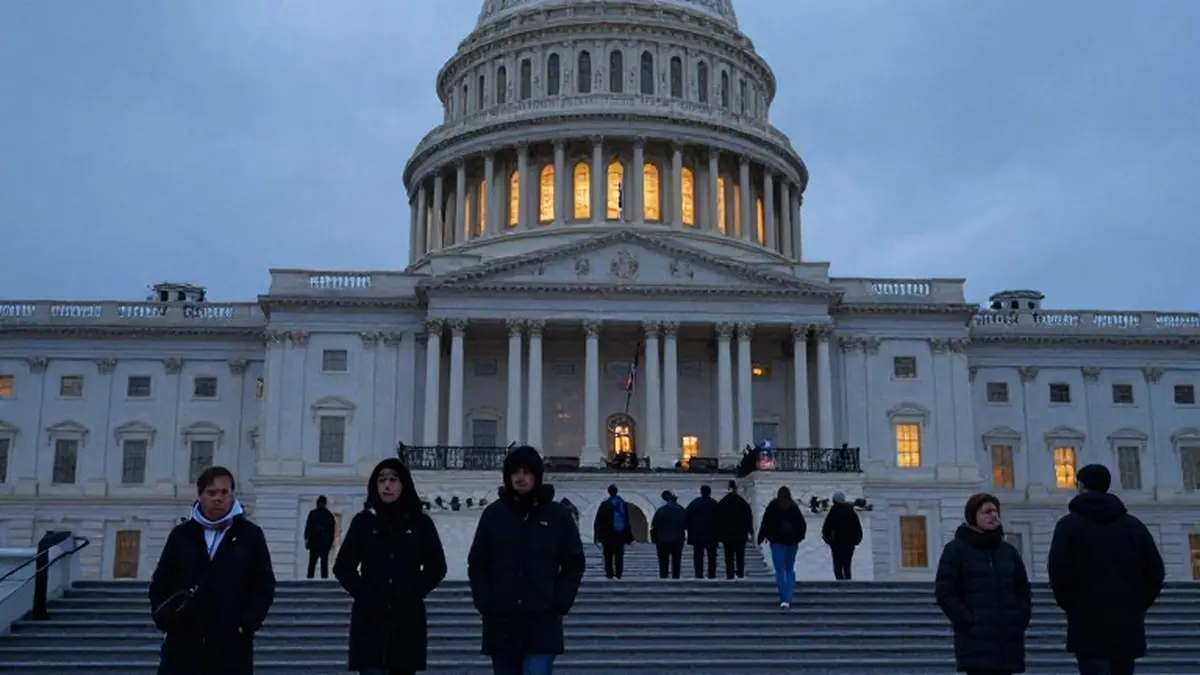
Asked at the foot of the Capitol steps during freshman orientation how he planned to vote for speaker, Brooks was blunt: "There's nobody else to vote for right now: It's Hakeem Jeffries. I'm Team Hakeem right now."
Anyone reading left-leaning social media feeds might assume Jeffries is at risk of not becoming the first Black leader of either chamber of Congress in January, with some critics arguing he has been "bought" by special interests. Inside the caucus, however, that picture does not hold. "It's interesting because the outside conversations don't match the internal conversations," said Rep. Jahana Hayes of Connecticut. "No one else is putting their name in, and he delivered the largest majority."
That final point carries weight for both leaders. Despite two years of activist frustration over the party's approach to confronting the president, it was Trump who lost touch with the American public, in part because Democratic leaders avoided shooting their party in the foot.
Schumer faces the louder rumblings as he pursues the majority leader job. Sen. Chris Van Hollen of Maryland is gauging colleagues' support for a possible challenge, and Sanders and Sen. Elissa Slotkin of Michigan have said publicly they do not back Schumer. Yet the ambitions of Van Hollen and Slotkin, both often mentioned as potential 2028 presidential contenders, and Sanders' efforts to pull the party leftward, should not be mistaken for broad disapproval inside the caucus, even as several incoming freshman senators are opposed or noncommittal. Schumer is on track to win a secret ballot for majority leader after Thanksgiving. If either leader were truly vulnerable, candidates would be climbing over one another to run. So far, none are.
In Ohio, meanwhile, newly elected Gov. Amy Acton's team offered a behind-the-scenes account of how she overcame a deeply personal attack ad from Republican Vivek Ramaswamy to become the first woman elected governor of the state and the first Democrat to win the office in 20 years. Her running mate, David Pepper, first spotted the ad shortly after 8:30 p.m. on a Monday night in mid-October while dining with local Democrats at the Old Canal Smoke House in Chillicothe: a 60-second video in which Acton's long-estranged mother called her daughter a liar and urged Ohioans not to vote for her.
The campaign had braced for the possibility that Ramaswamy would enlist Donna Arthur, a woman Acton had not seen or spoken to since her stepfather was charged with raping her as a young child. That night, a plan months in the making was activated. Footage of Acton's brother recalling the abuse they endured as children was used to produce an immediate response ad, and police and court records documenting the rape case against her stepfather, long obtained by campaign researchers, were shared with reporters and circulated online the next morning. "We didn't sleep a ton that night," senior adviser Justin Barasky said. "But I think we seized on it." Two weeks later, Acton made history. The account is based on interviews with more than a half-dozen people who worked on or closely with the campaign.
Elsewhere in the midterm results, Scott Colom defeated Republican Sen. Cindy Hyde-Smith in Mississippi, becoming the first Democrat to win a Senate seat there since 1982 and the state's first Black senator since Reconstruction. Republicans notched a rare flip in Maine's 2nd District, where former Gov. Paul LePage prevailed after a ranked choice tabulation. And even as shell-shocked Republican lawmakers say they want a course correction, they remain deeply reluctant to blame Trump directly for their losses.