Gadi Eisenkot, the leader of the Yashar party, has issued a sharp condemnation of recent violence in the occupied West Bank, labeling a series of settler arson attacks as Jewish terrorism. The former politician, who was assigned the task of forming Israel's next government by President Isaac Herzog on November 8, accused far-right ministers Bezalel Smotrich and Itamar Ben Gvir of fueling the conflict. He argued that these leaders are responsible for driving the region toward a state of unchecked anarchy.
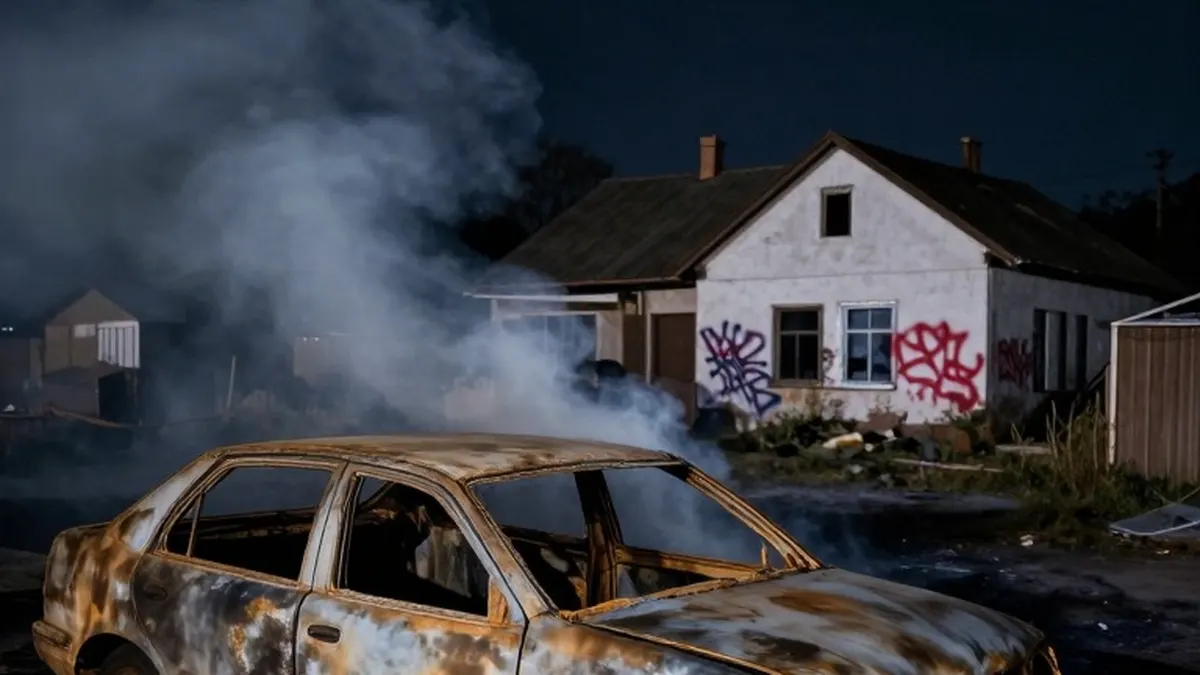
The criticism follows violent incidents that occurred overnight between Saturday and Sunday, targeting the Palestinian villages of Deir al-Sudan, Deir Abu Mashal, and Kafr Malik near Ramallah. According to local media reports, settlers set fire to Palestinian-owned vehicles and sprayed racist graffiti on residential buildings. The Palestinian news agency Wafa reported that a total of 12 vehicles were burned across the three communities during the attacks.
In a post on the social media platform X, Eisenkot described the sabotage acts by extremist groups as undermining regional stability and endangering lives. He stated that these actions seriously harm Israel's national security and foreign relations. Eisenkot called on the government and the security establishment to implement tougher measures against violent settlers, including administrative detention and targeted operations by the Shin Bet, Israel's domestic security agency.
Eisenkot emphasized that the current chaotic situation is not inevitable but is instead the result of poor leadership. He noted that the acts of setting fire to homes and vehicles reflect a deeper systemic failure. He urged authorities to use all available legal and security tools to stop the perpetrators and restore order in the territory.
Yair Lapid, another prominent opposition politician, joined in the condemnation of the attacks. He described the events as a form of terrorism born from criminal negligence by the Israeli government. Lapid criticized the silence of government ministers, suggesting that their inaction deliberately encourages these violent episodes, which he referred to as pogroms. He promised that his future government would tackle this terrorism and restore law and order.
The latest incidents occur against a backdrop of sustained escalation in settler violence across the West Bank. Palestinian communities have faced increased assaults, property destruction, and restrictions on access to farmland. The expansion of settlement outposts has also been linked to these growing tensions, creating a difficult environment for local residents.
The United Nations Office for the Coordination of Humanitarian Affairs, known as Ocha, recorded 40 settler attacks resulting in casualties or property damage between November 10 and November 16. These incidents affected 30 Palestinian communities, leaving 38 people injured and displacing 68 individuals, including 31 children. Israeli police have opened investigations into the recent cases of arson, vandalism, and property damage.
Ocha data shows that 428 settler attacks occurred during the 2026 olive harvest season, which ran from September 1 to November 16. These attacks have disrupted farmers' access to their land and damaged agricultural livelihoods. October marked a record for monthly incidents, with 467 attacks documented, the highest figure since the agency began tracking such events in 2006.
Since January 2023, settler violence and access restrictions have displaced approximately 6,800 Palestinians across 137 communities. This total includes more than 3,200 children. In 2026 alone, 2,894 Palestinians have been displaced by such violence. The UN agency notes that these attacks are often linked to the expansion of settlements and the gradual loss of Palestinian access to their land.
The Israeli settlement watchdog Peace Now reports that settlers have taken control of more than 100,000 dunams of land in Areas A and B. This area is equivalent to 10,000 hectares. Violence and threats have been used to restrict Palestinian access to this land, and in some cases, families have been pressured to leave their homes.