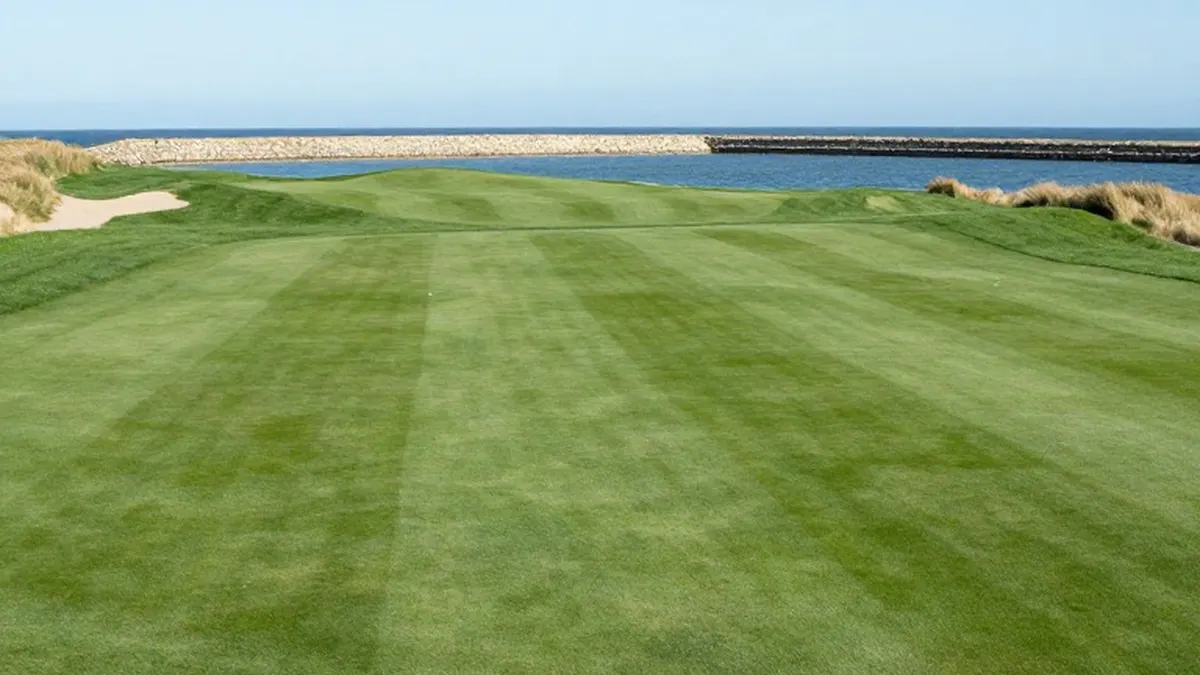
A federal judge in Washington issued a ruling on Saturday that temporarily blocks the Trump administration from closing East Potomac Park to the public. The decision strikes at the core of the president's initiative to renovate the site's golf course. U.S. District Judge Ana Reyes determined that the park and its surrounding infrastructure must remain accessible while legal proceedings continue.
The administration had previously announced that it would close the entirety of East Potomac and Hains Point starting on Sunday. However, Judge Reyes wrote that the golf course, along with adjacent bike and walking paths, must stay open. She specified exceptions for routine temporary closures that align with historical operating practices or for situations where there are articulated, imminent threats to public safety.
In her written order, Reyes noted that closing the park would cause irreparable harm to the plaintiffs, the Washington, D.C., Preservation League, a group that regularly uses the area. She argued that shutting down the park runs counter to the public interest in utilizing national parkland. The judge also stated that the government had not plausibly identified any harm it would suffer from a temporary restraining order that preserves the current status quo.
The order clarifies that the administration is not required to continue operating specific golf course features, such as the concession stand or pro shop. Nevertheless, Reyes specified that the government cannot use the absence of active golf operations as a justification to exclude the public from the course itself.
The administration argued that the park needed to close for repairs, citing a seawall that required mending. Officials described the seawall issue as an imminent threat to public safety. Judge Reyes expressed skepticism toward this argument, pointing to the National Park Service's rapid decision to cut down 400 trees in the area. She referred to that earlier action as being in bad faith and questioned why safety was not prioritized then.
Reyes wrote that if public safety were truly at risk, the National Park Service would have taken steps to address the known issues. She highlighted that within just ten days, the agency was able to plan, muster resources, and execute the felling of over 400 healthy trees. Consequently, she argued that the agency was not without the ability or resources to address safety concerns and presumably would not prioritize removing healthy trees over public safety.
President Donald Trump reacted to the situation just hours before the ruling was issued. He referred to the park as trash island while criticizing Judge Reyes. On Truth Social, the president wrote that the site is currently the worst golf course in the world but that the Department of the Interior is going to make it into the best golf course in the world.
The ruling followed a contentious hearing on Friday. During the proceedings, Adam Gustafson, a lawyer for the government, stated that the decision to close the park on Sunday was distinct from the president's social media declaration regarding extensive renovations. Gustafson argued that the president's October 18 announcement about transforming the three link-style courses into one 18-hole championship course was not the same action as the Interior Department's decision to shut down a large part of the park.
This legal battle is part of a broader trend in the president's second term, which has included several pet projects aimed at modifying Washington landmarks. The administration has faced legal challenges regarding the Kennedy Center for the Performing Arts and a proposed triumphal arch, both of which have been blocked by judges. Earlier this year, the Supreme Court did allow the construction of a ballroom on the White House grounds.
A spokesperson for the Justice Department responded to the ruling by stating that the judge's order would not stop the development of the golf course. The spokesperson noted that the court acknowledged the National Park Service can limit access where the public is at risk of harm. They added that nothing in the order precludes planning for the development of a world-class golf course to continue, and that the department will always vociferously defend the administration's agenda in court.