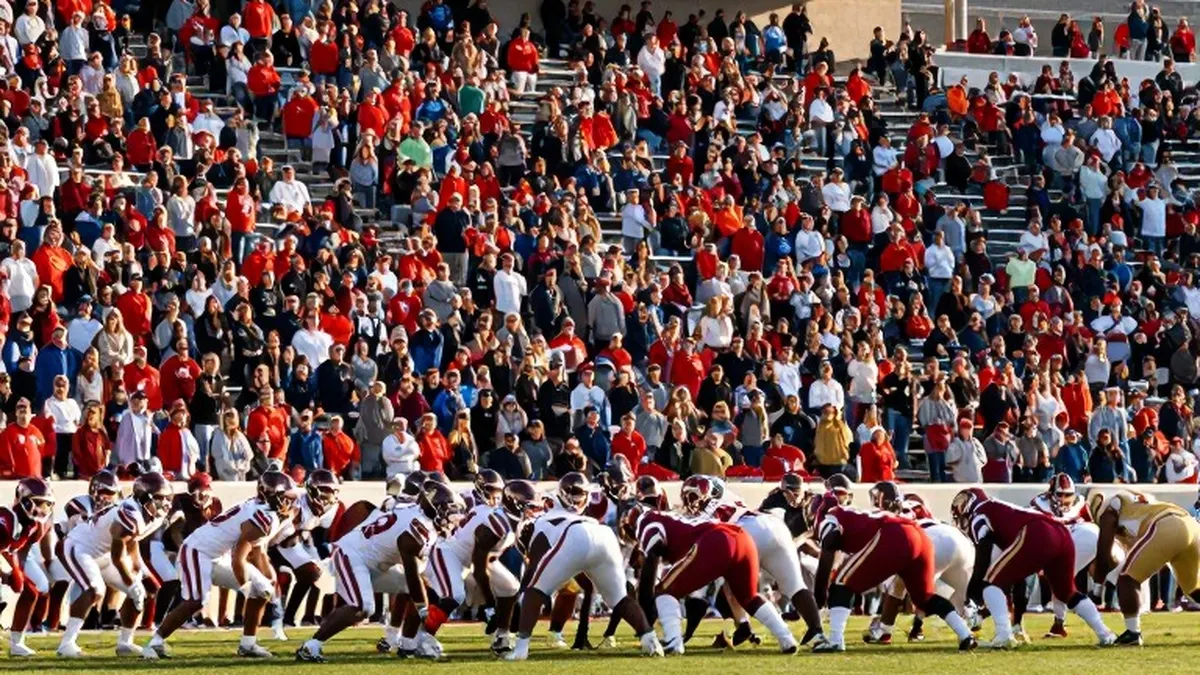
The landscape of college football recruiting has shifted dramatically in recent years, with the rise of the transfer portal and Name, Image, and Likeness deals often prioritizing financial incentives over traditional relationships. Despite these changes, programs in Texas continue to place a premium on coaches who possess deep roots in the state's high school football system. This phenomenon, often referred to as having Texas ties, suggests that the old world of relational recruiting still holds significant power in the Lone Star State.
David Wetzel, who served as a key liaison for the Baylor Bears under head coaches Matt Rhule and Dave Aranda, exemplifies this concept. As a former high school coach and president of the Texas High School Coaches Association, Wetzel acted as a cultural translator for coaches unfamiliar with the state's unique recruiting dynamics. His role highlighted how essential local knowledge and established networks are for navigating the complex social structures of Texas football.
The value of these connections is evident in the current coaching landscape. Four of the five sitting Power Four coaches in Texas spent time in the high school ranks before arriving at the collegiate level. Notable examples include Jeff Traylor at UTSA and Joey McGuire at Texas Tech, both of whom were legendary high school coaches before transitioning to college football. Their success suggests that an intimate understanding of the local talent pipeline provides a distinct competitive advantage.
North Texas athletic director Jared Mosley noted that while outside coaches can succeed, they must have a solid plan to build the necessary network if they lack direct experience. He emphasized that the game remains highly relational, and investing in people significantly increases the odds of retaining talent in a volatile market. This perspective is shared by many administrators who view local connections as a foundational element of program stability.
The impact of these relationships is visible on the field. Jacob Rodriguez, a former high school quarterback from Wichita Falls, found his path to stardom at Texas Tech through connections made with his high school coaches. McGuire, who now leads the Red Raiders, stressed that high school coaches still treat their former players as their own, even when those players are navigating the college transfer portal. This ongoing mentorship helps drive recruiting decisions, particularly when financial offers are comparable.
These ties also play a critical role in identifying and attracting coaching staff. For instance, Will Stein, who worked under legendary high school coach Hank Carter, moved from high school to UTSA and eventually to Oregon, illustrating the fluid nature of talent in the state. Similarly, McGuire helped connect Shawn Bell to Houston, and Wetzel facilitated the hiring of McGuire himself at Texas Tech. These networks allow programs to assemble staff with proven local experience.
Even when a coach is not a native Texan, local experience can be decisive. Neal Brown, who took over at North Texas, leveraged his time as an offensive coordinator at Texas Tech and a special assistant at Texas to build a staff rich in local knowledge. His team, which features a majority of Texas-born starters, currently sits at 7-2 and holds the third-best recruiting class in The American Conference, with nearly all 2027 commitments coming from within the state.
As the coaching market shifts, several Texas programs are facing leadership changes. Baylor became the first to open a vacancy when Dave Aranda was fired in late October, followed closely by Sam Houston. TCU's Sonny Dykes is also under pressure after a difficult start to the season. Early indications suggest that new searches will continue to prioritize candidates with strong local ties to rebuild trust and credibility with fans and players alike.
Ultimately, the enduring importance of Texas ties comes down to trust. Fans and players are more likely to buy into a program when the coaching staff is deeply embedded in the community. McGuire, who has lived in Texas his entire life, believes this genuine connection makes it easier to sell the program. In a state where football is a cultural institution, that sense of belonging remains a powerful recruiting tool.