Kylian Mbappé, one of the most recognizable athletes in the world, is facing a commercial backlash in China after remarks in which he suggested that Mao Zedong, the founding leader of communist China, was a dictator.
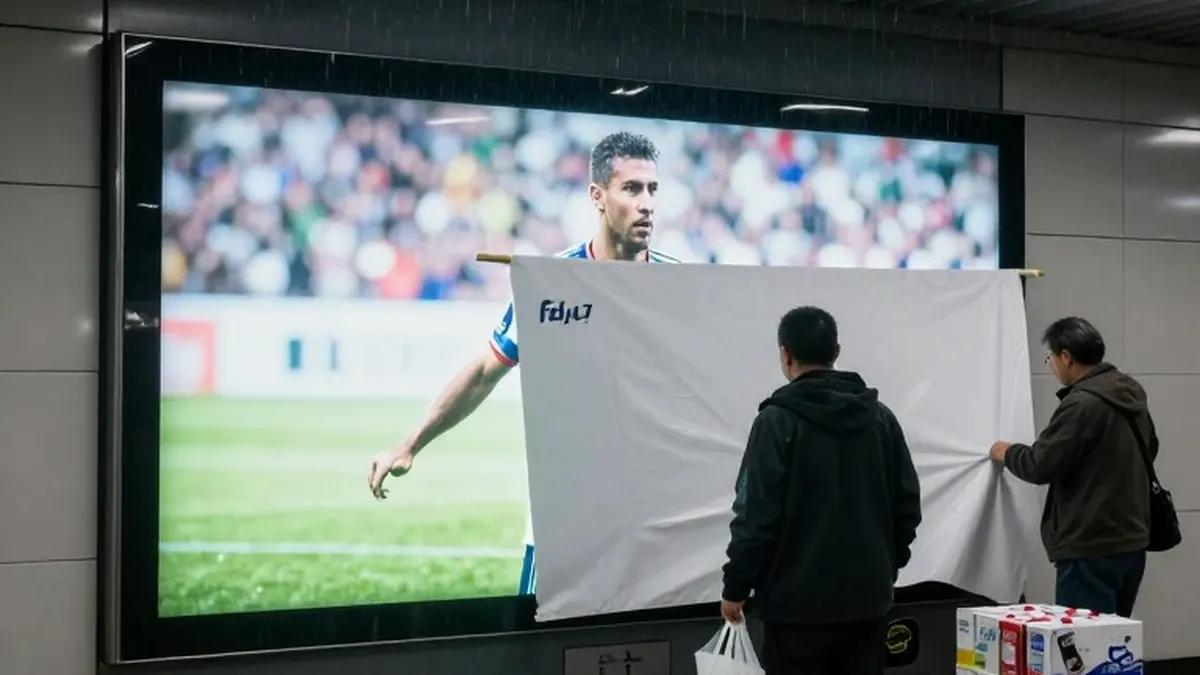
On Tuesday, a string of Chinese brands announced they were ending their relationships with the French captain. Dongpeng Beverage, known for its energy drinks, Inner Mongolia Mengniu Dairy, one of the country's largest dairy producers, and cheesemaker Milkground issued similarly worded statements early in the day. Social media platform Xiaohongshu said its contract with Mbappé had ended following a viral 2024 advertisement, and a note on his account, which had more than a million followers, said it was suspended for violating community guidelines.
None of the companies named the specific offense. However, the statements followed a clip that spread widely on Monday from an interview last spring on the French online talk show "The Bridge." Mbappé is frequently shown in online memes as a dictator because of his dominant presence in the game, and fans have compared him to various authoritarian historical figures, Mao among them. Asked to name his favorite meme, he described a video of a man he thought was "a Chinese dictator." The clip then displays his face superimposed on an image of Mao, whom he did not name.
The comments provoked anger in China, where he was accused of insulting a country that has been a profitable market for him. Foreign Ministry spokesperson Guo Jiakun told a regular Beijing briefing that "words and actions that hurt the feelings of the Chinese people will naturally be met with a collective boycott by all sectors of Chinese society." The Global Times, a state-backed nationalist tabloid, reported that sporting events and advertisements involving Mbappé have been suspended from broadcast, and said his case should serve as a "clear red line" for foreign public figures hoping to enter the Chinese market.
After reports that Spanish league broadcasts, which include Mbappé's Real Madrid, had been suspended in China, La Liga distanced itself from him. League President Javier Tebas said on social media that it "deeply regrets" the comments and that an individual's action could not be allowed to tarnish relations with China. He added that the league was working with its partners there to overcome the situation.
Mbappé then posted his own apology, saying he had reacted to an image of himself and that his comment was ill-judged. He said he now understood it hurt many people in China and in Chinese communities worldwide. "I have deep respect for the Chinese people and their history, and I am sincerely sorry," he wrote. He narrowly missed out on soccer's Ballon d'Or on Monday, finishing a close second. Last month he told the French sports newspaper L'Équipe that he knew the dictator memes were meant to be funny but that they also showed "a lack of political and human awareness."
Mao's legacy in China is deeply mixed. He led the country for more than 25 years until his death in 1976, and his forces won the civil war in 1949. His rule included the Great Leap Forward, a campaign believed to have contributed to famines that killed tens of millions, and the Cultural Revolution, a violent movement that brought political and social chaos. The Communist Party acknowledges his role in those events but holds that his achievements outweigh his mistakes, and his portrait remains on the 100-yuan bill.
Foreign athletes have run into Chinese sensitivities before. NBA games were largely pulled from Chinese broadcast for years from 2019 after a Houston Rockets manager voiced support for Hong Kong protesters, and former NBA star Dwight Howard drew controversy in 2023 for calling Taiwan a country. Because of strict censorship, many Chinese users did not know exactly what Mbappé said. One Weibo commenter wrote that they did not care about the details and supported boycotting him.
Mark Dreyer, author of a book on China's sports industry, said such episodes force brands to act regardless of context or truth. "The ultimate result is that sports stars and global celebrities will become increasingly cautious about engaging with China," he said.