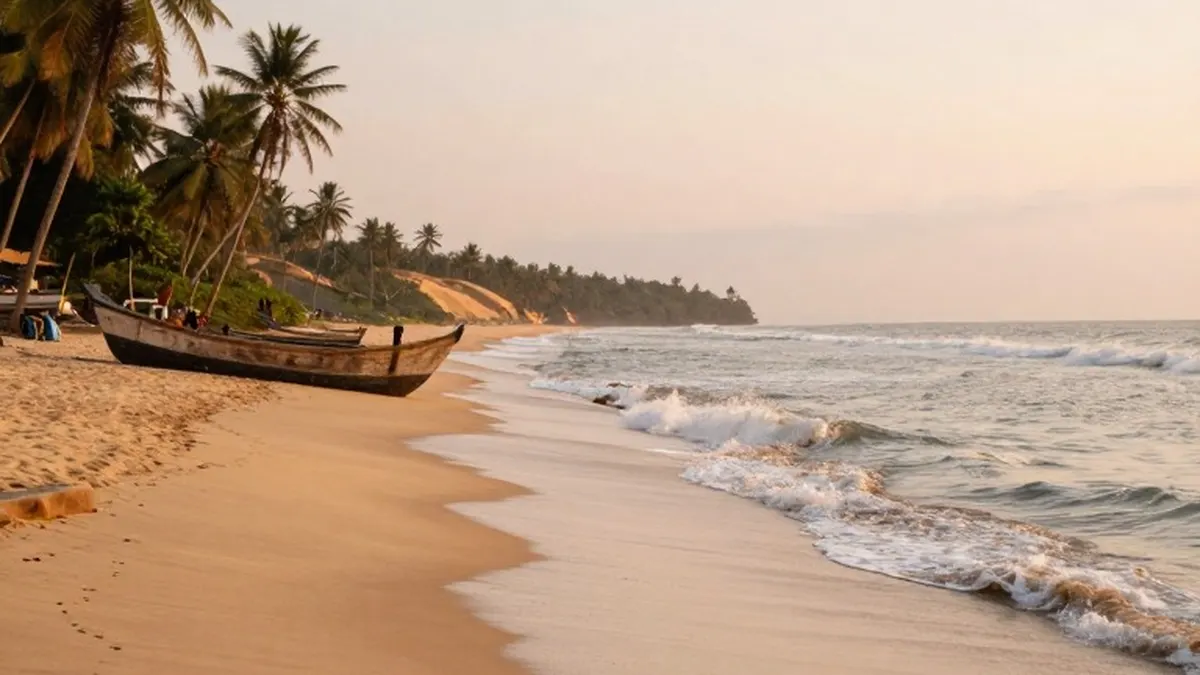
As the sun rises over the Indian Ocean, waves wash onto golden sand and palm fronds stir in the sea breeze. This is the picture of Mogadishu that Sucdi Abdul Fattah Abdul Khader wants the world to see, rather than the suicide attacks and young men carrying AK-47s that many still associate with Somalia's capital.
The 23-year-old is part of a small but growing number of local guides taking visitors beyond the headlines to explore the city's beauty spots, historic sites and culture. Her favourite destination is Jazeera beach, where guests can swim in the sea before heading to nearby sand dunes that remind some visitors of the Sahara. "It's one of the tourist attractions where we bring our guests. It's a nice place," she says.
Her tours go well beyond the scenery. She leads visitors through the fish market, where the variety of marine life along Somalia's vast coastline draws particular admiration, and through districts that reflect the city's past as a busy Indian Ocean trading centre shaped by Ottoman and Italian rule. Guests can also sample Somali food, including camel meat, samosas and traditional tea.
Many arrive with expectations formed by years of news about insecurity. "Mostly, they are surprised by how beautiful the country is and how welcoming people are," Sucdi says. Guiding runs in her family: her father spent more than three decades showing journalists, photographers and visitors around Somalia, and he introduced her to the work nearly three years ago. "I started this job as a hobby, but it has become something that I like and am passionate about," she says.
She now works alongside her father and a team of guides, sharing videos of her tours on TikTok and considering producing content in English to reach viewers who do not speak Somali. Tourism is still a young field in Somalia, with only a handful of guides working in Mogadishu, and the business is seasonal. Five tourists a week counts as a success, though Sucdi says this year has been encouraging and she is confident numbers will grow.
Since the collapse of Somalia's central government in 1991, Mogadishu has endured civil war, destruction and displacement, and much of the city centre was reduced to rubble. After al-Shabab withdrew from most of the city in 2011 and the federal government was established in 2012, returning diaspora members, entrepreneurs and investors fuelled a construction boom of hotels, restaurants and housing. The capital is now a growing commercial hub, though insecurity remains part of daily life. About 10,000 tourists visited Somalia in 2024, a 50% rise on the previous year, according to the country's tourism department.
Visitors often ask about safety before travelling and pass security checkpoints around the city, but Sucdi says their experience on the ground is generally positive. "What they heard from the news and everywhere else is not the same as what they see in the country," she says. Despite questions about whether the city is safe enough for a young woman to work as a guide, she is determined to continue. "I would want them to see the beautiful, welcoming side of Mogadishu, and not the side that they heard from the media, which is explosions and bombs," she says.
Somalia holds Africa's longest mainland coastline, stretching more than 3,000km along the Indian Ocean and the Gulf of Aden, and the gap between its reputation and reality can be striking. American travel content creator Chris Reese, known online as Authentic Travelling, first visited almost a year ago and enjoyed it so much that he returned with friends who had seen his videos. "It is such a beautiful tropical place. I love the vibe, the weather and the food," he says, adding that the desert is barely a 30-minute drive from the city. Before coming, he says, he saw mostly negative headlines: "Coming here, on my very first trip, showed me that there is so much more to this country than what is shown in the headlines."
Mihaela Patap, from Romania, travelled to Somalia from neighbouring Ethiopia and visited the dunes and coastline within her first few hours in the city. "I don't see anything dangerous. I feel safe and the people are warm," she says, adding that she plans to share her pictures and encourage others to come.
For Sucdi, the work is personal. She is carrying on a family profession in an industry with few women, using digital platforms to reach audiences far beyond Mogadishu. "Somalia still has a long way to go before tourism becomes a major industry," she says. "Through my tours, I am giving visitors an opportunity to experience its landscapes, our culture and people beyond the familiar negative headlines." Each visitor, she believes, is another chance to tell a fuller story of her city.