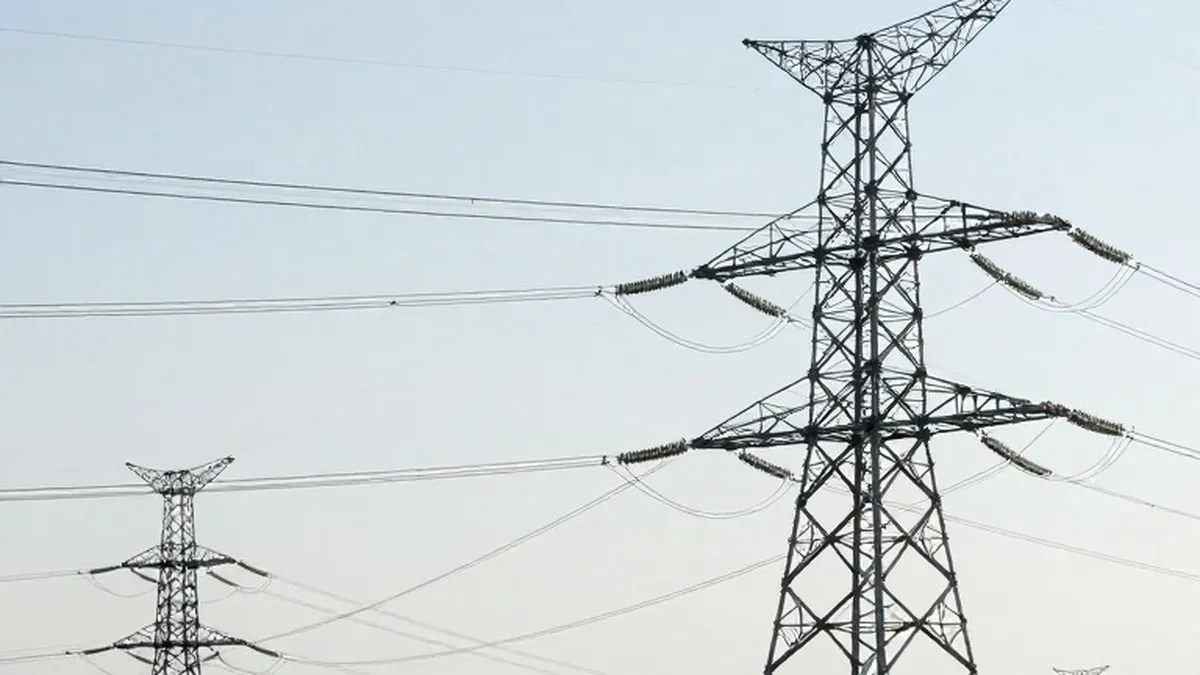
Moldova has officially inaugurated a new high-voltage power line that connects the nation to its neighbor Romania and the broader European energy grid. The project is a significant strategic move designed to diminish the country's long-standing reliance on Russian energy supplies. The new infrastructure represents a major step in diversifying Moldova's energy sources and strengthening its integration with continental Europe.
President Maia Sandu marked the launch of the facility with a strong statement on social media on Sunday. She noted that for decades, Moscow had used energy resources as a tool of political leverage against Moldova. Sandu declared that this era is over, emphasizing that Moldova now purchases zero Russian gas. This declaration underscores the government's commitment to economic and energy autonomy from its powerful neighbor.
The new connection is particularly vital for Moldova, a small nation of 2.6 million people situated between Romania and Ukraine. Historically, the country received the majority of its natural gas from Russia. These supplies were routed through pipelines running through Ukraine and via the pro-Moscow separatist region of Transnistria. The new power line provides an alternative pathway that bypasses some of these traditional and politically sensitive routes.
During the inauguration ceremony held in the capital, Chisinau, President Sandu explained that the project strengthens the country's electricity transmission capacity. She stated that the new line reinforces Moldova's connection to the European energy system while diversifying its means of supply. Sandu also announced that two additional power lines connecting to Romania are currently in development, signaling a continued push for infrastructure growth.
Marta Kos, the European Commissioner for Energy, attended the ceremony and highlighted the economic benefits of the new infrastructure. She noted that Moldova can now purchase energy from the market where it is cheapest, rather than being locked into specific supplier relationships. This flexibility is expected to help stabilize energy costs and improve the country's energy security in the short and long term.
The newly launched facility is a 400-kilowatt extra-high-voltage line that runs from the city of Vulcanesti to Chisinau. This specific routing allows Moldova to reduce its dependence on the Cuciurgan thermal power plant, which is located in the Transnistria region. By lowering reliance on this single source, the country aims to mitigate the risk of power outages that have been used as a pressure tactic in the past.
President Sandu recalled the historical threats faced by Moldova whenever it attempted to make choices that diverged from Moscow's preferences. She stated that Russian authorities frequently threatened to cut off electricity supplies in response. The new line, dubbed the "energy independence line," was launched two years after the initial date promised by Moldovan authorities, reflecting the complex challenges involved in the project's completion.
The launch comes at a critical time for regional energy security. Last month, the Moldovan parliament approved a state of emergency until November 20 to address ongoing gas shortages. These shortages have been exacerbated by soaring world energy prices, a situation that some European observers have attributed to Moscow. Critics accuse Russia of withholding additional supplies to exert political pressure on the continent.
The energy crisis is part of a broader pattern of tension in the Black Sea region. European-aligned states in the area report a renewed wave of attacks allegedly carried out by Russia. Last month, Romania attributed a drone strike to Russia, an incident that sank a cargo ship off the Romanian Black Sea coast. The attack resulted in the death of one crew member and left three others missing, highlighting the growing risks to commercial shipping.
In response to these escalating tensions, Ukraine, Romania, and Bulgaria have called on NATO to fast-track additional surveillance capabilities to protect commercial shipping in the Black Sea. The alliance has agreed to send more maritime patrol aircraft, radar systems, and drones to the region. These measures aim to bolster security as fighting in Russia's war on Ukraine continues to intensify.