Elon Musk poured more than $442 million into the midterm elections, a sum that eclipsed even his support for President Trump in 2024, but the spending did little to hold back the Democratic wave that battered Republicans across the country on Tuesday.
The losses exposed the limits of the world's richest man's political influence and raised fresh questions about how his business empire will fare with Democrats taking power in Washington and, more surprisingly, in Texas. "Other than the Republicans, Elon Musk is probably the biggest loser of last Tuesday," said Cayce Myers, a Virginia Tech public relations professor who studies political campaigns. "You have to have money to be competitive. No question. But money cannot guarantee outcome."
Musk had signaled a retreat from politics after a Wisconsin race he funded fell short last year, but he resumed spending in late 2025 and finished the cycle as the nation's top donor by a wide margin. The billionaire had become a major figure in Trump's second term, leading the cost-cutting drive that produced sweeping federal cuts and layoffs.
Nowhere were the results worse for Musk than in Texas, where he spent at least $168 million backing Republican Senate candidate Ken Paxton. Paxton lost to Democrat James Talarico in what became the most expensive nonpresidential race on record, with nearly $575 million spent overall, according to AdImpact data. Pro-Paxton donors more than doubled the spending of Talarico's allies in the general election stretch, much of it driven by Musk.
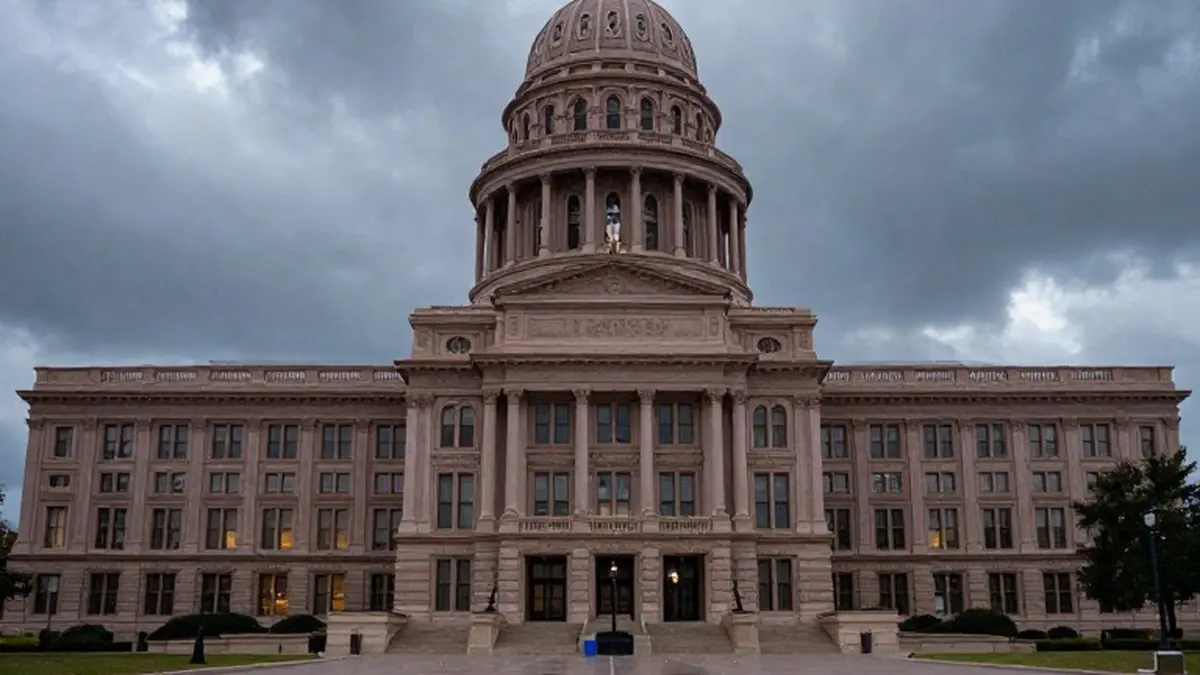
Democrats flipped more than a half dozen statewide offices in Texas, turning the state's top roles blue for the first time in decades. Gov. Greg Abbott, who received $5 million from Musk, lost to state lawmaker Gina Hinojosa, who has pledged to pause data center expansion and last week won a court order seeking access to emails between Abbott's office and Musk. Paxton will be succeeded as attorney general by Democrat Nathan Johnson, who campaigned on investigating grants to Musk's Starlink and SpaceX. Democrats also captured the Texas House, breaking the GOP's trifecta control of state government.
"He could have spent $0 and probably seen the same result," said Brendan Steinhauser, a Texas-based Republican strategist and CEO of the Alliance for Secure AI, calling it "a national wave election of historic proportions." Steinhauser said the impact of Musk's 2024 spending for Trump was "overstated," adding that "money has diminishing returns in politics."
The Texas upheaval carries particular risk for Musk, who left California for the state to escape left-wing politics and regulators. "The thing that Musk, I think, needs to be worried about is that regulatory structure of the state of Texas is about to change," said Jon Taylor, a political science professor at the University of Texas at San Antonio. Musk appeared to shrug off the results on X, the platform he owns, writing, "Guess my election-interfering space lasers didn't work this time," and adding that "data centers in space looking pretty appealing right now," an apparent nod to SpaceX's orbital data center push.
Scrutiny is also building in Washington. Sen. Chris Coons (D-Del.) suggested on X that he would investigate Musk's links to Russian President Vladimir Putin, and Rep. James Walkinshaw (D-Va.) posted that Musk "must answer" for the Department of Government Efficiency's cuts and firings. Other Democrats have signaled probes of his companies' multibillion-dollar government contracts. Tesla and SpaceX shed hundreds of billions of dollars in combined market value in the two days after the midterms amid investor concerns, CNBC reported.
Some strategists doubt Democrats will make Musk a personal target. "I think the Democrats will be careful about overreach," Steinhauser said, while Texas GOP consultant Vinny Minchillo argued that "the business of Texas is business," pointing to Musk's Austin plant and SpaceX as major employers. Talarico, meanwhile, accused Musk of trying to "buy his own personal U.S. senator" and called for campaign finance reform, a push echoed by Luke Warford of the Agave Democratic Infrastructure Fund: "Somebody should not be able to spend that much money in politics."