Myanmar has officially rejected the landmark ruling by the International Court of Justice, which determined that the country's security forces committed state-sponsored genocide against the Rohingya Muslim population. The government labeled the decision as unfair, primarily because the verdict was not unanimous among the judges. A spokesperson for the government stated during a press conference in the capital, Naypyitaw, that the nation had been unjustly accused by the judicial body.
The International Court of Justice found that Myanmar's military carried out mass executions of men and boys, committed widespread rape and sexual violence against women, and razed hundreds of villages. The evidence presented to the court indicated that approximately 100,000 Rohingya were killed during the clearance operations conducted in the northern Rakhine state in 2017. This marks a significant legal milestone, as it is the first time the ICJ has held a state responsible for genocide. It is also only the fourth instance since the Nazi Holocaust that an international court has ruled the legal threshold for proving genocide had been met.
Khine Khine Soe, the spokeswoman for President Min Aung Hlaing, addressed the media to explain the government's position. She argued that political bodies similar to the ICJ should not abuse their judicial authority. Soe emphasized that the decision was not a unanimous agreement by all members, leading the government to view the outcome as inequitable. President Min Aung Hlaing was the commander-in-chief of the military during the 2017 operations before assuming full power in a coup in 2021. The government maintains that its forces acted against insurgents during that period.
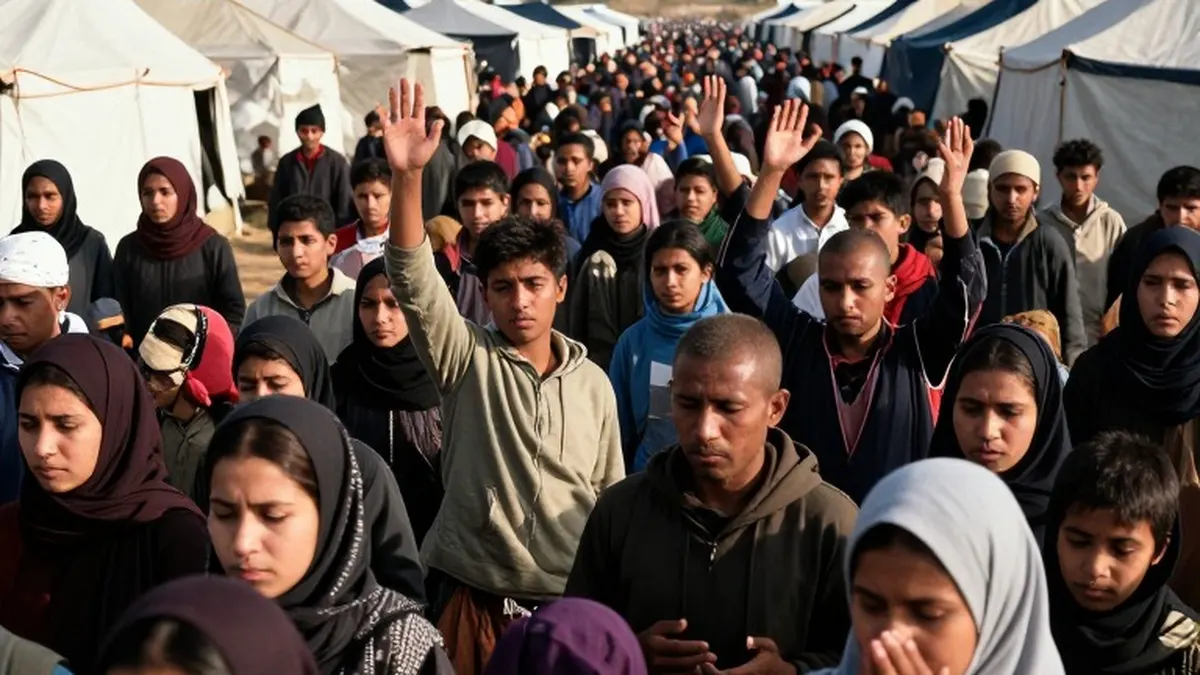
In response to the verdict, thousands of Rohingya refugees living in camps in Bangladesh celebrated the news. Many described the ruling as a victory that recognized their suffering and distinct ethnic identity. Mohammad Rofik, a community leader in the Cox's Bazar camp, stated that while the verdict was a victory, it was not the end of their ordeal. He noted that justice has just begun and that the Rohingya still have a long way to go.
Sayed Ullah, another community leader, highlighted that the ruling provided historic recognition of the Rohingya as a distinct ethnic group. He pointed out that Myanmar has long denied the existence of the Rohingya, but the court has now made their status clear. Ullah stressed that the group possesses its own culture, language, and land, which define them as a distinct ethnicity. Other leaders, such as Mohammad Osman, called on the international community to impose severe punishment on Myanmar authorities based on the court's findings.
The Rohingya population, which is mainly Muslim, has faced long-standing persecution in the Buddhist-majority country. Currently, 1.2 million Rohingya are living in worsening conditions within crowded refugee camps in neighboring Bangladesh. Rights groups have urged nations around the world to impose military and economic sanctions against Myanmar in light of the ruling.
A US-based human rights organization called Justice for All has urged the Trump administration to support a UN General Assembly resolution. This resolution would demand that Myanmar comply with the judgment and establish international monitoring. However, the path to enforcement remains challenging. The international court and many of its judges and staff are currently under US sanctions. Consequently, any action taken by the UN Security Council would likely face a US veto.
The legal case was initially filed by officials from Gambia, a predominantly Muslim nation. The International Court of Justice reached its conclusion through a vote that was nine to six in favor of finding that genocide had been committed.